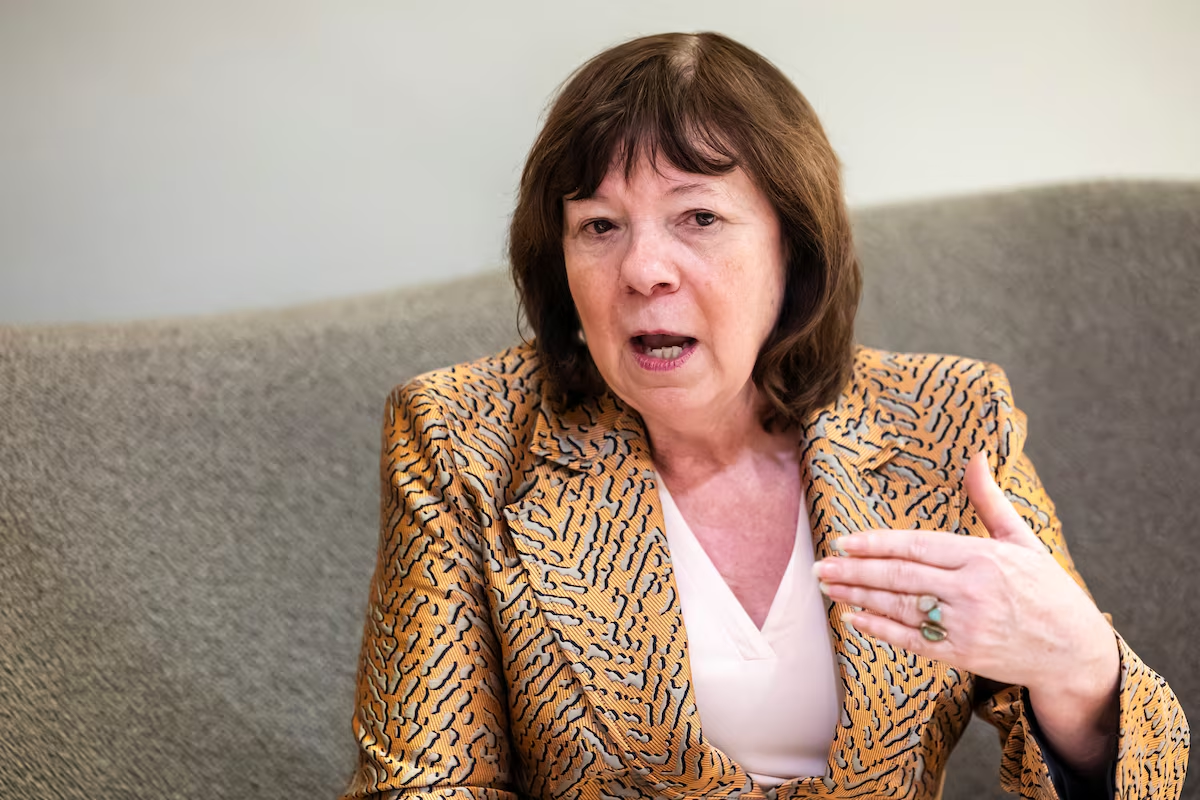

Open this photo in gallery:
Canadian Judge Kimberly Prost attends a meeting of the International Criminal Court in The Hague in 2025. She is among more than a dozen court officials facing U.S. sanctions.Geert Vanden Wijngaert/Reuters
On a hot summer night in 1998, Kimberly Prost was in Rome as part of Canada’s delegation at a United Nations diplomatic conference, where countries had gathered to create a global tribunal to bring people to justice for genocide and war crimes. Success was uncertain. The clock had ticked well past midnight when the large auditorium erupted in applause: A 120-7 vote established the International Criminal Court.
Two decades later, after a range of work in international justice, she felt a frisson of nerves at UN headquarters in New York before she was elected as a judge to the ICC in The Hague.
It was the culmination, and a new beginning, of a life’s work. Last year, it turned upside down.
Opinion: Failing to fulfill ICC warrants is also a failure to defend Canada’s sovereignty
Early in 2025, shortly after his second inauguration, President Donald Trump imposed sanctions on the court by executive order, alleging illegitimate investigations of Americans and Israelis. That August, the U.S. designated Judge Prost under the financial restrictions.
It catapulted her life into chaos. One company immediately cancelled a credit card. Amazon e-mailed to say her accounts had been closed. Her Alexa stopped speaking with her. Navigating the modern world now requires constant savvy and the occasional cajoling of hotel clerks, alongside a few debit cards and a ready stack of cash.
“The whole point is not woe is me,” Judge Prost said in a recent interview.
“It’s just such a shocking attack on the independence of the judiciary. We will never be intimidated. We’re not going to break.”
She and fellow ICC judges are speaking out to stand up for the institution they helped build, one under a sustained assault from the U.S. President, even as he is politically weakened after the Democrats’ demolition of Republicans in the midterm elections this month.
Mr. Trump’s administration has clearly stated its goal: to dismantle the ICC. The court came into official existence in 2002, but the U.S. has never been a state party to the Rome Statute that established the ICC, having first voted against it in 1998 under Bill Clinton alongside countries including China, Israel and Libya.
In October, U.S. Secretary of State Marco Rubio reiterated the country’s goal of taking down the court “brick by brick” as he announced further sanctions that seek to paralyze the court’s operations.
Judge Prost is among more than a dozen judges and court officials under the U.S. sanctions. She and two other judges, as well as civil-society groups, are taking on the President and his administration in a U.S. federal trial court, arguing the sanctions are unlawful.
“This is the moment when this attack has to be countered, in my view,” said Judge Prost, a 68-year-old Winnipegger whose nine-year term on the court ends in March.
One message she is trying to broadcast is that the sanctions are binding only on U.S. companies: Non-U.S. companies need to be convinced that they don’t have to comply.
“They have to be aware that if they choose to comply voluntarily, they are complicit in threatening the International Criminal Court and the judges,” she said.
Open this photo in gallery:
ICC Judges Tomoko Akane, Kimberly Prost and Keebong Paek, from left in the top row, sit at the court in The Hague in 2024. The Trump administration has expanded sanctions against the court and its officials in an effort to cripple its operation.EVA PLEVIER/AFP/Getty Images
In early October, South African jurist Navi Pillay, an ICC judge in its formative years who previously battled apartheid, won the Nobel Peace Prize. The award was widely viewed as a response from the Norwegian Nobel Committee to Mr. Trump’s attacks on international courts and judges. Mr. Trump also covets the prize.
Hours later, Mr. Rubio escalated the U.S. pressure on the “rogue court.” He announced a widening of U.S. financial sanctions on the ICC’s operations, set for next spring and aimed at “crippling its ability” to conduct its work. The court’s banking, technology and insurance are all in peril.
The same day, foreign ministers of nine countries – Australia, Britain, Canada, Denmark, Germany, France, Italy, Japan, and the Netherlands – issued a statement of “continuing and unwavering” support for the ICC. “We regret and strongly disagree” with the sanctions, they said.
They also noted a key meeting starting Nov. 30: the 25th session of the Assembly of States Parties to the ICC, a gathering relocated to The Hague from the UN in New York because of the sanctions.
In August, Prime Minister Mark Carney said Canada’s support for the ICC is “unequivocal” and that Ottawa would “provide support as needed” for Judge Prost.
In a mid-October statement, Global Affairs Canada cited “privacy considerations and ongoing legal proceedings” in response to questions from The Globe and Mail about supporting Judge Prost.
Judge Prost said there is work happening behind the scenes to try to mitigate the effects of the sanctions on her. Foreign Minister Anita Anand called her when the sanctions first hit her and again in October, when the U.S. threatened sanctions on court operations.
Federal government officials have helped in talks with industry and banks.
“They’re dealing with a very complicated situation,” Judge Prost said of Ottawa, as it takes on the capricious President amid a trade war and myriad other issues.
Allan Rock, Canada’s ambassador to the UN in the mid-2000s, remembered working with Judge Prost when he was federal justice minister in the mid-1990s. “We’re proud of her,” he said in an interview. “She’s a distinguished judge.”
Mr. Rock has spoken out about Canada doing more to “express disapproval of the vindictive, lawless and crude sanctions” but he also said the federal government faces exceptional circumstances in its relations with Mr. Trump.
“We’re dealing with a man who can lash back in a vindictive way,” Mr. Rock said. “It’s a fine balance. I’m reluctant to be critical. I hope we can find a way to express support for the various legal proceedings attacking the validity of the sanctions.”
At the U.S. District Court for the Southern District of New York, the case filed by Judge Prost and two other ICC judges – Solomy Balungi Bossa of Uganda and Reine Alapini-Gansou of Benin – argues that Mr. Trump exceeded his authority and violated the U.S. Constitution in his imposition of sanctions that are “tantamount to the financial death penalty.”
In response, the U.S. government called on the court to dismiss the case and said Mr. Trump’s executive order is “squarely within the broad powers” Congress granted the President “to address foreign threats to national security.”
U.S. imposes sanctions on International Criminal Court, hours after former judge wins Nobel
The U.S. has said it encircled Judge Prost with sanctions because she took actions to authorize the ICC’s investigation of U.S. personnel in Afghanistan. This relates to a broad early-stage case she was a part of in 2020. The next year, the ICC effectively shelved the potential U.S. aspect of that case.
Judge Prost’s career, after law school at the University of Manitoba, began as a federal prosecutor in the mid-1980s in Winnipeg before she joined a new war crimes group at the Justice Department in Ottawa. In Rome in 1998, she recalled the seeming unlikeliness of the proposed court being embraced by enough countries to make it a reality.
“No one in that room knew whether we were going to be successful,” she said.
Judge Prost is Canada’s second judge on the court, following Philippe Kirsch in the ICC’s early years.
What will happen with the sanctions after her term ends in March is unclear. Day-to-day life remains an obstacle course. She recalled checking in to a hotel in Ottawa, which required a credit card. She only has debit. The clerk insisted on a credit card. Judge Prost blurted out: “The President of the United States has sanctioned me, and I no longer have a credit card.” The stunned clerk was taken aback.
The clerk Googled her and spoke with her manager, and the judge was allowed to pay with debit.
“It’s such an absurd story,” Judge Prost said.
“You never really get used to it. You get more accustomed to it.”