
Open this photo in gallery:
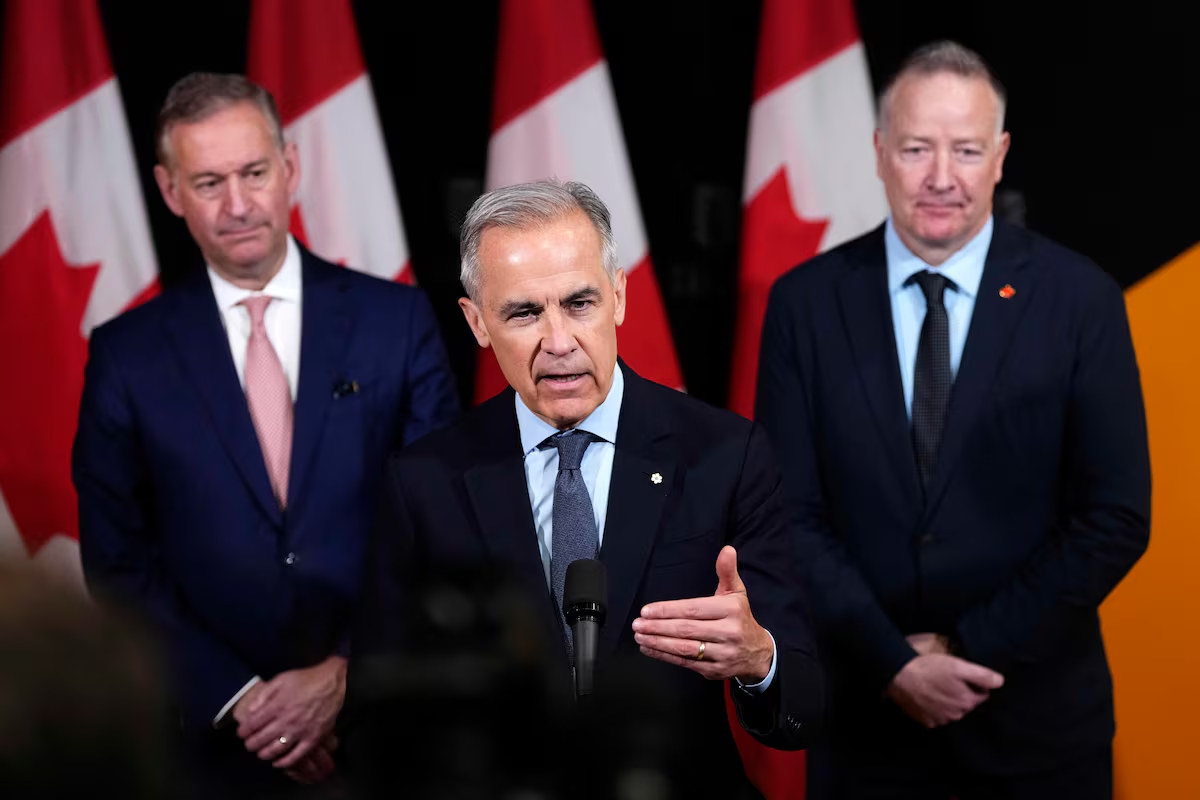
Prime Minister Mark Carney is joined by Doug Guzman, the CEO of the Defence Investment Agency, left, and Secretary of State (Defence Procurement) Stephen Fuhr, right, at the Canadian Association of Defence and Security Industries trade show in Ottawa on May 27.Justin Tang/The Canadian Press
Ottawa is asking cities interested in hosting the headquarters of a multinational defence bank that Canada is championing to submit their proposals as the federal government inches toward its goal of establishing the bank in 2027.
The long-awaited selection process for the host city of the Defence, Security and Resilience Bank is finally open after months of advocates across Canada lobbying the government to consider their unsolicited proposals to headquarter the institution in their municipality.
The Globe and Mail first reported in April that Canada had officially been selected to host the bank by 19 countries that met in Montreal that month. The bank will provide long-term, low-cost financing for defence projects undertaken by the participating countries. Even before then, however, press conferences and pitch decks were put together by cities, including Toronto, Ottawa, Vancouver, Montreal and Halifax, boasting buildings where the bank could be housed and attractive attributes to international delegates.
Proposals are due Dec. 3, days after the signing of the bank’s charter is expected to take place in Luxembourg with its nine founding countries: Canada, Albania, Belgium, Greece, Latvia, Luxembourg, Romania, Turkey, and Ukraine.
Britain won’t join Canada’s defence bank, plans to pursue separate procurement entity
Hosting the bank will involve entertaining international delegations, attracting workers, holding conferences and drawing in investment activity, according to the federal government.
An ecosystem of existing banking and financial expertise surrounding the bank will be valued in the selection process, according to Ottawa, which plays heavily into Toronto’s pitch to have the DSRB located in the country’s financial district. Access to defence companies, government and academia will also be coveted, which could help the pitch that advocates in the country’s National Capital Region have been making.
The building itself must be able to house 50 employees to start in a space of about 7,500 square feet, according to Ottawa, and applicants are expected to have this available within six months of being selected. Within 10 years, cities should plan for the bank to grow to approximately 700 employees in roughly 500,000 square feet.
Security of the site will also be a major concern, and any proposed headquarters must be able to meet a high standard of secure communications, specialized technology infrastructure, physical security and confidentiality.
Canada, partners to sign charter for new defence bank at end of November
While the bank will pay for its operations through its own resources, municipalities applying to host it may be asked to provide a package of support measures and services in their pitch.
Proposals must be a maximum of 20 pages and include letters of support from provincial or territorial governments, for example, as well as any financial and incentive disclosures.
The Globe first reported in August that Doug Guzman, chief executive officer of the Defence Investment Agency, is leading the selection process for the city that will headquarter the bank. He will be joined by a former member of the Privy Council Office, and a business leader and senior executive to aid the decision-making.
Mr. Guzman’s shortlist will be submitted to the Minister of Finance and Prime Minister for the final decision before the bank can begin operations in 2027.