
Open this photo in gallery:
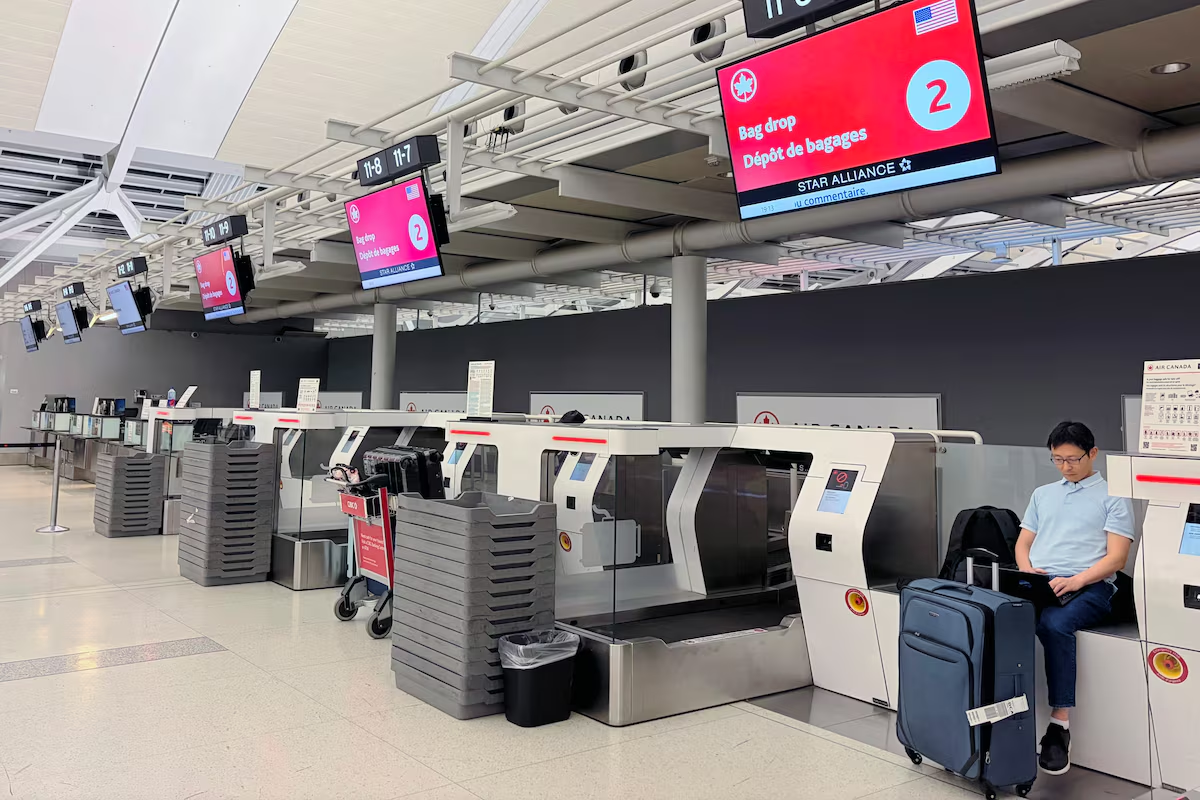
Closed Air Canada bag drop areas are shown at Pearson airport in Toronto. A spokesman for for the airline said the U.S. ground stoppage affected 23,000 customers on Friday.Sandra Ezekwesili/The Canadian Press
Canadian airlines could face millions of dollars in costs and days before operations return to normal after the United States halted all flights on Friday night when its air traffic control system went down.
The carriers are expected to take until Tuesday to resume normal operations after cancelling 720 flights on Friday, when the U.S. Federal Aviation Administration issued a nationwide ground stop for all civilian flights.
Traffic resumed on Friday night but at least 260 Canadian flights are cancelled on Saturday and Sunday, according to Cirium, an aviation analytics company. This includes flights from the U.S., Mexico and the Caribbean.
Canadian travellers face delays, cancellations as airlines recover from U.S. ground stop
Airlines are now grappling with the challenge of getting fresh crews to destinations where their planes were grounded and pilots and flight attendants burned through their available flight duty hours on the ground, said John Gradek, an aviation lecturer at McGill University. This can lead to crew shortages elsewhere in the network.
“The knock-on effect can be significant,” he said.
The U.S. ground stop brings expenses that include the costs of moving fresh crews and planes around to help stranded customers, in addition to hotel and food claims made by passengers whose journeys were delayed during rebooking.
Airlines are rebooking customers on the next available flight or offering refunds. Given the backlog, the next available flight might not be until the next day or later, which could leave the airline open to claims for hotel and meal expenses under Canada’s Air Passenger Protection Regulations, Mr. Gradek said. The initial delay or cancellation is outside the control of the airlines and therefore not covered.
Canadian airlines have responded to reduced demand for travel to the U.S. under President Donald Trump by trimming cross-border schedules beginning last year. This lessened the impact of the outage. However, flights to and from Mexico and the Caribbean were also affected, given they must pass through U.S. airspace and use U.S. air traffic control.
It is impossible to place a price tag on the impact of the ground stoppage, but Canada’s airlines could face millions of dollars in new costs. “It’s significant,” Mr. Gradek said.
The toll of the stoppage comes as airlines are grappling with soaring jet fuel prices caused by the U.S. war on Iran.
U.S. air travel should recover from nationwide ground stop by end of Sunday, officials say
Christophe Hennebelle, a spokesman for Air Canada, said the U.S. ground stoppage affected 23,000 customers on Friday. It is hard to say when normal operations will resume, he said, or how quickly stranded passengers can resume their trips.
“It’s really case by case,” he said by phone.
“We are rebooking people, so we will contact people directly, and of course they’ve got the option either to accept the rebooking that we’re proposing or get a refund if they don’t want to travel any more,” Mr. Hennebelle said.
Almost a third of Friday’s 26,200 flights departing in the U.S. were cancelled, Cirium said. On Saturday, more than 4,100 flights are cancelled. This includes flights operated by Canadian airlines.
In a statement, Porter Airlines said it will likely take the weekend for normal scheduling to resume. For customers with flexibility, the airline is waiving fees for rebooking a different flight or selecting a nearby airport.
WestJet Airlines said on Saturday it is preparing for a return to normal operations over the next 48 hours.