
Listen to this article
Estimated 5 minutes
The audio version of this article is generated by AI-based technology. Mispronunciations can occur. We are working with our partners to continually review and improve the results.
Two search and rescue dog associations are warning the cancellation of Parks Canada’s K9 program could impact public safety.
The Canadian Avalanche Rescue Dog Association (CARDA) and British Columbia Search Dog Association (BCSDA) wrote a letter to Parks Canada and Environment and Climate Change Canada asking to “immediately reverse” the cancellation to “reduce risks to rescuers and the Canadian public.”
Kyle Hale, president of CARDA, said only a handful of search and rescue dogs are trained to work in mountainous terrain in drastically changing weather.
He added search and rescue dogs can be dropped with their handler into an avalanche scene and are more likely to quickly find a person or people missing.
The alternative, Hale said, is to have several people at a scene to do avalanche probing “that would take hours or days,” and leave them at risk of further avalanches.
“They save lives collaterally,” he said. “You’ve got to safely be able to travel through mountainous terrain day and night and 365 days to be able to be safe for you and your team.”
Hale said Parks Canada’s K9 program would help instruct civilian dog handlers with BCSDA and CARDA, which will “leave a significant gap in Canada’s rescue dog capacity.”
WATCH | Meet Parks Canada’s backcountry superhero team:
Meet Parks Canada’s backcountry superhero team
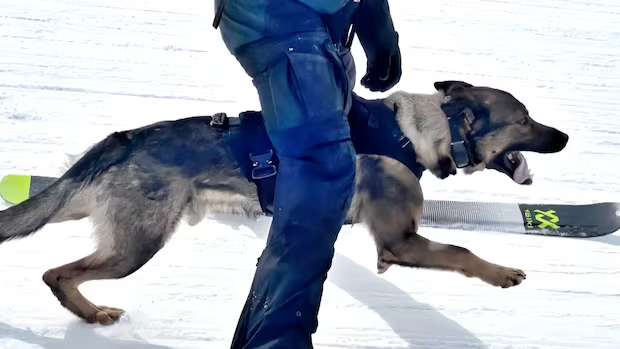
Logan Bennett and his dog Leroy make up the only K9 team for Parks Canada. They fly across the country locating victims of avalanches and missing people and provide back-up for park wardens in high-risk enforcement calls.
‘Zero consultation and zero outreach’
The letter from Hale and BCSDA president Megan Kelly says discussions with internal Parks Canada staff gave them the understanding that the federal agency “intends to rely on volunteers from both BCSDA and CARDA, at least in the short-term, to fill this operational gap.”
Hale said the associations are working to come up with a “short-term Band-Aid solution” with avalanche season underway, but there was “zero consultation and zero outreach to any stakeholders in regards to this decision.”
“It is clear to our organizations that the termination of this program was a decision made in isolation, without broad consultation with stakeholders and without a full understanding of the nationwide implications,” the letter said.
The letter said both Parks Canada and CARDA are members of the International Commission for Alpine Rescue, which focuses on best rescue practices.
“We cannot think of any jurisdiction in the world that is not currently utilizing avalanche rescue dogs for winter mountain rescue response,” the letter stated.

Cazz, a Parks Canada search and rescue dog, stands outside an illegal campsite on the edges of the Town of Banff. (Submitted by Mike Henderson)
Parks Canada ‘modernizing its law enforcement model’
The federal agency is in the midst of cutting $145 million from its budget over the next three years.
It’s part of Prime Minister Mark Carney’s directive to federal agencies, departments and ministries to scale back public sector spending by 10 to 15 per cent.
Parks Canada previously said it “made the difficult decision to discontinue its dog handler program.”
LISTEN | Parks Canada plans to slash 500 jobs:
Radio Active6:54Parks Canada plans to slash 500 jobs
Parks Canada plans to cut hundreds of jobs across the country, and eliminate some programming such as the search-and-rescue dog program in Banff National Park. It’s been a busy year for search and rescue in Banff. So far seven people have died while doing outdoor recreation in the park. William Stevenson is the Conservative MP for the Yellowhead riding, which covers Banff and Jasper National Park. He has launched a petition calling on Parks Canada to keep the program.
Meaghan Bradley, a spokesperson for Parks Canada, said it’s part of work to “modernize how it delivers programs and services to ensure they provide the greatest value to Canadians while supporting long-term sustainability.”
She said Parks Canada is also “modernizing its law enforcement model” to focus on high-risk areas, and that “park wardens are trained and equipped to enforce the Canada National Parks Act without the use of dogs.”
Parks Canada is eliminating 13 warden detachments and the number of wardens across the country from more than 100 to about 85. It’s also downsizing a warden position in both Banff and Jasper, while the regional model could send wardens to other areas. The federal agency is hiring three regional intelligence coordinators.

Leroy, Parks Canada’s search and rescue dog that was based out of Banff National Park, is seen here with dog handler Logan Bennett. (Parks Canada)
Petition calls for program’s return
William Stevenson, the MP for Yellowhead which includes Banff and Jasper national parks, presented a petition in the House of Commons Nov. 5 signed by more than 11,500 people calling to reinstate the search and rescue program.
Stevenson sent a letter to Environment, Climate Change and Nature Minister Julie Dabrusin and Parks Canada interim CEO Andrew Campbell requesting information on why the program was halted and the estimated savings.
“For decades, these highly trained dogs have saved lives, located missing people and supported avalanche rescues,” he said in Parliament.
The previous Parks Canada dog, Leroy, retired in the summer when he turned seven. In his years of service, he found 57 missing people in the wilderness and tracked more than 150 people. He was also pivotal in finding people during the Bow Glacier Falls rockfall.
The Parks Canada K9 program has existed since 1971. At its peak, it had six dogs, but had been at one for about the past decade.