
Listen to this article
Estimated 3 minutes
The audio version of this article is generated by AI-based technology. Mispronunciations can occur. We are working with our partners to continually review and improve the results.
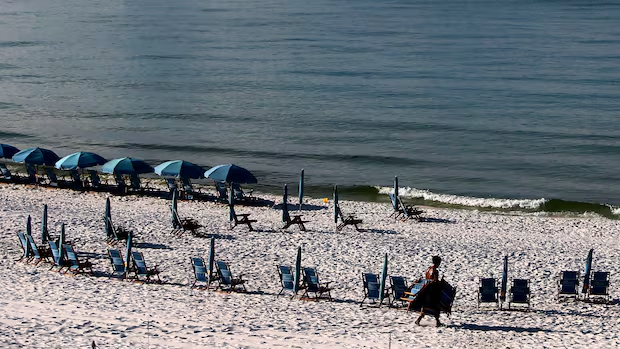
The Regional District of East Kootenay, which includes B.C. communities like Cranbrook and Kimberley, now observes the same time as Fort Walton Beach and Crestview in Florida.
With B.C. not rolling back its clocks on Sunday, unlike much of the rest of Canada and the U.S., some far-flung communities now share the same time zones — though they may have different names.
Officials in the East Kootenays in southeast B.C. voted in August to stick with Alberta time year-round, which is mountain daylight time, or a permanent UTC−6 time standard.
Part of the Florida Panhandle — more than 3,200 kilometres away — observes central standard time during the winter, which is also UTC-6.

A map of the current time zones across Canada and the U.S. during the winter months. Most of Western Canada did not roll back its clocks on Nov. 1, resulting in many time quirks. (Darius Mahdavi/CBC)
British Columbians woke up on Sunday having not changed their clocks for the first time in decades, and most of B.C. will have to get used to being one hour ahead of Washington state to the south and two hours behind Ontario and much of Quebec this winter.
“All of Eastern Canada, for the most part, besides a small portion of Ontario, did turn back their clocks,” said Darius Mahdavi, CBC’s science and climate specialist.
“So maybe you woke up and your phone had the wrong time on it because it did fall back when it shouldn’t have, maybe your phone and your computer disagreed about what time it was.”
Those aren’t the only quirks that will result from B.C.’s decision not to roll back its clocks last weekend.
Alaska communities will have to adjust to being two hours behind B.C., observing a UTC-9 standard during the winter, despite sharing a large land border.

Meanwhile, residents of Point Roberts, Wash. — a U.S. pene-exclave of Washington state at the southern tip of the Tsawwassen Peninsula, completely cut off by land from the rest of the country — will see their time zones shift by an hour when they cross the border to attend school or access services in Blaine, Wash.
Most of B.C. has now moved to daylight time year-round, a permanent UTC-7 time standard called Pacific time (PT).
The decision to stick with daylight time year-round has prompted criticism from scientists, who said sticking with standard time would have been better for population health overall.