
Open this photo in gallery:
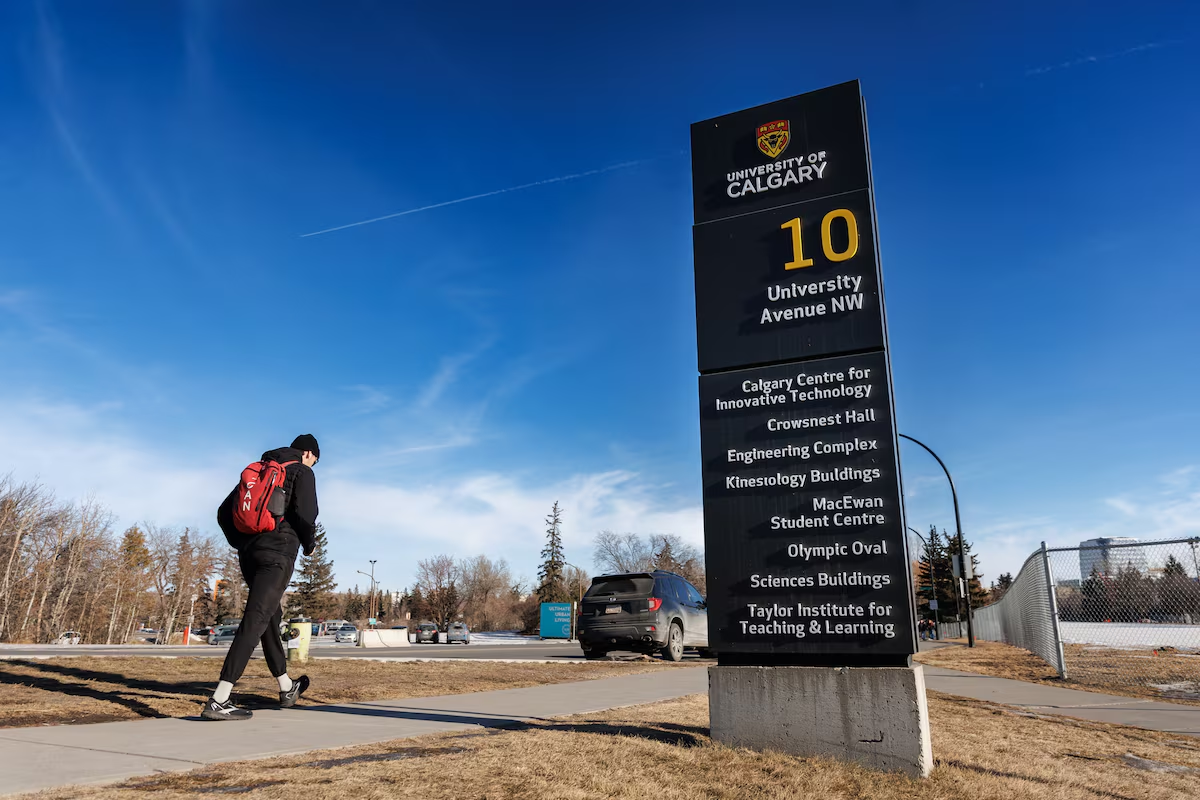
Publicly funded postsecondary schools in Alberta have already adopted a set of principles in favour of institutional neutrality.Amir Salehi/The Globe and Mail
Universities and colleges in Alberta won’t be allowed to take official positions on sensitive ideological and political matters under proposed legislation that would also pave the way for lifting the province’s 2-per-cent cap on average annual domestic tuition increases.
Myles McDougall, the province’s minister of advanced education, tabled a bill Tuesday that would require postsecondary schools to establish “institutional neutrality” policies. These policies would apply to schools themselves, not to individuals expressing their views in class and on campus. The bill would also set minimum standards for student codes of conduct.
“When an institution speaks officially, we expect it to stay neutral on political, social and ideological issues,” Mr. McDougall told a news conference before introducing the bill. “That leaves the debate where it belongs: with students, faculty and staff.”
Mr. McDougall proposed the new legislation, Bill 38, a little more than a year after releasing an expert panel’s report on Alberta’s college and university sector. That report, led by University of Calgary economist Jack Mintz, focused mainly on revamping the funding formula for postsecondary institutions, but also included a recommendation in favour of institutional neutrality and against most diversity, equity and inclusion initiatives.
However, the panel also noted that all publicly funded postsecondary institutions in Alberta had already adopted a set of principles, first espoused at the University of Chicago in 1967, in favour of institutional neutrality.
On the funding question, Mr. McDougall said Tuesday that a new framework would be rolled out in next year’s Alberta budget.
In the meantime, he said domestic tuition increases would be capped at two per cent for the 2027-28 school year while the government develops new maximum tuition rates for specific programs and groups of programs. Colleges and universities would set their own tuition rates beneath those ceilings, he explained.
Alberta Education Minister introduces wide-ranging bill meant to remove ‘ideology’ from classrooms
Mr. McDougall also unveiled a change to Alberta student financial aid rules, separate from Bill 38. Applications for government-financed student loans will no longer take parental income into account, he said.
“Students and families told us that counting parental income in student aid assessments did not always reflect the support parents could actually provide. We listened,” he told the news conference. “For the 2026-27 academic year, we are removing parental income from provincial student aid assessments.”
The minister made no mention of increasing non-repayable grants and scholarships to Alberta postsecondary students, a measure the Mintz report recommended.
When it comes to institutional neutrality, Mr. McDougall said there will likely be consequences for institutions that break the rules.
“What specific penalties have been established? That will be done by regulation, and we will continue to work with the postsecondary stakeholders in determining what would be reasonable,” he said.
The minister, in his news conference, elaborated on what would and wouldn’t violate the proposed new law.
For example, he said the president of a university would be free to share his or her personal opinions but not to have the institution adopt them as official policy. He also said colleges and universities wouldn’t be penalized for speaking in an official capacity about government decisions that affect their operations, such as government funding policies for the sector.
He added that schools could make official statements of sympathy for victims of tragedies.
Asked by a reporter if it would be okay for an institution to say, “prayers for Ukraine or Gaza,” Mr. McDougall replied: “For me, it’s okay. Anywhere people are, in this case, dying, one deserves perspectives of support and prayers. You know, the underlying political reasons for why these types of things happen – that’s not for the institution to weigh in.”
More to come.