The devastating summer floods that hit north Niagara helped propel Canada’s total insured damage from natural disasters over the summer to one of the worst on record, new data shows.
Those back-to-back storms overnight on July 27 and July 28 then again on Aug. 2 each dumped a month’s worth of water in just a few hours, completely overwhelming the municipal sanitary sewer systems in St. Catharines, Lincoln, and parts of Niagara-on-the-Lake and Niagara Falls and leaving thousands of homes flooded.
Three months later, countless Niagara residents whose homes were flooded with sewage-tainted water remain in limbo as they try to get their insurance companies to settle what can be expensive claims, says St. Catharines riding MPP Jennie Stevens.
Many of those flooding victims say they feel overwhelmed, anxious, traumatized, helpless and even suicidal, a new survey of flooding victims has found.
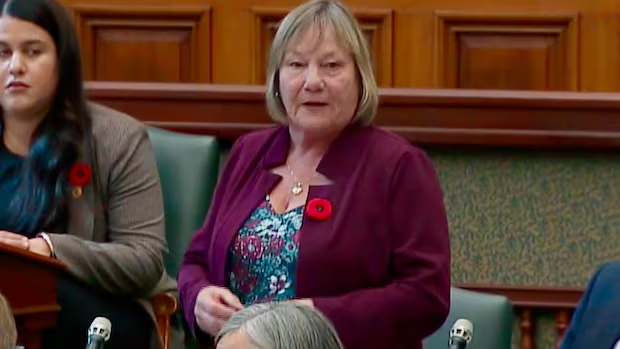
Stevens stood up in the Ontario legislature this week and demanded the province activate a provincial disaster relief program to help Niagara people hammered by flooding, but ran into stiff resistance from Municipal Affairs and Housing Minister Rob Flack who said those flooded households don’t qualify for that aid.
$360 million in flooding damage estimated
Toronto-based Catastrophe Indices and Quantification Inc. estimated the flooding in Niagara caused $360 million, a sizeable chunk of the estimated $3.7 billion in insured losses nation-wide over the summer that included severe storms across the prairies, wildfires in British Columbia and other natural disasters, the Insurance Bureau of Canada said on Oct. 22.
That was the third costliest summer in history for losses related to severe weather, the bureau said.
Earlier in the summer, Stevens wrote to Flack, asking him to consider making Niagara residents and businesses hit by flooding eligible for financial assistance under the Disaster Recovery Assistance for Ontarians (DRAO) program.
That program pays up to $250,000 to people, farmers, small businesses and not-for-profit agencies for emergency expenses, repairs and replacing essential property after natural disasters such as floods, tornadoes, landslides and earthquakes.
A provincial website says the disaster recovery program generally doesn’t cover damage from sewer backups, except for a provision in which low-income households may qualify. But Stevens said in her letter to Flack that an Environment and Climate Change Canada meteorologist confirmed the July storm resulted in flash flooding.
The City of St. Catharines also said in a statement in the summer that the flooding was the result of a storm, not an infrastructure issue.

Ontario Municipal Affairs and Housing Minister Rob Flack speaks at the Ontario legislature on Tuesday after St. Catharines riding MPP Jenny Stevens demanded the province activate the Disaster Recovery Assistance for Ontarians program for Niagara flooding victims. (Legislative Assembly of Ontario)
Flack wasn’t buying that when he responded to Stevens’ demands during question period at Queen’s Park on Tuesday that the province activate DRAO for the Niagara flooding victims. He said people with basements flooded by sewer backups need to go through private insurance.
“Bottom line is, DRAO was not activated because it was not overland water,” he said. “It was sewer backups.”
Stevens said the province has a duty to help Ontarians in times of disaster.
“[But] ninety two days later, still, no relief” in north Niagara, she said.
She noted an online group formed in the wake of the flooding, Northend Neighbours, did a survey of nearly 450 homeowners and found more than 60 per cent of those flooded “are still in limbo” with their insurance claims.
“Seniors and vulnerable families are drowning in repairs bills and fears of losing their homes,” Stevens said.
Stop pointing fingers, Stevens said
“Stop pointing the finger and start taking responsibility. “The residents of St. Catharines cannot afford another day of delay.”
Daya Lye, one of the organizers of the Northend Neighbours online survey, said only 36.6 per cent of respondents — 97 per cent of whom were flooded — have had their insurance claim fully approved.
Of those flooded, 70 per cent described the damage as severe or catastrophic, she said.
The flooding and the uncertainty over repairs has taken a huge psychological toll on residents as shown by their descriptions of their feelings in the survey, said Lye, who experienced minor flooding because she has a backflow valve at her home.
“They said overwhelmed, frustrated, stressed, depressed, PTSD, anxious, trauma, helpless, despair,” she said. “People feel devastated. One person wrote ‘suicidal’.”
“That part was shocking to me how bad it was for people emotionally. It’s definitely a mess.”
Lye said some respondents said their insurance companies leapt into action almost right away, with an insurance adjuster calling within days of the flooding and remediation companies sent out almost immediately after that.
“There’s a huge difference between people’s insurance companies,” she said.
The insurance bureau said claims from natural disasters continue to skyrocket in Canada.
Over the last decade, insured losses from extreme weather in Canada have averaged more than $3.7 billion annually, up from $1.4 billion in the previous decade and $883 million in the decade before that, its data shows. Annual losses have increased by roughly 300 per cent since the late 1990s and early 2000s, even after accounting for inflation, the bureau said.
The insurance bureau called on all levels of government to take immediate steps to reduce Canada’s exposure to extreme weather events through steps such as:
- Using land use planning to restrict development in areas at high risk of floods and wildfires.
- Providing homeowners with incentives to invest in practical, affordable measures to reduce extreme weather damage.
- Investing in resilient infrastructure to protect communities from extreme weather risks such as flooding.