
Open this photo in gallery:
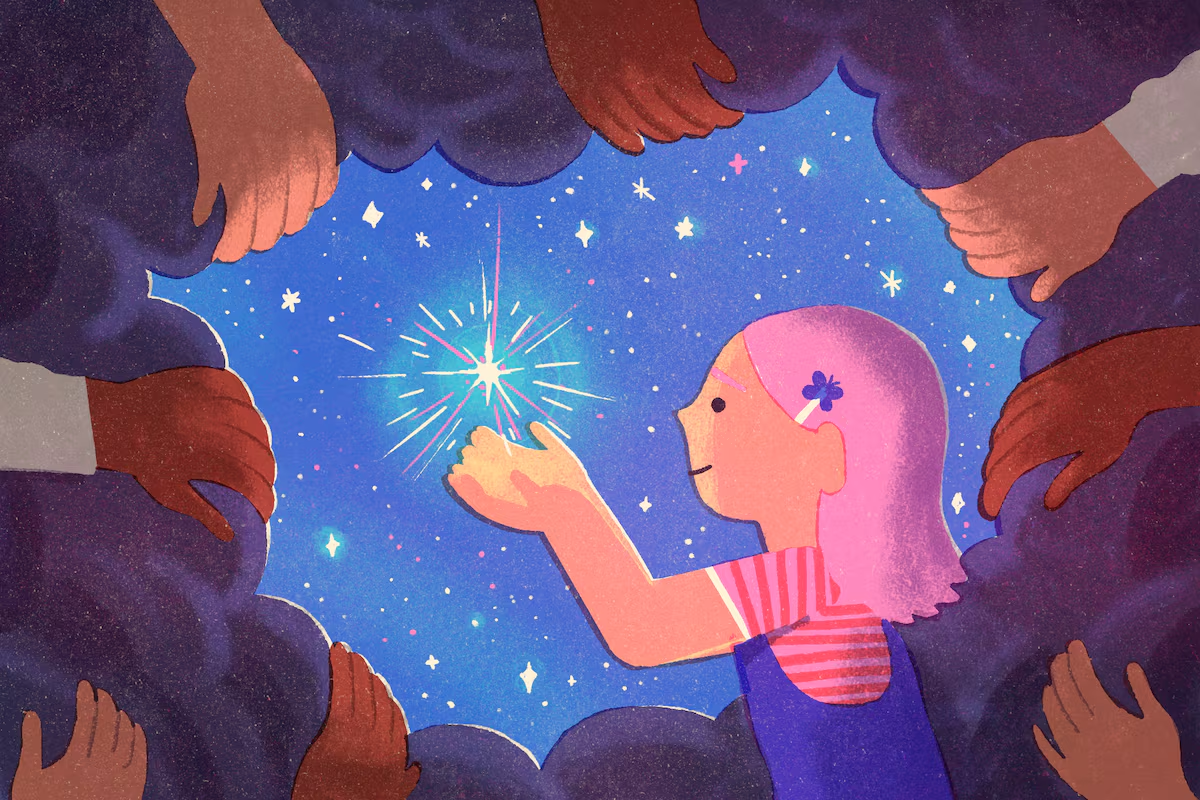
Illustration by Drew Shannon
Thomas R. Verny is a clinical psychiatrist, academic, award-winning author, poet and public speaker. He is the author of eight books, including the global bestseller The Secret Life of the Unborn Child and The Embodied Mind: Understanding the Mysteries of Cellular Memory, Consciousness and Our Bodies.
No one comes through childhood entirely untouched or unscathed. One reason lies in the profound asymmetry of a child’s world.
The adult is big and strong; the child is small and vulnerable. One has power, the other has virtually none. One looks down, the other looks up, literally and metaphorically.
Love and dependence tend to become interwoven with frustration, resentment and envy, sometimes on both sides. We generally regard this imbalance as necessary, benign and caring. And usually, it is.
But what happens when the adults on whom a child depends are absent, overwhelmed, dangerous, or simply unable to provide for the child’s needs?
I was reminded of this recently when I attended the 35th anniversary celebrations of Smile as a Gift (Usmev ako dar), a charitable organization in Bratislava, Slovakia, that works with children in foster care and children’s homes, as well as families threatened by poverty, violence, imprisonment or illness.
Thomas Verny: Is genius a gift, serendipity or something else?
Slovakia also has a Commissioner for Children (Komisar pre deti), charged with defending children’s rights under the UN Convention on the Rights of the Child. The current commissioner, Jozef Miklosko, is a man in his early 50s, with tousled blond hair beginning to turn silver, an infectious laugh, and enough energy and enthusiasm to power a small nuclear plant. He seems to regard his work less as a job than a calling.
He and I spent many hours talking about Slovak “social orphans.” He explained that these are children who have been separated from their parents because of a complicated mixture of neglect, poverty, parental incapacity, illness, imprisonment, abuse, family breakdown, separation from parents, violence, hunger, physical, sexual, and emotional abuse and, more recently, displacement by the war in Ukraine.
They are now under the care of the social-welfare system. Only a small proportion are orphans in the traditional sense of having lost both parents. Most live with relatives or foster families rather than in institutions.
Each child has a different history and reacts differently to harsh conditions. But they are all affected by them. At this very moment, hundreds of millions of children around the world are exposed to adversity. [1, 2, 3]
Many children and youth from disadvantaged communities do not eat, sleep, live, work or go to school in safe, stable places. Growing up under such stressful conditions undermines health, development and learning. [4, 5, 6]
Thomas Verny: AI friends and lovers: promise and peril
It was less than three decades ago that researchers introduced the concept of Adverse Childhood Experiences, or ACEs, as a way of measuring the cumulative effects of childhood adversity. [7–9] What have we learned since then about their long-term consequences?
I don’t think you need a PhD or Dr. Google to figure out that hunger or ill-treatment will have a negative impact on the physical and mental health of any person, especially a young vulnerable child. Many studies have quantified such effects for individual ACEs. They appear to extend across the lifespan, increasing the likelihood of unhealthy behaviours, mental illness and a range of chronic physical diseases. And the risks tend to rise as adverse experiences accumulate. [10, 11, 12, 13]
A particularly thorough review was conducted by Professor Karen Hughes of Bangor University in the U.K. She and her colleagues reviewed 37 studies involving more than a quarter of a million people. What they found was that the more adversity people experienced in childhood, the greater their likelihood of encountering a remarkable range of difficulties later in life.
The links were relatively weak for obesity, physical inactivity, and diabetes; stronger for smoking, heavy drinking, cancer, heart disease and respiratory illness; and stronger still for mental health problems and risky sexual behaviour. But the most disturbing associations were with drug misuse, violence toward others and violence directed against oneself. [14]
Surprisingly, the commonly held belief that children who suffer physical abuse are at increased risk of becoming abusive parents themselves and children who have been sexually abused become adult sexual offenders is refuted by many academic studies. [15, 16, 17] Most abused children do not grow up to abuse others. That’s the good news.
Thomas Verny: The gift of care for people with Alzheimer’s disease
The bad news is that drawing on very large population samples from Europe and North America, Professor Mark Bellis, a leading British public health researcher and expert on adverse childhood experiences, asked how much illness across entire populations might be associated with childhood adversity. He and his colleagues examined common ACEs such as physical, sexual and emotional abuse, domestic violence, parental separation, and living with household members affected by substance abuse, mental illness or criminality. [18]
What they found was that childhood adversity was common. In Europe, about 24 per cent of people had experienced one ACE, and 19 per cent had experienced two or more. In North America, about 23 per cent had experienced one ACE and a striking 35 per cent had experienced two or more, supporting the Hughes results.
Perhaps the most surprising finding was the sheer scale of the estimated financial burden. The researchers calculated that health problems associated with ACEs cost approximately $748-billion annually in North America and $581-billion in Europe. That is an incredible $1.3-trillion a year combined (all in U.S. dollars). More than three-quarters of those costs were associated with people who had experienced two or more ACEs.
Scientific research focused for a long time on the risks associated with adversity. The prevailing “deficit model” described children from high-stress backgrounds as being at risk for impairments in learning and behaviour.
The intervention goal was to prevent, reduce or repair the damage. Bruce J. Ellis and colleagues wrote in 2017 that missing from this deficit approach is an attempt to leverage the unique strengths and abilities that develop in response to high-stress environments. These were originally called “hidden talents” but are now referred to as “stress-adapted skills,” partly because “hidden talents” can sound as though adversity is somehow beneficial. [19]
Recent studies show that damage and adaptation can occur simultaneously. [20, 21] How do some individuals manage to flourish despite painful experiences that leave others struggling? I think the following brief biographies of three personalities throw some light on the subject that academic studies fail to do.
Thomas Verny: Building resilience against Alzheimer’s disease
As you probably know, this year’s Nobel Peace Prize was awarded to 85-year-old South African jurist Navi Pillay. Born in 1941 in Clairwood, a poor Indian neighbourhood of Durban, Ms. Pillay was the fifth of eight children. Her grandparents had come to South Africa as indentured labourers. Her father drove a bus, supplementing his meagre wages by fishing. The family could afford neither newspapers nor a radio, and books were in short supply.
At 10, she boldly announced in class that she wanted to become a lawyer. Her teacher dampened her enthusiasm by pointing out that university tuition was expensive and her father could never afford to pay for it.
Ms. Pillay excelled at school, winning prizes for essays, including one examining racial discrimination in sentencing. This came to the attention of the local Indian community. Recognizing her abilities, members collectively helped finance her university education. At the University of Natal, she spent hours in the library. There she discovered the transcripts of the Nuremberg trials, which profoundly influenced her understanding of international justice.
She graduated in law in 1965. Subsequently, she served on international criminal tribunals and became United Nations High Commissioner for Human Rights.
We are all familiar with Charles Dickens. But most of us don’t know that his father was imprisoned for debt, and at 12 Dickens was sent to work in a shoe-blacking factory. The humiliation and insecurity of that experience haunted him and informed much of his writing. He made the suffering of impoverished children one of the great moral themes of his writing.
Abraham Lincoln is my last example. His childhood was marked by poverty, like the other two individuals mentioned, exhausting physical labour and limited schooling. When Lincoln was nine, his mother died. His father remarried a widow with three children.
Lucky for young Abe, his stepmother was not the folkloric evil stepmother but a significant positive influence. She encouraged his love of books, treated him affectionately, and maintained a close relationship with him for the rest of her life.
Thomas Verny: Decoding Alzheimer’s disease
Although their childhoods differed considerably, Navi Pillay, Charles Dickens, and Abraham Lincoln appear to share several characteristics.
All three were intellectually curious despite environments that offered limited educational opportunities. They thirsted for knowledge, shared an awareness of the limitations of their present lives and would not accept them as permanent. They searched tirelessly for ways to escape them. They found people who encouraged them and helped them along the way to better themselves. Their childhood experiences shaped what they came to notice, care about, and fight for. And they developed verbal skills to adroitly combat injustice.
In some instances, having been powerless may make a person particularly aware of the powerlessness of others. Having been unfairly treated may motivate some individuals to a lifelong commitment to fair play and justice.
While there is no denying that adversity, especially early adversity, has a corrosive impact on a child, it is equally true that some people, like the three mentioned here and, of course, thousands of others who have the good luck of inheriting sterling genes, a pleasant temperament, persistence, ambition, intellectual curiosity, and who received encouragement from others, can overcome and grow from it.
What seems to be required is a kind of psychological alchemy: transforming one’s misfortunes to a reason to achieve something worthwhile with one’s life. And, of course, to repay society for saving them from living a blighted life.
The scientific study of ACEs shows us how experience becomes implanted in our biology and psyche and has such a long reach. In other words, how childhood becomes embodied. Even so, with the love and care of reliable adults, abused children do recover from their dark childhoods. Of course, because human nature is so complex, it is impossible to predict to what degree each child will recover. The important thing is that there are individuals and organizations that provide this type of help.
Thomas Verny: The inner world of cats and dogs
At the Smile as a Gift organization, I spoke to the professionals there and observed them interacting with the social orphans. They know that they cannot erase the past, that recovery from adversity is not about forgetting or papering over the hurts and wounds, and that childhood adversity leaves scars that never entirely heal.
But maintaining a safe place where truly dedicated and caring people provide many opportunities for reparenting, developing trust, good communication, education, counselling and a variety of workshops that help the children gain self-confidence and grow into the healthy adults they were meant to be. Individual resilience is not enough. Children need people and institutions that give them opportunities to recover.
Let us remember that adversity is not a witch’s curse, as in Sleeping Beauty, it is not destiny. It is also not necessarily ennobling. It is not one or the other.
The human mind is very complex. Someone may be highly successful professionally while battling constantly with their families. Another person may have significant psychological difficulties such as anxiety or depression yet possess remarkable generosity and compassion. You may ask yourself: Do I carry any scars from my childhood? And if so, how have they affected me?
In many cases adversity predates birth. I shall address that subject in my next column.
Notes
- Kalmakis, K. A., & Chandler, G. E. (2014). Adverse childhood experiences: Towards a clear conceptual meaning. Journal of Advanced Nursing, 70(7), 1489–1501.
- Mulvihill D. (2005). The health impact of childhood trauma: An interdisciplinary review, 1997–2003. Issues in Comprehensive Pediatric Nursing, 28, 115–136.
- Kim, B., & Royle, M. (2025). Annual research review: Mapping the multifaceted approaches and impacts of adverse childhood experiences—An umbrella review of meta-analyses. Journal of Child Psychology and Psychiatry, 66(4), 399–416.
- Shonkoff J. P., Fisher P. A. (2013). Rethinking evidence-based practice and two-generation programs to create the future of early childhood policy. Development and Psychopathology, 25, 1635–1653.
- Meyerson D. A., Grant K. E., Carter J. S., Kilmer R. P. (2011). Posttraumatic growth among children and adolescents: A systematic review. Clinical Psychology Review, 31, 949–964.
- Pravosudov V. V., Clayton N. S. (2001). Effects of demanding foraging conditions on cache retrieval accuracy in food-caching mountain chickadees (Poecile gambeli). Proceedings of the Royal Society B: Biological Sciences, 268, 363–368.
- Felitti, V. J., Anda, R. F., Spitz, A. M., Edwards, V., & Marks, J. S. (1998). Relationship of childhood abuse and household dysfunction to many of the leading causes of death in adults: The Adverse Childhood Experiences (ACE) Study. American journal of preventive medicine, 14(4), 245-258.
- Senaratne, D. N. S., Thakkar, B., Smith, B. H., et al. (2024). The impact of adverse childhood experiences on multimorbidity: A systematic review and meta-analysis. BMC Medicine, 22, 315.
- Rieder C., Cicchetti D. (1989). Organizational perspective on cognitive control functioning and cognitive-affective balance in maltreated children. Developmental Psychology, 25, 382–393.
- Abate, B. B., Sendekie, A. K., Merchaw, A., et al. (2025). Adverse childhood experiences are associated with mental health problems later in life: An umbrella review of systematic review and meta-analysis. Neuropsychobiology, 84(1), 48–64.
- Antoniou, G., Lambourg, E., Steele, J. D., & Colvin, L. A. (2023). The effect of adverse childhood experiences on chronic pain and major depression in adulthood: A systematic review and meta-analysis. British Journal of Anaesthesia, 130(6), 729–746.
- Campbell JA, Walker RJ, Egede LE. (2016). Associations between adverse childhood experiences, high-risk behaviors, and morbidity in adulthood. Am J Prev Med. 50(3):344-352
- Grummitt, L. R., Kreski, N. T., Keyes, K. M., & McLaughlin, K. A. (2021). Association of childhood adversity with morbidity and mortality in US adults: A systematic review. JAMA Pediatrics, 175(12), 1269–1278.
- Hughes, K., Bellis, M. A., Mikton, C., … & Dunne, M. P. (2017). The effect of multiple adverse childhood experiences on health: a systematic review and meta-analysis. The Lancet public health, 2(8), e356-e366.
- Jespersen, A. F., Lalumière, M. L., & Seto, M. C. (2009). Sexual abuse history among adult sex offenders and non-sex offenders: A meta-analysis. Child Abuse & Neglect, 33(3), 179–192.
- Assink, M., Spruit, A., Schuts, M., Lindauer, R., van der Put, C. E., & Stams, G. J. J. M. (2018). The intergenerational transmission of child maltreatment: A three-level meta-analysis. Child Abuse & Neglect, 84, 131–145
- Madigan, S., Cyr, C., Poole, J. C., & Alink, L. R. A. (2019). Testing the cycle of maltreatment hypothesis: Meta-analytic evidence of the intergenerational transmission of child maltreatment. Development and Psychopathology, 31(1), 23–51.
- Bellis, M. A., Hughes, K., Ford, K., Ramos Rodriguez, G., Sethi, D., & Passmore, J. (2019). Life course health consequences and associated annual costs of adverse childhood experiences across Europe and North America: A systematic review and meta-analysis. The Lancet Public Health, 4(10), e517–e528.
- Ellis, B. J., Abrams, L. S., Tottenham, N., & Frankenhuis, W. E. (2022). Hidden talents in harsh environments. Development and Psychopathology, 34(1), 95–113.
- Porter, L., & Handley, E. (2025). A systematic review of stress-adapted skills and hidden talents in individuals who faced early adversity. Development and Psychopathology, 1–16
- Frankenhuis, W. E., de Vries, S. A., Bianchi, J., & Ellis, B. J. (2020). Hidden talents in harsh conditions? A preregistered study of memory and reasoning about social dominance. Developmental Science, 23(4), e12835.