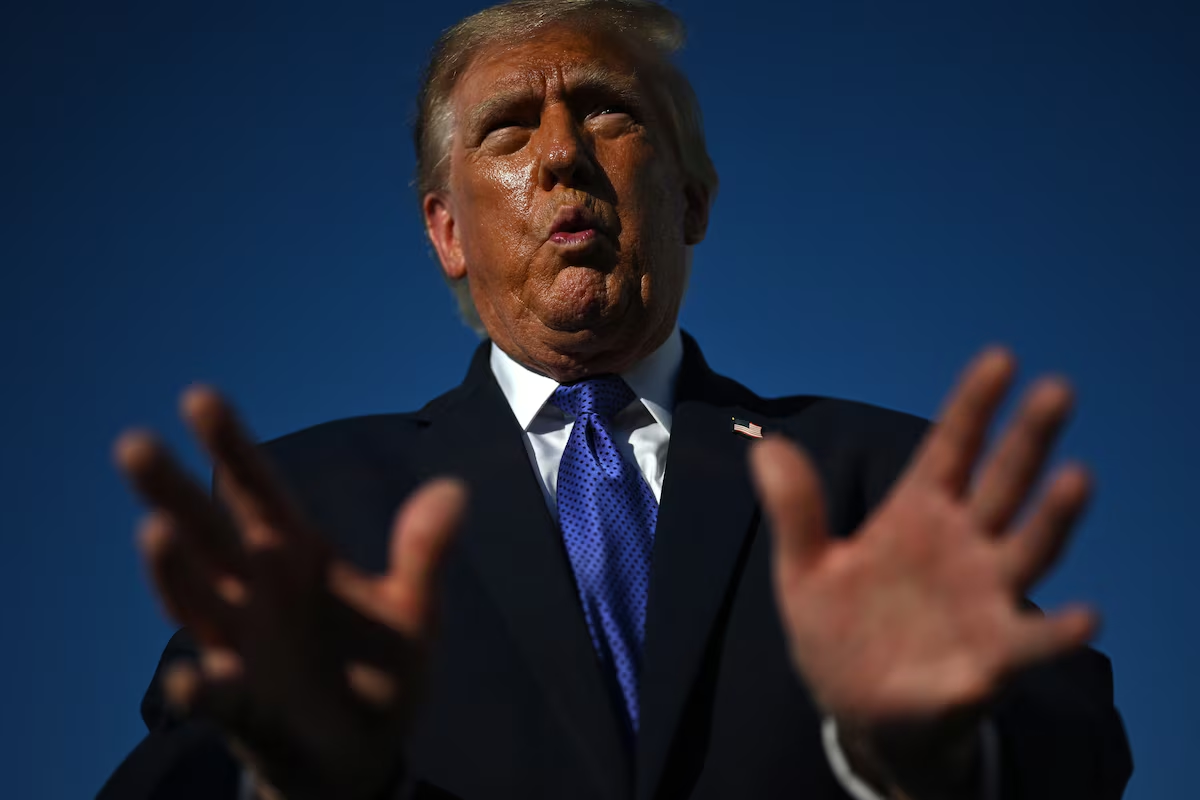

Open this photo in gallery:
U.S. President Donald Trump speaks to reporters after exiting Air Force One at Joint Base Andrews, Md., on Thursday.KENT NISHIMURA/AFP/Getty Images
Gus Carlson is a U.S.-based columnist for The Globe and Mail.
During the 1992 U.S. presidential election, Bill Clinton’s senior strategist James Carville famously exhorted his campaign staff to remember that it’s the economy, stupid, when it came to the hottest of the hot-button issues for voters.
Mr. Clinton heeded the advice. His opponent, George H. W. Bush, campaigned on foreign policy. The rest, as they say, is history.
Now, more than 30 years later, Mr. Carville’s blunt phrase is as relevant as ever – maybe more so.
As the U.S. braces for what promises to be rough-and-tumble midterm elections next week that may rebalance Congress, the economy is once again the headline. And it’s not good news.
Consumers are so frustrated that they may want to rewrite the legendary Clinton-era comment to say: It’s the stupid economy.
Trump and Obama make closing stretch appeals in pivotal states ahead of next week’s midterm elections
The U.S. Bureau of Labor Statistics announced two weeks ago that inflation rose faster and more broadly than expected. For more than seven months, consumers have been feeling the pinch particularly at the gas pumps, as the war in Iran has driven up prices by more than 30 per cent to an average of more than US$4 a gallon.
American voters are laying the blame squarely on President Donald Trump, and by extension, his Republican colleagues, many of whom are up for re-election next Tuesday. A New York Times/Siena poll released this week showed 75 per cent of voters say the economy is fair or poor and most hold Mr. Trump accountable.
So much for the conventional wisdom that suggests voters have short memories. Even staunch supporters of the President are reminded of the painful gap between the current conditions and his 2024 campaign promises of US$2-a-gallon gas and non-existent inflation.
To be sure, there’s a curious reality that tells a less dire story for Mr. Trump, at least statistically. Despite the recent rise in the rate, inflation under Mr. Trump is actually about half what it was under his predecessor, Joe Biden, who presided over the COVID-19 aftermath. The stubbornly high inflation under Mr. Biden was a significant campaign issue in 2024, and something that is no longer the case in Mr. Trump’s second term. In the last quarter, the U.S. economy grew at an annualized rate of 3.4 per cent, the fastest in a year.
Lawrence Martin: Hold off on the cheering: A Trump drubbing in the midterms could make things worse
So why is Mr. Trump’s approval rating on the economy so dismal? The two main reasons: War and tariffs.
The Times/Siena poll found that 73 per cent of likely voters disapprove of Mr. Trump’s handling of gas prices. Diesel fuel has been a particular source of pain, especially for working-class Americans such as truckers, farmers and tradespeople who have traditionally supported Mr. Trump.
Despite taking steps to reduce the price of diesel, including cutting a deal with Russia for an infusion of fuel and directing US$150-billion to increase domestic refining capacity, Mr. Trump has been unable to move the needle in his favour on the issue.
Tariffs have hurt, and are unpopular with a majority of Americans. Prices of everyday imported goods such as clothing, coffee, toys and the like have risen under Mr. Trump – under Mr. Biden, they fell.
The negative view of the Trump administration’s handling of the economy, regardless of what the inflation statistics say, is one reason polls suggest the midterms will almost certainly reshape the balance of power in the U.S. Congress.
What impact could the midterms have on Trump’s second term? We answered your questions
Republicans, already under pressure for the impact of a war that has been drawn out longer than anticipated, face fights in many battleground districts, including in places like Texas and Kansas that have been red for as long as people can remember.
High-profile issues among some Republican supporters, such as the investigation into Minnesota congresswoman Ilhan Omar’s immigration status, the federal indictment last week of Virginia State Senator Louise Lucas on charges of criminal marijuana distribution and racketeering and the Alaska election-tampering controversy, are juicy political theatre. But they are unlikely to sway voters who are focused on making ends meet for their households.
And even though the stock market has reached record highs in recent months – and Mr. Trump has pointed to its performance as a measure of his policy acumen – only about half of Americans hold stock, most in retirement accounts. So, any gains they may make in their portfolios are good for the future, but they won’t put food on the table now.
As Americans go to the polls, the question many are asking is whether a Democrat-controlled Congress will make a difference on the economy. The answer: Unless there is a quick end to the war and an easing of tariffs, probably not.