
Good morning, my name’s Salmaan Farooqui, and I cover the housing and mortgage market for The Globe. Today, we’ll take a closer look at the Bank of Canada’s decision to hike rates yesterday. It’s the first rate change in nearly a year, and it won’t do any favours for Canada’s stagnant housing market. But first:
Up first
In the news
Taxes: Ontario will match Ottawa’s proposed “mega” tax deduction for businesses, a move expected to cost the province $8-billion over five years while encouraging new investment.
Banking: BMO and TD have joined RBC in blocking third-party AI agents from accessing their digital platforms amid concerns over customer data security.
Airlines: Air Canada’s proposed expansion of its partnership with United Airlines on 10 cross-border routes could lead to higher fares for travellers, the Competition Bureau warns.
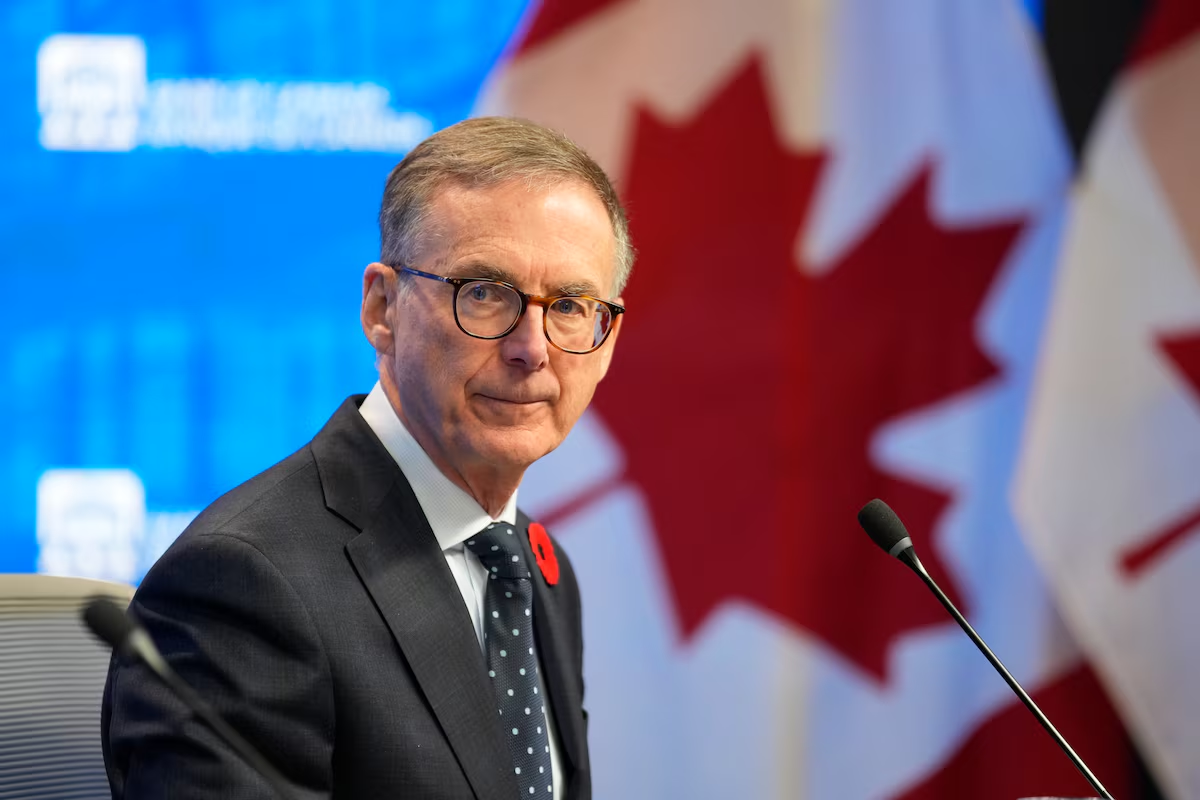
Open this photo in gallery:
Bank of Canada Governor Tiff Macklem during a news conference in Ottawa on Wednesday.Adrian Wyld/The Canadian Press
In focus
Higher rates, tougher housing market
A little less than a year ago, I spoke to economists to get a sense of what 2026 would look like for interest rates and the housing market. The answer was simple: It was going to be boring. And for the most part, it was.
Rates were kept at 2.25 per cent for much of the year, even during unexpected headwinds such as the oil-price shock from the Iran war and the collapse of Canada’s trade talks with the United States. All the while, the housing market remained stagnant nationally.
The Bank of Canada’s decision this week to raise rates to 2.5 per cent marks an end to that boring era, at a time when homeowners looking for the cheapest rates may be more exposed to the bank’s rate decisions.
Robert Kavcic, senior economist at BMO Capital Markets, says more consumers have been signing variable-rate mortgages in recent months because they’re significantly cheaper than fixed rates.
As a result, this week’s rate hike could immediately make a home purchase more expensive for buyers.
It’s a change from the last couple years, when fixed rates were priced cheaper than variable rates. Fixed rates are based on bond yields rather than the central bank’s policy, so there were other factors affecting the cheapest rates in the past.
Mr. Kavcic said further hikes could deepen the housing downturn in specific weak segments, such as condo markets in the Vancouver and Toronto areas. In the rest of the country, it’ll keep the market flat.
“This probably puts a lid on any type of rebound that may or may not have been building below the surface,” he said.
Meanwhile, there is an unusually high level of disagreement over where rates will go next, or whether the bank should’ve even increased rates this week.
“The reason the market almost fully priced in this move is because last week the Bank of Canada effectively told us they were going to raise rates,” Mr. Kavcic said.
Apart from that communication, he added, if you were to look at the data flow, the recent Consumer Price Index report and the business outlook survey, “there’s nothing that really screamed the bank needed to raise rates right now.”
Instead, the central bank hiked rates because it is worried that high oil prices will translate into inflation in other parts of the economy, Mr. Kavcic said, even though that hasn’t necessarily happened yet.
He said that perhaps the bank is taking a more proactive approach after 2022, when it reacted too late to an overstimulated economy and high oil prices.
There are a wide range of guesses as to what might happen with rates from here. On one end of the spectrum, Royce Mendes, managing director and head of macro strategy at Desjardins, expects only one rate hike in 2027 and none for the rest of 2026.
Meanwhile, bond swaps markets, which capture investor expectations around interest rates, have priced in another three rate hikes in the coming year.
Charted
Weight loss boom
Canadian sales of GLP-1 drugs have surged from $350.4-million in 2020 to $3.9-billion in 2025 and are on track to reach $4.8-billion this year. The booming market has created a major opportunity for Canadian drugmaker Apotex, which is launching a generic version of semaglutide, the active ingredient in Ozempic and Wegovy.
Quoted
I do not believe that what Minister Joly is doing – when she openly solicits buyers for a company the government does not own – is a good course of action.
— Cleveland-Cliffs chief executive Lourenco Goncalves
The U.S. company’s CEO criticized Industry Minister Mélanie Joly for suggesting there are potential buyers for Stelco, insisting the steelmaker is not for sale. The dispute comes amid layoffs at Stelco’s Ontario plants and growing pressure from Ottawa over the company’s employment commitments.
Up next
More files we’re following
Before the bell: In Canada, earnings are due from Restaurant Brands International, Teck Resources and Spin Master. On Wall Street, Amazon, Eli Lilly, Mastercard, Intel, Merck, Caterpillar, Shell and Starbucks are also scheduled to report.
By the numbers: U.S. third-quarter GDP figures and the Federal Reserve’s preferred inflation gauge are due at 8:30 a.m. ET. Statistics Canada will also release August payroll employment figures, while the European Central Bank is set to announce its latest interest-rate decision at 8:15 a.m. ET.
Morning update
Global markets were mixed as AI-related earnings announcements from Alphabet and Microsoft prompted wildly different responses, raising the stakes for Amazon and Intel results due later in the day.
Wall Street futures diverged, with the tech-heavy Nasdaq pointing lower, while TSX futures were in positive territory.
Overseas, the pan-European STOXX 600 was up 0.59 per cent in morning trading. Britain’s FTSE 100 rose 0.44 per cent, Germany’s DAX advanced 1.13 per cent and France’s CAC 40 gained 1.11 per cent.
In Asia, Japan’s Nikkei closed 1.1 per cent higher, while Hong Kong’s Hang Seng declined 0.59 per cent.
The Canadian dollar traded at 71.45 U.S. cents.