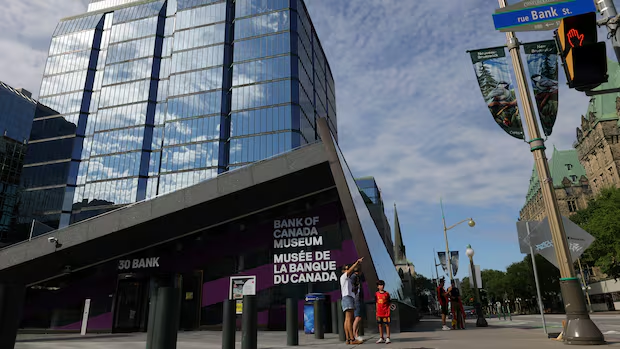
A look at recent rate decisions
Ahead of today’s decision, let’s take a look at how we arrived here.
At its last meeting in early September, the Bank of Canada held its rate at 2.25 per cent. That move was widely predicted by economists in advance, so it came as little surprise.
It also marked the bank’s seventh hold in a row, keeping the trend-setting interest rate at 2.25 per cent.
The bank has stayed there in part because of the tariff environment — Macklem cited “unpredictable” U.S. trade policy as a source of uncertainty in his January decision.
But the threat posed by rising oil prices has crept up since the U.S. and Israel struck Iran in late February. Pricier oil has led to inflation, and combatting inflation usually requires rate hikes.
At first, Macklem said the central bank was monitoring the situation in the Middle East but “looking through” the increased cost of energy in April, and said in June and July there was little evidence of high oil prices spilling over into higher prices for other things, like food.
Inflation is now at 3.1 per cent. That’s almost entirely because of sky-high energy prices which inflation data showed still aren’t flowing over into the rest of the economy yet. But the longer energy prices remain high, the bigger that risk becomes as Macklem has warned at past meetings — and economists say the bank might not want to wait around too long to see how bad things get before taking action.
And at a meeting in Thailand, Macklem made comments about oil inflation driving up prices at home. A number of economists changed their predictions in the days after those comments, and many now predict a rate hike today.