
Open this photo in gallery:
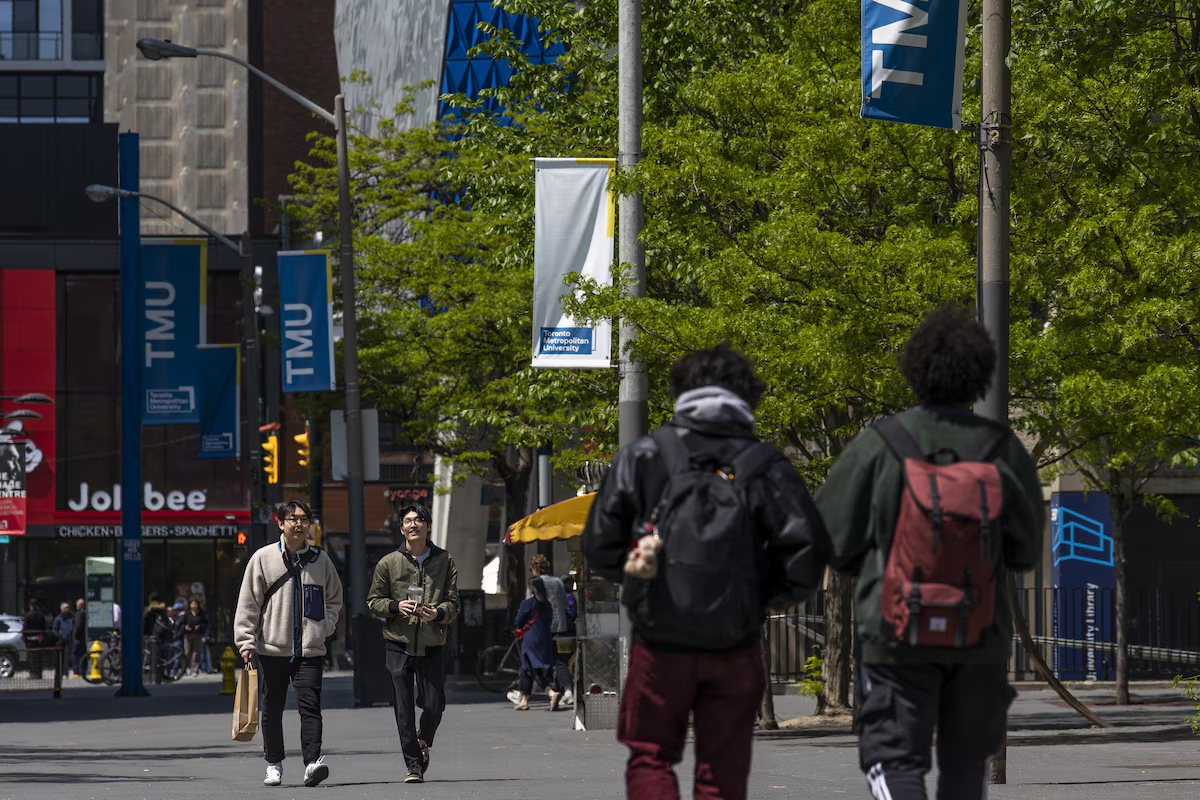
Over the past three decades, the share of undergraduate degrees in health sciences, engineering, business, computer science and related fields jumped to more than 60 per cent from 42 per cent.Tuan Minh Nguyen/The Globe and Mail
Recent university graduates are still struggling in Canada’s unforgiving job market, with post-pandemic unemployment rates among young bachelor’s degree holders sitting at levels not seen since the early 1990s.
These struggles aren’t because young people are making irresponsible career choices; in fact, our graduates’ pragmatic mindset may be making the situation worse.
The youth employment numbers are sobering. Despite a rising population and the continuing retirement of the baby boomers, the number of job vacancies requiring a bachelor’s degree has fallen by 6 per cent in the last year, with 4.9 unemployed people for every job requiring a university degree. It is also taking young people longer to find a job, as the time they stay unemployed has nearly doubled since 2023.
One common misconception is that young people are choosing majors with little practical value. Florida Governor Ron DeSantis has spoken about young people taking degrees in “zombie studies,” while Ontario Premier Doug Ford told students worried about Ontario Student Assistance Program (OSAP) cuts that they’re “picking basket-weaving courses and there’s not too many baskets being sold out there.”
These criticisms aren’t just aimed at politicians; they’re aimed at them for creating systems that set young people up to fail. Mike Rowe, host of the TV series Dirty Jobs, is one such critic, lamenting that “we are lending money we don’t have to kids who can’t pay it back to train them for jobs that no longer exist.”
The data, however, tells a different story: today’s young adults are taking a more pragmatic, career-oriented approach to education than previous generations.
Boomers and Generation X were far more likely than today’s grads to choose majors that politicians and TV hosts would dismiss as frivolous. In the early 1990s, when the latter half of Generation X started university, 13 per cent of bachelor’s degrees in Canada were awarded in the humanities. By 2024, that share had fallen to just 5 per cent.
Over the past 30 years, the share of undergraduate degrees granted in health sciences, engineering, business, computer science and related fields jumped to more than 60 per cent from 42 per cent, with no sign of slowing.
Often, the argument is not that young people lack pragmatism because they choose the wrong major while in university, but that they are being impractical by going to university at all, with Mike Rowe passionately arguing that young people would be better served by learning a trade.
Amid high youth unemployment, loss of early-career opportunities has lasting impact
However, given alarmingly low apprenticeship completion rates, young people may pragmatically choose programs where they have a higher chance of success.
The brutal reality is that our kids know they are entering a world where they cannot afford to make mistakes or explore their interests. Choosing the wrong major might lead to years of unemployment or underemployment, and not earning enough right away can put homeownership forever out of reach in much of the country.
This pragmatism starts early, as a high-school grade average of 96 is no longer a guaranteed entry into some university programs. No university in Ontario today would take a chance on someone with a high-school transcript as poor as mine was 30 years ago.
Once in university, students choose courses and majors to maximize their chances of getting a well-paying job upon graduation, which is typically interpreted as choosing a “practical” major and selecting courses based on the likelihood of earning a high grade. This safe approach prevents young people from taking risks and exploring their interests.
The undergraduate courses that have benefited me most in my career were challenging advanced philosophy courses, where I had little prior knowledge and often received relatively low grades because of it.
Students struggle to land career-boosting summer jobs after opportunities ‘fell off a cliff’
Like many virtues, pragmatism taken to excess becomes a vice. Rewarding students for taking subjects they already understand, and courses where they are likely to earn high grades, is like going to the gym and training muscles that are already strong, at weights that minimize the chance of failure.
It is not the condition for growth.
Perhaps the worst part is that youth have been misinformed about which fields are safe options. Well-meaning parents and guidance counsellors have steered a growing share of students into just a handful of majors, such as business consulting and computer science, even after former president Barack Obama said everyone should learn to code. Ironically, these are now two of the most at-risk fields owing to the rise of AI.
We have done our young people a disservice by insisting they make safe, pragmatic educational choices. Pundits and educators have a terrible track record of predicting which careers will be most in demand, and steering students into a handful of occupation-focused majors increases risk if one of those occupations suddenly declines in demand.
Instead, young people should be encouraged to explore a wealth of their options and take risks, including the occasional course in zombie studies.
Mike Moffatt is the founding director of the Missing Middle Initiative and co-host of the Missing Middle podcast.