
Listen to this article
Estimated 2 minutes
The audio version of this article is generated by AI-based technology. Mispronunciations can occur. We are working with our partners to continually review and improve the results.
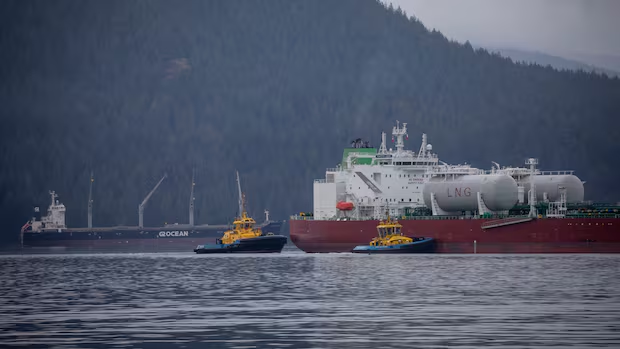
Conservative Leader Pierre Poilievre has asked Prime Minister Mark Carney to repeal the oil tanker ban on British Columbia’s northern coast months after Canada inked a deal not to change it.
Poilievre was one of several Opposition MPs who signed a letter to Carney as a federal Tory bill to scrap the tanker ban goes for second reading this week.
The group says the tanker ban “effectively donates” billions of dollars to the United States by forcing Canada to sell discounted oil profiting American refineries.
The MPs point to a proposal by Calgary-based Strathcona Resources to ship up to 250,000 barrels of Canadian oil a day on existing railroad tracks through Prince Rupert, B.C., and across the Pacific Ocean.
For the proposal to be considered, the tanker ban would have to be lifted, and the letter says the federal government is the only thing standing in the way.
WATCH | Carney says tanker ban will stay in place:
B.C. North Coast tanker ban will stay in place: Carney
Carney and then-B.C. Premier David Eby signed an agreement in July that included a promise by Ottawa to maintain the North Coast tanker ban “without alteration, suspension, or narrowing of scope.”
The letter says the Opposition would also be willing to discuss amendments to the ban that would allow the Prince Rupert project to move forward.
Eby’s New Democrats lost the B.C. election on Saturday, as Lorne Doerkson’s provincial Conservatives swept to power with about two-thirds of the 93 seats in the provincial legislature.
WATCH | B.C.’s incoming premier lays out key priorities:
Doerkson vows to boost B.C. economy as next premier
After Carney signed the deal with B.C., Alberta formally submitted a pipeline proposal to the major projects office — but with a southern route.
The plan would largely follow the path of the existing Trans Mountain pipeline from Bruderheim, Alta., to an export terminal in Delta, B.C.
The letter says lifting the ban would give Alberta and British Columbia “an opportunity to build prosperity together.”