
Open this photo in gallery:
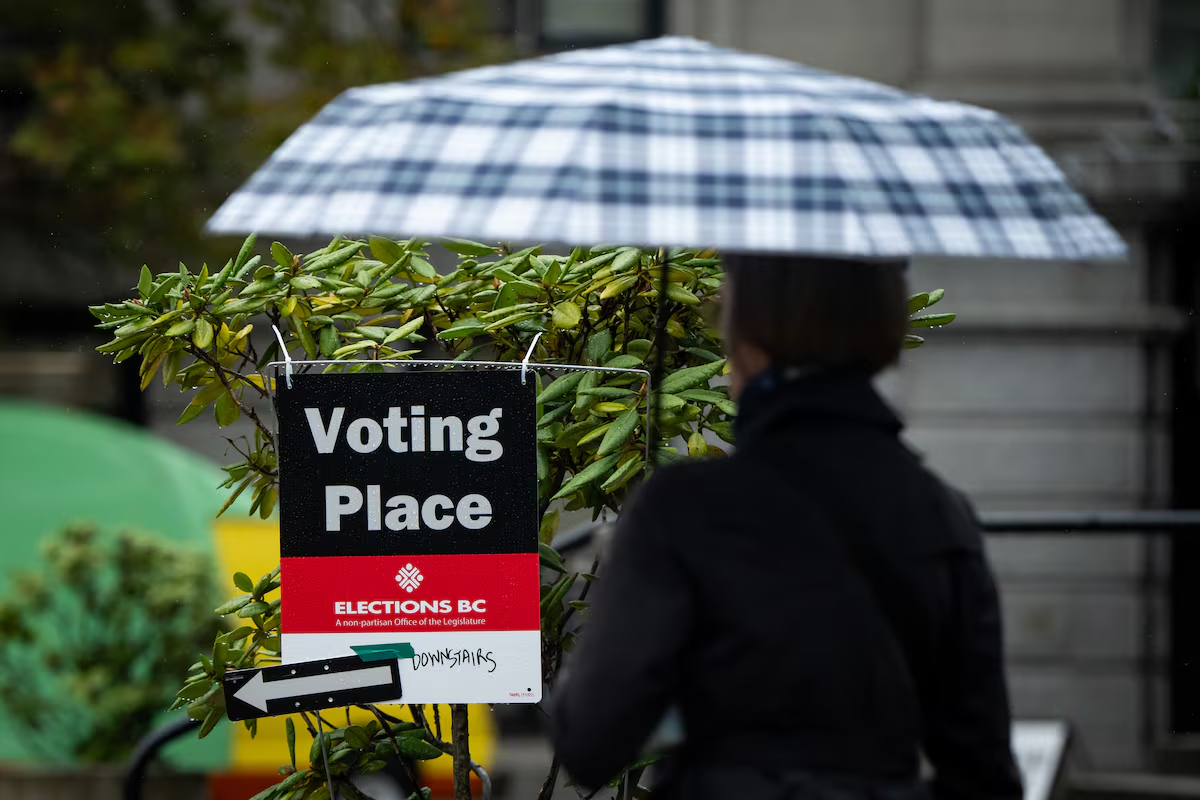
A woman walks past a polling station in Vancouver on Saturday. Polls in the province closed at 8 p.m. local time.ETHAN CAIRNS/The Canadian Press
The polls are closed in British Columbia and the tallying begins to determine whether the gamble by NDP Leader David Eby to call a snap election has paid off or whether the Conservatives will form government for the first time in the province in nearly a century.
Mr. Eby’s surprise election call last month came two years ahead of schedule, with the NDP Leader saying that a strong mandate was needed to fix a legislature that “wasn’t working.” A one-seat majority had left his government mired in procedural wrangling, he said, and forced some of his MLAs to vote from hospital beds while dying of cancer or hours after giving birth.
The “existential threat” posed by U.S. President Donald Trump’s trade war made a strong mandate even more important, he said.
“The government’s focus was on just doing whatever we could to make sure the government didn’t fall, because the Conservatives voted 13 times to collapse the government, including just three weeks after the election,” Mr. Eby said on the campaign trail Oct. 16.
David Eby’s surprise B.C. election culminates in narrow race between NDP, Conservatives
Mr. Eby also pointed to a Conservative party whose members were found to have espoused racist, homophobic and otherwise unacceptable views with alarming frequency and said it was never a bad idea for British Columbians to choose their path forward.
The 2024 election returned 47 New Democrats, 44 Conservatives and two Green MLAs. When the legislature was dissolved last month, the Conservatives were down to 29 seats, officially.
However, Mr. Eby’s early election call was also met with cynicism, seen as an opportunistic move intended to capitalize on an opposition in disarray. After the polarizing Kerry-Lynne Findlay was narrowly elected Conservative leader in late May, the party was plagued by scandal and bitter infighting; 13 MLAs either quit or were removed, all in clashes with Ms. Findlay. Many went to the nascent CentreBC party – which branded itself as a fiscally conservative, socially progressive alternative – raising questions about vote-splitting on the right that would further increase the likelihood of an NDP re-election.
What you need to know ahead of B.C.’s provincial election, according to our experts
At the height of caucus conflict, the Conservatives were down to just 24 MLAs – 20 fewer than were elected in 2024.
But Ms. Findlay’s resignation, two days before Mr. Eby’s snap election call, galvanized the centre-right’s warring factions. Most defectors returned to the party under interim leader Lorne Doerkson, a relative unknown who projected a face of calm among chaos as he led the party through the campaign.
“We’re here because David Eby called a snap election,” Mr. Doerkson said at an Oct. 14 leaders’ debate in Vancouver. “He saw an opportunity for himself, and I see an opportunity for British Columbians.”