
Open this photo in gallery:
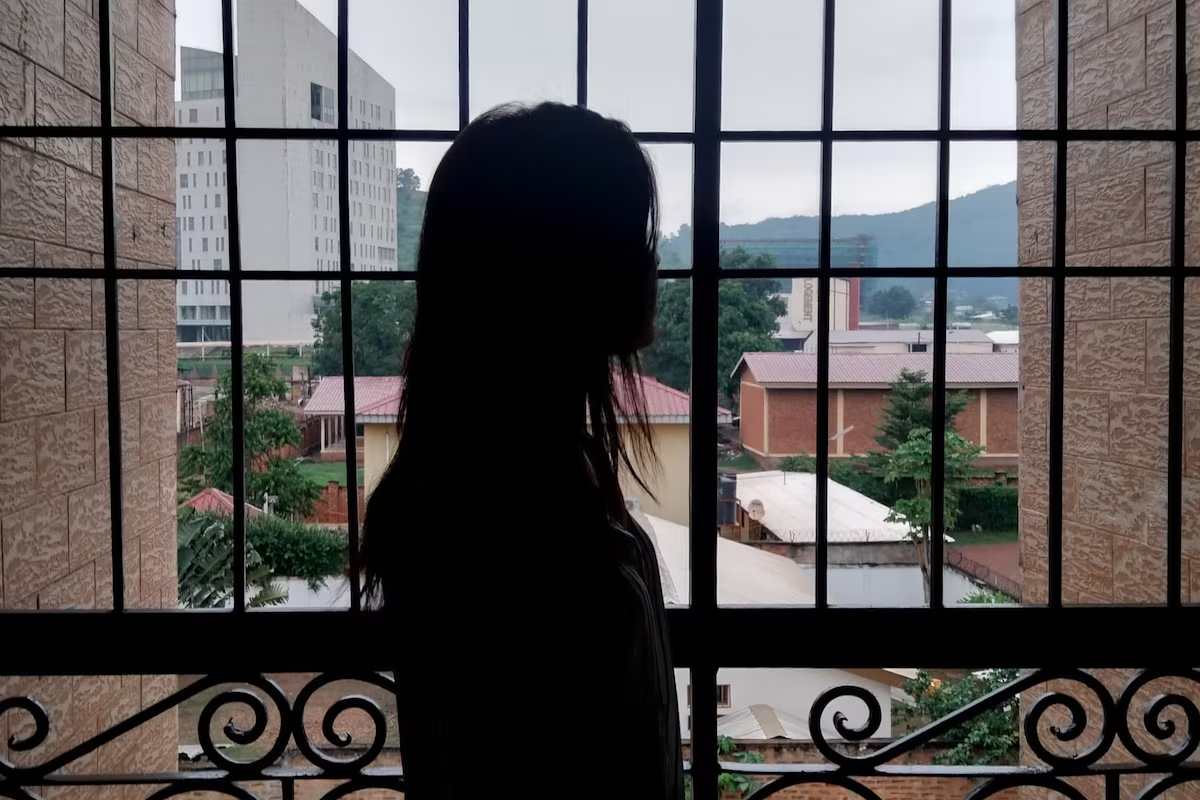
An Afghan woman deported by U.S. authorities to the Central African Republic at her apartment. She is now the lone member of her family living outside of Canada.Supplied
An Afghan woman who was detained by U.S. Immigration and Customs Enforcement while travelling to Toronto to reunite with her family says she was deported to the Central African Republic after Ottawa failed to respond to ICE’s request to release her to Canada, according to legal submissions made to the federal government.
The woman, who is a former nurse for Médecins Sans Frontières, was detained by ICE in Texas, December, 2024, and deported in June of this year. She fled Afghanistan alleging persecution for being Hazara, a minority Muslim community that is persecuted by the Taliban, as well as her family’s history working for Western organizations in Helmand province.
The Globe and Mail is not naming the woman because of the risk she would face in Afghanistan if the Central African Republic forcibly repatriates her, which her lawyer says remains a possibility. The former nurse has a temporary visa to remain in the conflict-ridden African country, but it expires at the end of the year.
In an interview with The Globe last week, the woman said she is terrified for her safety. The Central African Republic, located between Cameroon and South Sudan, is described by the World Bank as “one of the poorest and most fragile countries in the world.” Canada has temporarily paused deportations to the country owing to concerns over the humanitarian crisis there.
In the United States, the practice of removing people to countries they have no connection with has become a key part of President Donald Trump’s immigration crackdown, according to the American Immigration Council, a non-profit that advocates for immigrant rights. The measure is used to deport individuals who cannot be legally returned to their home country owing to a credible risk of persecution.
ICE whistleblower warned of ‘unprecedented lowering of standards’ for new hires
The Afghan woman has now filed an application from the Central African Republic to obtain a Canadian temporary resident permit that would allow her join her sister and other family members, who have already been granted refugee status in Canada. These permits are granted on a case-by-case basis when someone is otherwise inadmissible.
Legal submissions made as part of the application say there is “reason to believe” that ICE unsuccessfully sought to send the woman to Canada, prior to deporting her to another country.
“Canada has a responsibility here,” said the woman’s lawyer, Adam Sadinsky. “We’re not talking about opening the floodgates. We’re talking about doing right by one family.”
In a statement Monday,a spokesperson for Immigration, Refugees and Citizenship Canada (IRCC) said the department could not comment on individual cases for privacy reasons. The statement said IRCC “remains committed to the principle of family reunification in the context of its immigration programs.”
When the woman fled Afghanistan, she was unable to fly directly to Canada because she did not qualify for a visitor visa, according to immigration submissions made to the federal government.
However, she was eligible to claim refugee protection in Canada at its border with the U.S., according to Mr. Sadinsky. While the Safe Third Country Agreement prevents most asylum seekers from travelling by land through the U.S. to claim asylum in Canada, the treaty contains an exception for those with close relatives legally residing here.
The reunification plan was derailed after the woman, who fled to Brazil with her brother and father after being granted a temporary visa by the Brazilian government, travelled by land to the U.S. and was detained after crossing the border in Texas.
Opinion: The world set Afghanistan up to fail. Now, it has forgotten its people
In submissions to IRCC, lawyers for the family described what unfolded next as a “legal trap”: U.S. authorities were willing to release the family if they could travel to Canada by air, but this required Ottawa to grant them temporary resident permits. Ottawa rejected the woman’s application for one in October, 2025, according to documentation reviewed by The Globe.
Earlier this year, an ICE officer told the Afghan woman that the U.S. immigration agency had made requests to remove her to the Dominican Republic, Panama, or Canada, according to a statutory declaration that she made as part of her immigration case. The officer told her that the first two countries refused the request, while Canada did not respond, she states.
Court filings show her father, who was held at a different detention facility and filed a habeas corpus application to be released, experienced a similar issue.
In deciding his case, a New Mexico district judge cited evidence from deportation officer Juaquin Quevedo, who said ICE had made four requests to Ottawa to remove the man to Canada – most recently in February, 2026 – but did not receive a response.
The New Mexico court ordered that the Afghan woman’s father, as well as her brother, be released from detention. Both were able to travel to the Canadian border, where they were granted entry to claim asylum.
However, the former nurse was deported by ICE before her family had the chance to complete a similar habeas corpus application for her, the woman’s sister said. The sister, who is based near Toronto, told The Globe last week that she realized something was amiss when her sister’s contact details disappeared from an ICE-monitored app that allows detainees to call family members.
“I kept calling the detention centre,” she said. “They sent no information.”
The former nurse’s statutory declaration says she was taken without prior notice from the Texas detention facility and driven to a Louisiana airport in early June. On June 11, she was handcuffed at the feet and hands, put on an airplane, and told that she was headed for the Central African Republic, the declaration says.
Opinion: In its bid to rescue Afghans, Ottawa is fracturing their families
The woman now shares an apartment provided by the UN’s International Organization for Migration with 11 other asylum seekers, she told The Globe in an interview. She said the organization has imposed a strict curfew on residents, and said she only leaves her apartment if absolutely necessary.
The Central African Republic has struggled for years with sectarian violence between its Muslim and Christian populations. Last year, the United Nations released a report documenting “grave human rights violations” by armed groups targeting Muslim communities including summary executions, sexual violence and torture.
“There is simply no way I can remain here safely as a Muslim woman from Afghanistan with no ties to the country,” the woman’s declaration says.
The woman is now the sole member of her family who is not in Canada, submissions in her immigration case say. She has been unable to access the medication she was previously taking to treat the anxiety and depression she developed while in ICE detention, her declaration says. It also states that her eyesight declined significantly owing to repeated eye infections developed in detention, but she has been unable to obtain new prescription glasses in the Central African Republic.
Her declaration says she has limited access to clean water and electricity.
The woman’s sister told The Globe she feared for her sibling’s well-being.
“Her mental health is collapsing. She gets worse every single day . . . and I can’t do anything.” she said.
“It is affecting my entire family,” she added. “We are suffering. We are exhausted.”
The former nurse is seeking a temporary resident permit because of the long processing times for Canada’s other refugee resettlement streams, her immigration application says.
“[She] needs to be rescued from her current situation,” her lawyer, Mr. Sadinsky, said. “The government of Canada can do that with the stroke of a pen.”