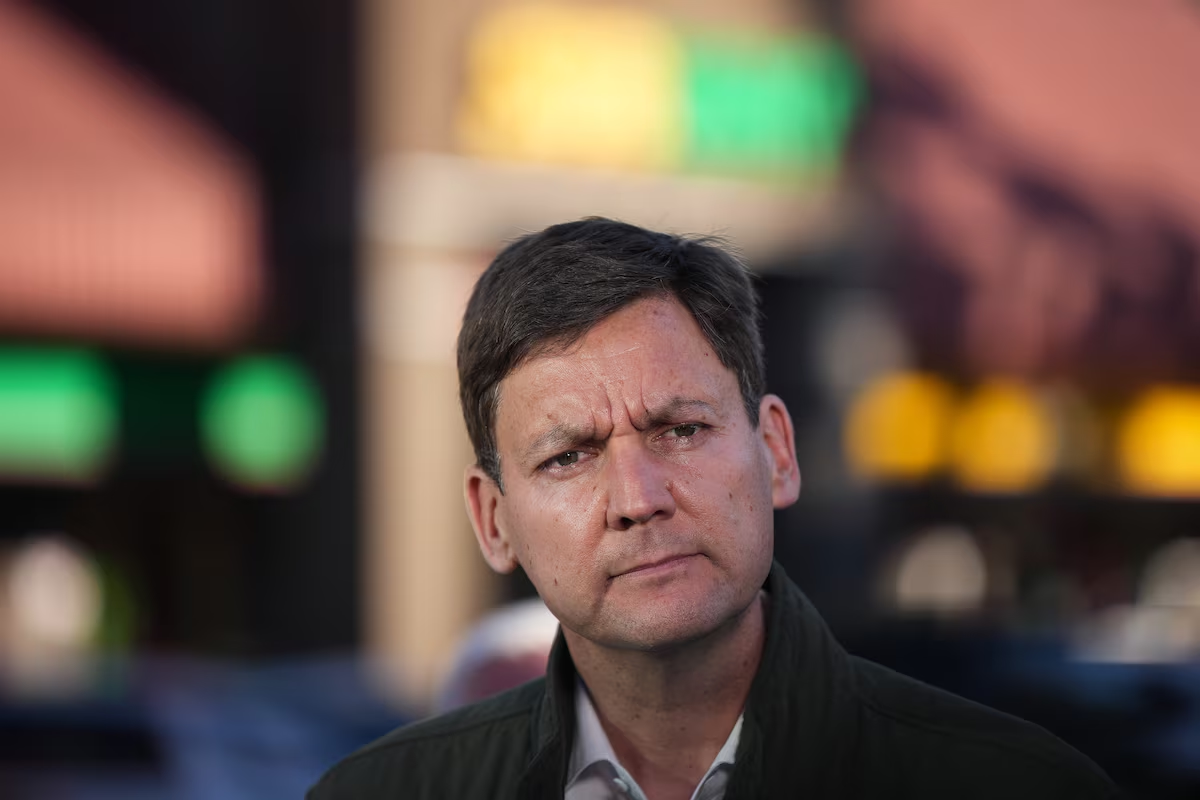

Open this photo in gallery:
B.C. NDP Leader David Eby during a campaign stop in Surrey, B.C., on Friday.DARRYL DYCK/The Canadian Press
Five Sundays ago, NDP Leader David Eby was gearing up to call a surprise election.
But that day, he received a surprise of his own: Embattled B.C. Conservative leader Kerry-Lynne Findlay resigned after just four months on the job.
And, he acknowledged during a recent editorial meeting with The Globe and Mail, he was just as shocked to see her replaced that same day by Lorne Doerkson, a 58-year-old former small-town newspaper publisher from the Interior and two-term MLA whom most people had never heard of.
Despite his unknown opponent, Mr. Eby called the election two days later on Sept. 22.
The timing of this decision became a frequent issue for him throughout the campaign.
What you need to know ahead of B.C.’s provincial election, according to our experts
Greg Lyle, a Sunshine Coast-based pollster who is president of Innovative Research Group, said the call meant the NDP was fighting an election with far more uncertainty. With Ms. Findlay gone, Mr. Lyle said, it proved much more difficult to tie Mr. Doerkson to the same grievances and goals animating the greatest existential threat to B.C.’s economy: U.S. President Donald Trump.
Mr. Eby “thought he was going to be running against Kerry-Lynne and he ended up with someone else, but they had two full days to figure this thing out or to not call the election,” said Mr. Lyle, who began polling for Kim Campbell’s Progressive Conservative Party in the 1993 federal election.
“At that point, you just don’t call it and you would have a perfectly good excuse: ‘It’s not a responsible thing to call an election when there’s so much disarray in the main opposition, we’re going to give them a chance to catch their breath.’”
The Conservatives appear to have caught their breath anyway. Most opinion polls show them either statistically tied with the NDP, or slightly ahead.
Open this photo in gallery:
B.C. Conservative interim Leader Lorne Doerkson during a campaign stop in Vancouver on Friday.ETHAN CAIRNS/The Canadian Press
The New Democrats have governed the province for nine years, since the late John Horgan formed government with the support of three Green Party MLAs in 2017. Mr. Eby succeeded Mr. Horgan as leader and premier in 2022. Two years ago, he won a slim majority government with 47 seats, compared with 44 for a resurgent BC Conservative Party and two for the Greens.
During a campaign appearance this week, Mr. Eby acknowledged that him snapping his term in half is still front of mind for many voters.
“The No. 1 question that people ask me is why are we having an election. … Look. I get it. I know that people have a lot going on. I know they didn’t want an election right now. I hear the frustration and I understand it,” he said.
But, Mr. Eby said in the lone leaders’ debate, he requires the stability of a majority mandate to make the “big swings” that British Columbians need government to deliver.
What slim margins from B.C.’s last election can tell us about the coming vote
Over the course of the race, the Conservatives dropped two candidates after the NDP highlighted their past anti-Islamic and antisemitic statements.
However, the party kept Katy Merrifield as campaign director despite controversy over an anti-Islamic social-media post she had made in June. She took it down within hours of posting, and after the backlash erupted earlier this month, she explained that, as a rape survivor, she posted in anger upon hearing about an independent “Rape Gang Inquiry” in Britain. She said she misdirected her fury at the entire religion instead of the “extremism used to justify these horrific crimes.”
The New Democrats, meanwhile, had to explain why Mr. Eby and his doctor wife, who earn multiple times the province’s median household income, were benefiting from their child using one of B.C.’s scarce $10-a-day subsidized daycare spots.
Regardless of who forms government, neither of the main parties presented clear paths back to fiscal stability in the near or even medium term amid rising deficits, a mounting debt load and tumbling credit ratings.
Economists say tax hikes proposed by the NDP and Greens could raise less revenue than projected and discourage economic activity, while the Conservatives’ tax cut could put B.C. further in the red.
The NDP’s plan shows the deficit falling from roughly $13.8-billion this fiscal year (after adjusting for the government’s pause to its planned expansion of provincial sales taxes on professional services) to $11.97-billion in fiscal 2028-29.
To achieve even that modest reduction, the party’s plan relies on a tax increase on the top 4 per cent of earners and up to $730-million a year of new revenue from “targeted economic growth” tied to major projects. However, planned new spending would absorb most of the new revenue.
The Decibel: David Eby’s B.C. election gamble
Meanwhile, the Conservatives said their plan will bring B.C.’s annual deficit down to $10.8-billion by 2029-30, which would still be more than twice the province’s 2023-24 shortfall. The plan was harshly criticized for relying on rosy growth predictions.
To reach its target, the party said it would reduce the province’s contingency reserve fund, enact a hiring freeze, review spending at most ministries and cut outside consultants.
The plan bakes in $2.6-billion of extra revenue from faster growth over three years. But a tax cut achieved by raising the province’s personal income tax exemption level to save most workers $1,000 a year would offset that extra revenue by about $3.4-billion annually.
Both the NDP and the Conservatives pledged to fully fund the health care system.
Open this photo in gallery:
Mr. Eby during a campaign stop at Surrey-Fleetwood NDP candidate Jagrup Brar’s campaign office, in Surrey, B.C., on Friday.DARRYL DYCK/The Canadian Press
To help people with the crushing cost of necessities, the NDP pledged to suspend 10 cents a litre of the provincial motor fuel tax, and promised up to another 20 cents off by asking the BC Utilities Commission to cap the price of gasoline.
The Conservatives promised to cut the 10-per-cent provincial sales tax on Canadian alcohol.
Political scientist Stewart Prest of the University of British Columbia said the two parties focused the final stretch of the campaign on Surrey, Vancouver’s southeastern suburb and the second most populous city in the province. Many of its 10 ridings could swing to elect a new party.
“Surrey is pretty clearly the chief battleground of this election, and that’s not new,” he said. “We have seen Surrey specifically, but then the Fraser Valley more broadly as the battleground of elections.”
Gary Mason: Will B.C.’s next government break the province’s debt addiction?
Both the NDP and Conservatives have promised to expand SkyTrain service in Surrey. The Conservatives have released what they call a Surrey Success Plan with commitments on SkyTrain, scrapping the Massey Tunnel replacement in favour of a new bridge as well as building a new hospital.
Among other commitments, the NDP has promised a new Surrey Charter to provide the city’s leaders with more authority in managing the city.
“There’s a sense of unmet need there, a frustration that is palpable, that the people need things in Surrey, that they are not necessarily getting them at the pace they need them,” Dr. Prest said.
Saturday’s election outcome will show whether Mr. Eby can continue the streak of Canadian politicians benefiting from having Mr. Trump as a foil.
Ontario Premier Doug Ford called a snap election last year on the basis he also needed a mandate to respond to economic threats posed by the Trump administration. Mr. Ford led his Progressive Conservatives to a third straight majority.