
Open this photo in gallery:
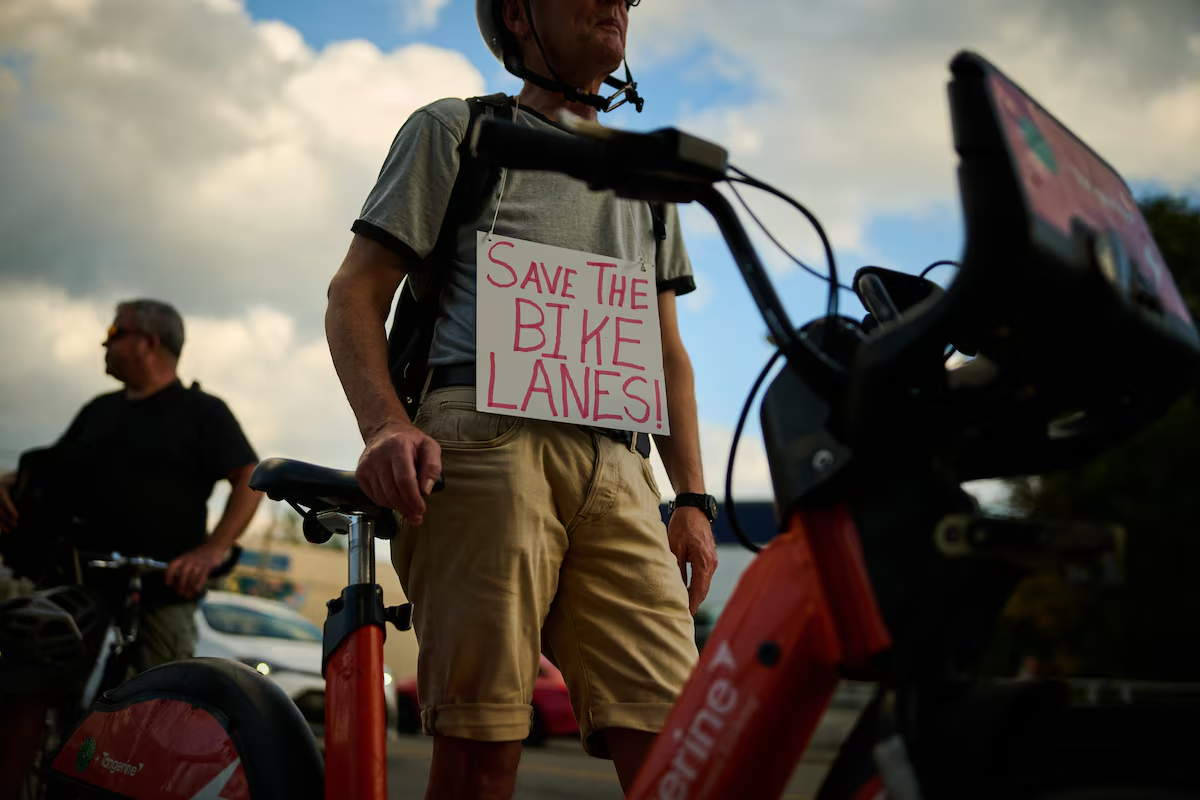
Cyclists gather for a protest against the Ontario government’s planned removal of a stretch of bike lane along Bloor Street West, in Toronto, Oct. 13.Sammy Kogan/The Globe and Mail
On a normal Wednesday afternoon, Adam Rodgers loads his five-year-old daughter onto the rear seat of his Tern cargo bike, and together they rattle along Toronto’s pockmarked bike lanes to her swimming lessons.
This Wednesday, they’re bracing for a far bumpier ride – one section of those bike lanes along Bloor Street West could be gone.
“I don’t even know how we’re getting there,” he said. “It’s frustrating.”
The barrier is bigger than any pothole. A small strip of their 15-minute journey has become so mired in legal and political wrangling that, on Tuesday, the province vowed to start removing it by day’s end and cycling advocates asked the country’s highest court to intervene. All this lands just two weeks before a mayoral election in Toronto between two front-runners who’ve staked out opposing bike-lane positions.
The formal motion to the Supreme Court of Canada – a request for leave to appeal – was made public at a press conference organized by Cycle Toronto, one of the applicants in the case, on Tuesday morning. It asks the court to overturn an Ontario Court of Appeal decision that allowed Premier Doug Ford’s government to proceed with a 2024 law ordering the removal of bike lanes along Bloor Street, University Avenue and Yonge Street.
Open this photo in gallery:
Bike lane advocates began gathering along Bloor Street on Tuesday to hold a night-long protest against the measures.Sammy Kogan/The Globe and Mail
The Ford government is adamant that converting bike lanes back to car lanes will help reduce traffic, which it says costs the provincial economy $56-billion a year.
A lower-court judge had ruled that the removal posed a safety risk to cyclists, constituting a serious violation of Section 7 of the Charter of Rights and Freedoms guaranteeing security of the person and right to life.
The appellate court declared that reasoning erroneous, stating that legislatures are free to regulate road use without implicating the Charter.
Cycling advocates want the Supreme Court to clarify the scope of Section 7 and whether it applies in this case. “The consequences of this case reach far beyond bike lanes,” Bronwyn Roe, a lawyer with Ecojustice, an environmental law charity representing the applicants, said at the press conference.
The Supreme Court generally takes several months to decide if it will hear an appeal – far too late to influence the Ford government’s immediate plans for the Bloor bike lane. It aimed to start removing a 1.2-kilometre section between Clissold Road and Royal York Road on Tuesday night.
“Following the ruling by the Ontario Court of Appeal, the province announced in September that it would immediately begin restoring motor vehicle lanes on Bloor Street West. That work begins Tuesday,” Dakota Brasier, spokesman for Ontario Transportation Minister Prabmeet Sarkaria, said in an e-mail.
Open this photo in gallery:
Bike lanes have become a political bone of contention in Toronto’s mayoral race.Sammy Kogan/The Globe and Mail
By Tuesday afternoon, bike lane advocates were already massing to hold a night-long protest against the measures.
The push to build bike lanes on Bloor goes back to the 1970s, but only materialized in the 2010s. Road engineers and cycling advocates viewed it as an ideal east-west biking thoroughfare for its flatness and proximity to the Bloor subway. “It has always been seen as the holy grail of bike lanes,” said Albert Koehl, co-founder of Toronto Community Bikeways Coalition, who has been championing cycling infrastructure for nearly 20 years.
Throughout that time, he has encountered resistance from local businesses, who predict bike lanes will snarl traffic, reduce parking and lessen foot traffic. The Kingsway neighbourhood in Etobicoke showed that resistance when the city placed bike lanes there in 2023 and 2024, he said.
A group of Kingsway businesspeople have proved to be organized and influential in their opposition. Last year, 40 area businesses filed a lawsuit against the city over the bikes lanes, claiming $10-million in damages.
But few residents walking the Kingsway section of Bloor – where coffee shops, fruit stores and restaurants abound – felt strongly about the issue on Tuesday.
“I really don’t think the bike lanes makes a difference in the traffic levels,” said Pat Phillips, a 13-year resident of the neighbourhood. “I think they are fantastic.”
The resistance around Kingsway, she said, comes from the suburban nature of the neighbourhood. Most homes have driveways and two-car garages. They expect speedy drive times. Plus, she said, Mr. Ford is part of an Etobicoke political dynasty that has long fought against what he and his late brother, former mayor Rob Ford, called “the war on the car.”
John Rydzanicz, who’s lived in the area for 35 years, said he had mixed feelings. “I think we should make it safe for bikes, but the lanes have definitely slowed down traffic,” he said. “I don’t even bother leaving the house if it’s after 4 p.m.”
The City estimates that removing all the bike lanes covered by the provincial law will cost $48-million. Once the Kingsway work is done, the rest of the removals are slated to start in the spring.
The removal work is scheduled to take place in the middle of an intense mayoral campaign, where bike lanes have become a political bone of contention.
Under Mayor Olivia Chow, the city has tried to work with the province on plans to restore vehicle lanes while preserving bike lanes – to no avail.
Ms. Chow’s main challenger, Brad Bradford, has said he would take out the contested bike lanes in Etobicoke if elected.
Mr. Rodgers and his daughter just want a safe ride to swimming lessons. He’s contacted the province several times to ask how the route might change. So far, nobody has responded.