
Open this photo in gallery:
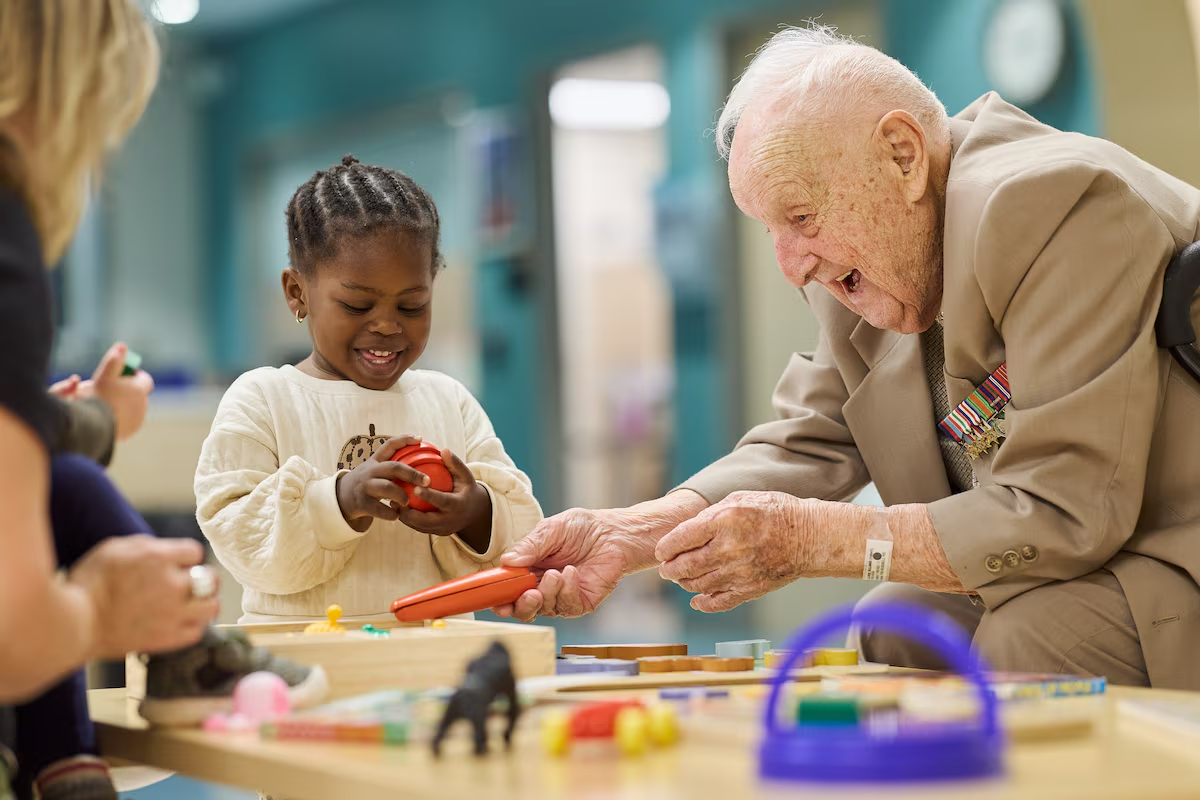
Roly Lalonde, a resident at Perley Health in Ottawa, enjoys playtime with toddler Daa-Sha at the centre’s daycare on Sept. 24.Jess Deeks/The Globe and Mail
Roly Lalonde sits in a walker while a toddler named Daa-Sha listens to his heart with a blue plastic stethoscope. Next, she checks his blood pressure.
The Second World War veteran boasts about his good health at 103, except for some challenges with his eyes. He’s also in good spirits, sporting a light-coloured suit and a smile, buoyed by his many new friends − who are about a century younger.
He often checks on his wee comrades here, at a daycare down the hall from his room in a long-term care wing for veterans at Ottawa’s Perley Health.
“I sometimes watch them eat and they wave their hands,” Mr. Lalonde said. “It’s beautiful.”
These are typical interactions at Canada’s first purpose-built intergenerational early learning centre. The aim of the project, which began welcoming children in July, is to foster community and combat loneliness among seniors through interactions between children and “grandfriends.” The model could serve as an example for other centres across the country as Canada experiences rapid growth in its aging population.
Novel ‘heart in a box’ technology gives London, Ont., patient ‘second life’
Two-year-old Daa-Sha is one of 49 children who attend daycare at Perley Health, which offers independent living and long-term care for seniors. Located near the gift shop, the learning centre is intentionally situated at the height of foot traffic. It is somewhat akin to a fish bowl, with large windows that allow for residents to greet children inside the centre.
The daycare space itself is about double the size of traditional child-care centres, in order to help seniors who use walkers or wheelchairs move with ease over non-slip tiles. It also features sound-absorbing materials to make it more comfortable for residents with dementia.
“We want to bring generations together and communities together,” said Katrin Spencer, vice-president of strategy and business development at Perley.
Open this photo in gallery:
The project’s goal is to foster community and combat loneliness among seniors through interactions between children and ‘grandfriends.’Jess Deeks/The Globe and Mail
About 80 per cent of the children have parents who work for the health organization. “When you move into long-term care, you want to be part of a community still,” she added.
Many studies have shown the benefits of bringing generations together, including better mental health, improved well-being and increased sense of purpose. And similar centres exist elsewhere in the world, including in Australia and Britain.
But research on the effect of having child care situated inside a long-term care facility is still limited, says Annie Robitaille, named by Perley Health in 2020 as its Ottawa research chair of the Centre of Excellence in Frailty-Informed Care. She is also an assistant professor in the Interdisciplinary School of Health Sciences at the University of Ottawa.
Prof. Robitaille is leading a team studying the interactions at Perley and evaluating the program as it unfolds – but the work was already under way before opening day. They conducted interviews with residents, including veterans in independent living and those in long-term care.
In part, the research will look at whether the centre improves mental health for the seniors.
“Does it actually decrease loneliness? Also, what impact does it have on staff?” Prof. Robitaille said, referring to those who work on the campus and have kids in daycare there.
Leading mental health hospital cuts wait times by condensing programs, hiring and tracking data
The centre is the product of a partnership between Perley Health and Andrew Fleck Children’s Services, a non-profit in the Ottawa region.
The project, which was about six years in the making, cost $4.8-million. It received $2-million from the Perley Health Foundation and $2-million from Ontario’s Ministry of Education.
Open this photo in gallery:
The centre is the product of a partnership between Perley Health and Andrew Fleck Children’s Services.Jess Deeks/The Globe and Mail
Perley and Andrew Fleck collaborated throughout the process, and still do, said Ms. Spencer, adding that they work carefully to prevent the spread of infection, for example.
When the COVID-19 pandemic raised questions about bringing together young children and seniors – both vulnerable populations – the organizations worked through necessary regulations with support from Ottawa Public Health.
If an outbreak is declared in long-term care or in child care, interactions between the cohorts are paused.
As well, all of the furniture at the centre is wipeable and easy to clean, and handwashing stations are located at its entrance. When children arrive, workers conduct wellness checks.
The parents know the policies and ensure children stay home if they are ill, said Tina McLean, a program co-ordinator with Andrew Fleck who has worked in child care for three decades.
She described her work at the centre as deeply rewarding.
Open this photo in gallery:
Lalonde, a 103-year-old veteran, often visits the children at the daycare.Jess Deeks/The Globe and Mail
“The interactions that I see, let alone have myself, are so magical,” she said, adding that different generations are connecting like family.
And it’s not just the seniors who benefit.
The community draws valuable lessons from residents like Mr. Lalonde, who enthusiastically embraces life. A talented artist, he can frequently be found in Perley’s art studio when he isn’t visiting with his newfound friends.
“We have so much to learn from you,” Ms. McLean tells him.
With a grin, he replies: “I know it. Life is beautiful if you know how to live it.”