
Open this photo in gallery:
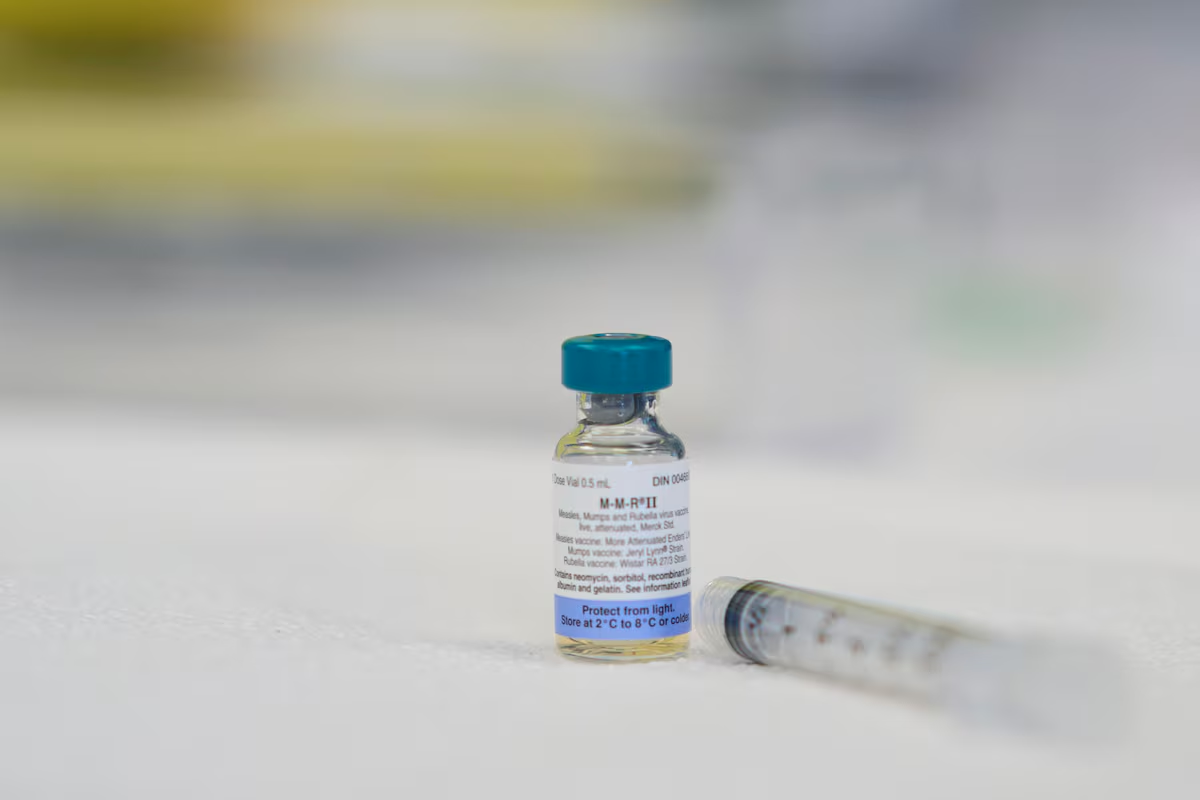
The report shows that 85.3 per cent of two-year-olds have been vaccinated against measles, mumps and rubella, as of Dec. 31 last year, but to achieve herd immunity 95 per cent of the population must be fully immunized.Geoff Robins/The Canadian Press
Routine childhood vaccination coverage in Canada has not bounced back to pre-pandemic levels, opening the door to infectious disease spread, national data on immunization show.
The Public Health Agency of Canada on Wednesday said that parents should be discussing childhood vaccinations now that kids are back in school, pointing to its latest report on vaccination as a warning sign that coverage is lower than the level needed for population immunity.
Natasha Crowcroft, vice-president of infectious diseases and vaccination programs at the national health agency, underscored in an interview on Thursday that Canada cannot stay in the “risk zone” for too long without consequence.
“We need a whole of Canada approach where we’re all pulling in the same direction to get vaccines to kids,” said Dr. Crowcroft. “We cannot be complacent.”
The Standardized Reporting on Vaccination, or STARVAX, report shows that vaccination coverage in two-year-old children has decreased since 2019 with some stabilization after 2022. And, in seven-year-old children, there has been a continuous decrease with “no apparent recovery.”
The report includes routine childhood vaccination data from Alberta, British Columbia, Manitoba, New Brunswick, Nova Scotia, Ontario, Quebec, Saskatchewan and Yukon on coverage rates as of Dec. 31 last year. The other four provinces and territories have not yet submitted data for the STARVAX report.
When vaccination rates decline, forgotten diseases can make a comeback. Take measles for example, which had a resurgence in Canada and has sickened more than 5,000 people since the outbreak began in November, 2024. The country is still trying to regain its measles elimination status as a result.
High measles cases in Canada, dramatic increase in North and South America need vaccination response: WHO
The report shows that 85.3 per cent of two-year-olds have been vaccinated against measles, mumps and rubella, as of Dec. 31 last year. But because measles is highly contagious, 95 per cent of the population must be fully immunized, meaning they have received two shots, to achieve herd immunity.
Coverage also varies greatly at the community level, dipping below 50 per cent in some pockets of Canada, which helped fuel the outbreak that gripped Ontario and Alberta for months last year. Both provinces have since brought the situation under control but sporadic cases are still popping up elsewhere.
Coverage rates have also dipped since the COVID-19 pandemic for other vaccine-preventable diseases, including meningococcal disease, diphtheria, tetanus, pertussis (whooping cough) and polio, according to the report.
Dr. Crowcroft said there are a range of reasons for declining childhood rates, including mistrust in the medical system, vaccine hesitancy and opposition, practical or logistical challenges for families, and health system hurdles.
“Some provinces deliver everything through the public health system and some are really reliant on primary care,” she said. “So, if you haven’t got access to good primary care, then that’s obviously a major barrier, and there are also language barriers and other things like that.”
Underimmunized communities are fertile ground for these diseases to spread.
Saskatchewan, for example, is experiencing an outbreak of invasive meningococcal disease, which helped Canada reached its highest annual level of infections in more than a decade last year. As of last month, eligible infants, six weeks to under 12 months of age, can receive additional doses of meningococcal vaccine to provide earlier protection against the disease.
In 2019, meningococcal coverage for two-year-olds (based on data from five provinces, including Saskatchewan) reached roughly 90 per cent. Coverage dropped to about 82 per cent in 2025. Meningococcal disease can cause severe and life-threatening infections.
Additionally, the report shows diphtheria, tetanus and pertussis coverage at two years of age dropped nearly 20 percentage points to 69 per cent in 2025 from 2019, according to the same data set. For polio, coverage decreased to 80.1 from 88.3 per cent.
Dr. Crowcroft said work is under way to increase immunization across Canada, but it can be time-consuming to get the word out and speak to parents, while also building trust among those who are reluctant to get their children vaccinated.
“The complacency is the thing that makes it hard,” she said. “People think ‘oh, we’re okay’ and ‘Canada’s okay’ … it just makes it much harder to get the momentum toward getting coverage levels back up to where they need to be.”