
Open this photo in gallery:
Telus Corp. CEO Victor Dodig says the company is ‘not interested’ in acquisitions and will instead focus on organic growth and getting the company ‘fit again.’DARRYL DYCK/The Canadian Press
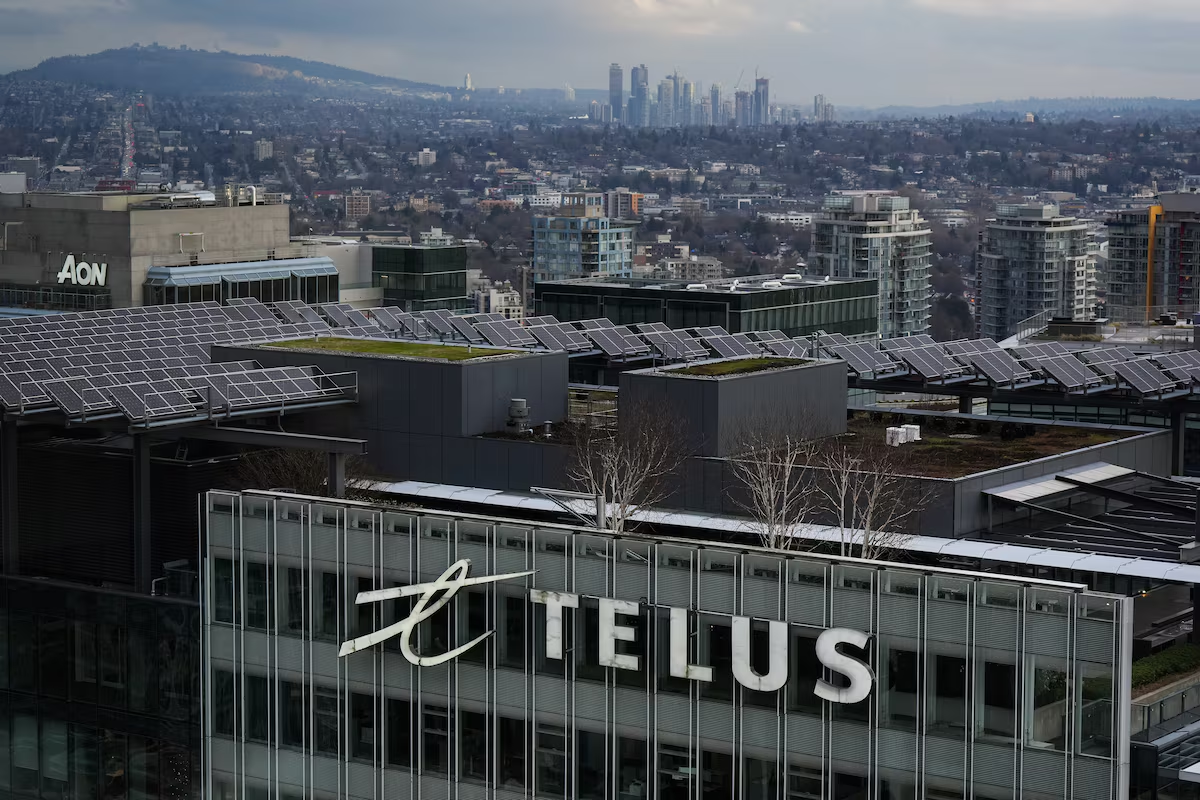
Telus Corp. chief executive officer Victor Dodig says investors should expect a simplified, “less expansive” company in the coming years, as he leads it through a series of divestitures, refocuses on the core telecom business and puts a moratorium on acquisitions.
Like its peers, over the years Telus has sought to diversify its income sources as growth in its core earnings area – phone and internet services – has moderated. For Telus, that has meant a series of expensive acquisitions, with forays into numerous sectors such as agriculture, overseas call centres and health care.
Now, Mr. Dodig – who took over the top spot in July – is jettisoning some of the side projects developed by his predecessor, Darren Entwistle, while leaning into advanced technology investments started during Mr. Entwistle’s tenure.
“We have great companies within the Telus world, some of which shouldn’t be within our world,” he said.
The company has brought in outside advisers to help chart the path for a transformed Telus, which will “be much more focused on Canadian telecom and digital infrastructure – which is a euphemism for data centres,” Mr. Dodig said, speaking to a room of investors at a Bank of Montreal conference.
Bell Canada aims to quadruple capacity of data centre operations in Saskatchewan
As part of that transition, he said, the company is in active talks to monetize part of its health care division, Telus Health. That process began in earnest at the beginning of the year. Former executives had hoped to have a commitment in place by July.
The company is now in “later stages” of discussions to sell one of three components of the business, Mr. Dodig said, and the company will then move to sell a second component. “I’m pretty confident that two of those, maybe three, over time will be in the hands of other owners.”
Meanwhile, he said, the company is “not interested” in acquisitions – instead, he said, he is focused on organic growth and getting the company “fit again,” so that “2027 doesn’t look anything like 2026.”
Mr. Dodig made a splash during his first quarterly earnings day in July by moderating guidance, writing down the goodwill value of the Telus Digital brand and halving the dividend to make it “viable” and “deliverable.”
“Once we get visibility on growth and stability, we’ll grow our dividend again,” he said, though he ruled out any reintroduction of a dividend reinvestment plan. He added he would “love to” buy back shares from the market, once the company has its “house in order.”
Major AI firms agree to Ottawa’s new data-centre framework as public opposition grows
The telecom sector, which he described as “in the doldrums,” has been affected in recent years by lower cellphone plan prices, stagnant immigration levels and heavy debt loads following extensive infrastructure spending. In recent years, telecom executives have pulled back on capital expenditures, saying government policies have discouraged investment.
As for turning its core telecom business around, he said he planned to streamline costs while focusing on improving customer service and profitability, as opposed to winning new customers at all costs by offering cheaper plans. “You don’t just load, load, load. You load if it’s profitable.”
He said the company has also identified over a million homes where the company could build fibre. Telus started offering internet services by piggybacking on rival BCE Inc.’s networks, but Mr. Dodig said the company wants to build and own its own networks, while working with partners to lighten the load of capital expenditure.
Meanwhile, he said, the company will double down on data centres. While rival Bell’s strategy has been to focus on constructing building shells, under Mr. Entwistle, Telus committed to also buying the AI compute components, such as chips from Nvidia.
Some analysts have noted that this exposes the company to obsolescence risk, but Mr. Dodig defended the extra spending, citing sovereign demand for an integrated project. But he added the company could also approach data centres, like Bell, as a “real estate” play.
Mr. Dodig said he would provide further details about the company’s financial and data centre plans during the next quarterly earnings call on Nov. 6.
“This is a company that can be put on the right road, where shareholder value can be enhanced over time. That’s one of the reasons why I’m here,” Mr. Dodig said. “We will get it on the right track.”