
Open this photo in gallery:
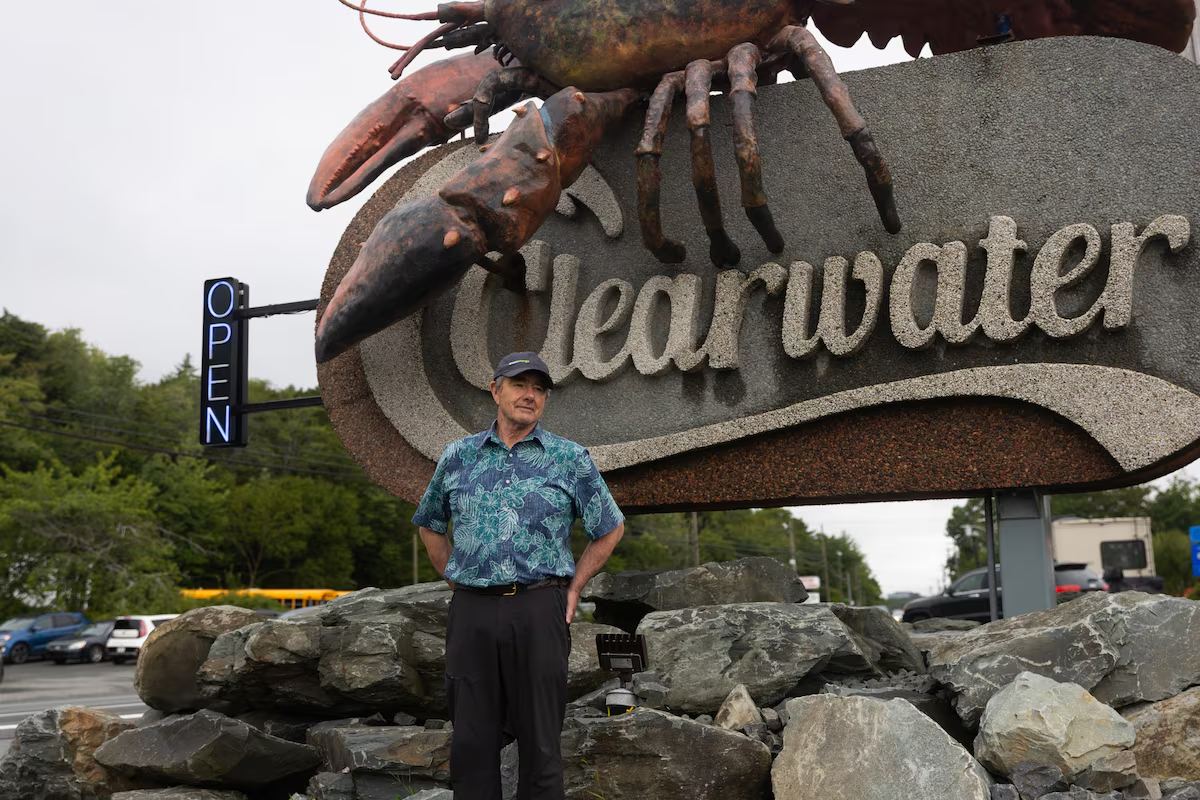
John Risley, co-founder of Clearwater Seafoods, in Bedford, N.S., in August, 2022.Carolina Andrade/The Globe and Mail
Ownership of artworks dominated discussion in a Halifax courtroom Thursday as lawyers debated the next stage in the pending sale of debt-laden investment firm owned by Nova Scotia seafood tycoon John Risley.
The artworks are part of CFFI Venture’s 1,281-piece collection, valued at close to $14-million and includes works by Maud Lewis, Christopher Pratt and Group of Seven members A.Y. Jackson, Arthur Lismer and J.E.H. MacDonald.
Known for his yacht and mansion, Risley is one of the best-known businessmen in Atlantic Canada, having co-founded Clearwater Seafoods, which he sold in 2021 for $1-billion.
During the hearing Thursday, the court heard that Risley claims ownership of 669 artworks because he purchased them himself, rather than through the now-insolvent investment firm.
“CFFI and Mr. Risley were not maintaining the corporate separateness of CFFI exactly,” said court monitor Maria Konyukhova, who is responsible for overseeing the sale process through the Companies’ Creditors Arrangement Act.
“Some of the assets being purchased were perhaps being purchased by Mr. Risley personally but being kept in CFFI’s name and vice versa.”
Inside the unravelling of seafood magnate John Risley’s billion-dollar empire
In a text message, Risley told The Canadian Press he bought some of the artworks before CFFI existed and other pieces were purchased by different companies.
Nova Scotia Supreme Court Justice John Keith is set to make a decision on the pending sale Friday, which could see CFFI Ventures sell most of its holdings to New York-based New Tide Capital LP.
A lawyer representing New Tide told the court that if the sale is approved, New Tide would negotiate an out-of-court deal with Risley regarding ownership of the artworks.
Keith told the court that the value of the artworks will not come close to covering CFFI’s debts, nor would their sale have a meaningful impact on the overall transaction.
In 2017, CFFI borrowed US$250-million from a group of companies led by HPS Investment Partners, a private equity firm based in New York, court documents say.
The documents show the HPS debt started out as a US$250-million loan in 2017, but ballooned to nearly US$1-billion after interest rates jumped to as high as 28 per cent when CFFI stopped making payments.
CFFI had been selling millions of dollars worth of art, private planes and other assets to pay down its debt.
However, CFFI still owed HPS about US$776-million when the sales process began in February.
Court files show Ernst and Young pegged the fair market value of CFFI’s assets, mostly equity stakes in companies across a slew of different sectors, at $367-million.