
Listen to this article
Estimated 4 minutes
The audio version of this article is generated by AI-based technology. Mispronunciations can occur. We are working with our partners to continually review and improve the results.
An invasive insect known to kill grapevines and impact other crops and trees has been detected for the first time in Canada by the Canadian Food Inspection Agency (CFIA).
And that first detection happened in Windsor.
Windsor residents have reported previous sightings of the spotted lanternfly, according to a non-profit that works to prevent the spread of invasive species.
But this is the first time it’s been detected by an agency survey, the Invasive Species Centre said.
“Spotted lanternfly is known to damage and kill grapevines, causing significant impacts for the grape and wine industry,” the centre said in a Thursday news release.
“This pest could also have an impact on other crop growers and the horticulture and forestry industries, as well as residential yards and neighbourhood parks. Spotted lanternfly can have widespread economic, ecological and social impacts if allowed to spread uncontrolled.”
The spotted lanternfly is native to southeast Asia and was first detected in North America in Pennsylvania in 2014, the centre said.
It can feed on the sap of over 100 different plant species.
 Egg masses of the spotted lanternfly. (Canadian Food Inspection Agency)
The centre is asking people to learn to identify the insect.
If they see a fly or its eggs, it’s asking people to photograph them, put the fly or eggs into a sealable plastic bag or container, and report it to the CFIA.
“All [Canadians] must report any suspect sightings of SLF to the Canadian Food Inspection Agency (CFIA) immediately,” the release said.
“A good report includes an accurate location and photos of the insect. The CFIA will respond to reports of spotted lanternfly and take appropriate action, which may include site surveying and insect collection.”
How to identify a spotted lanternfly
The invasive Species Centre and the CFIA have provided a number of tips for identifying the flies.
Adults:
- Approximately 25 mm long and 12 mm wide.
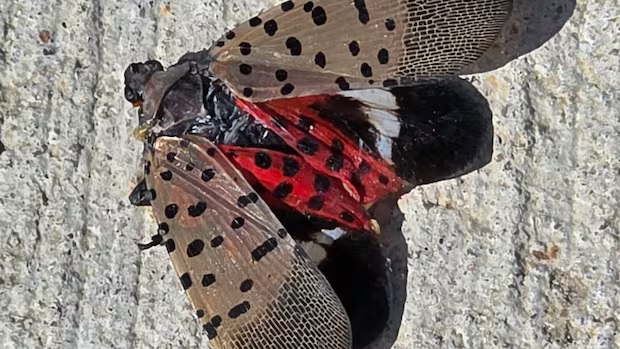
- Front wings are light brown/grey with black spots at the front and dark speckled bands near the back.
- The rear wings are red and have black spots near the front and white and black bands at the back.
- The abdomen is yellow with horizontal black stripes.
- Congregate in large swarms on trees, grapevines and other plants.
- May be seen from summer until they die in late fall/early winter.
- Most active in September and October, when they are mating and laying eggs.
Nymphs:
- Early-stage nymphs are black with white spots.
- Late-stage nymphs are red with black and white spots.
- Visible in spring and summer.
- Tend to congregate in swarms and ascend plants and trees to feed.
Eggs
- Egg masses appear as grey smears of mud on host trees and any hard surface outdoors.
- Older egg masses lose the gray coating and look like seeds arranged in four to seven vertical rows.
- Egg masses are approximately 25 mm long.
- Typically visible beginning in September and throughout the winter until they hatch sometime in the spring.
 Spotted lanternfly nymphs cluster together on a tree. The insects can be identified from their bright red underwing pattern. (Eric R. Day/Bugwood.org)
The insect’s clear, sticky liquid excrement, known as honeydew, can accumulate at the base of a host tree and can foster the growth of sooty mold, the centre said.
It can often attract bees and wasps.
Reducing the spread
The Invasive Species Centre provided the following advice on reducing the spread of the fly:
- When visiting areas with known spotted lanternfly infestations, check your vehicle and any items that sit outdoors for a period of time – such as camping equipment – for egg masses, nymphs or adults.
- Consider running your vehicle through a high-pressure car wash.
- Don’t move firewood — Buy and burn your firewood locally.