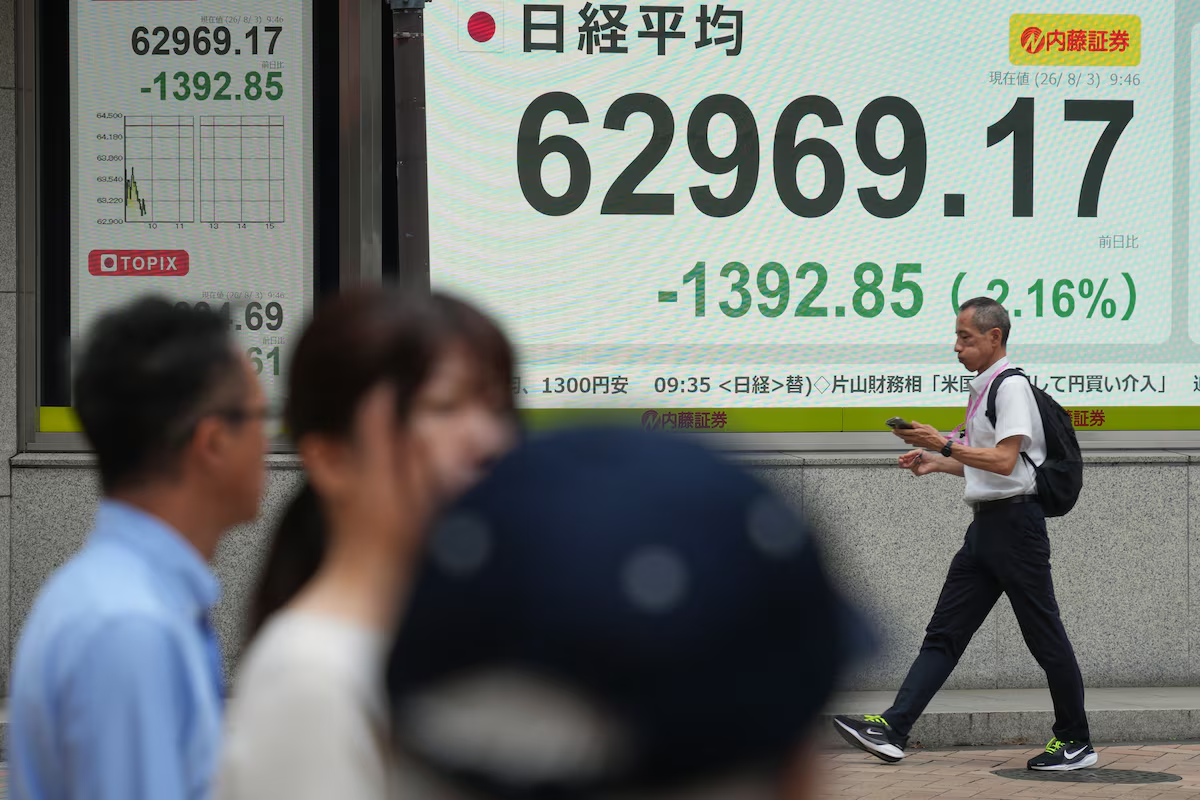

The yen hit its strongest in seven months on Monday, extending recent gains driven by bets on a faster pace of Bank of Japan tightening, and the potential for Japanese investors to shift their funds home.
Monday’s move reinforces the view of some market watchers that the tide may now be turning for the yen, as a host of factors finally smoke out traders who had spent years betting against the Japanese currency.
New tailwinds from capital repatriation, unwinding carry trades and U.S. political pressure, as well as expectations of a faster pace of interest rate hikes by the Bank of Japan are all combining to provide support for the currency, which hit 40-year lows on the dollar in August.
The dollar dropped as much as 1.4 per cent to 154.05 yen – the strongest the yen has been since February – with the Japanese currency having firmed from around 160 yen per dollar early last week.
The rally in the yen gathered pace on Monday after it broke past its August level of 155.2, which it hit after joint U.S.-Japanese FX intervention. Traders and analysts said this suggested stop-loss orders – automatic instructions to buy or sell once a currency reaches a pre-set level – were triggered around that level and accelerated the move.
Traders generally remain alert to the risk of further official buying to support the currency.
Monday’s thin liquidity, due to a public holiday in the United States, could provide an attractive environment for intervention although traders said the absence of a surge in trading volumes suggested official buying was not the driving force.
Japan’s finance ministry, which is responsible for currency intervention, had no immediate response.
Longer-term outlook
The big question for longer-term investors is what comes next. One issue is whether Japan’s giant pension fund, the GPIF, as well as other big global investors shift to holding more Japanese assets, as a fall in Japanese government bond (JGB) prices has pushed their yields to attractive levels.
Official data shows Japanese investors are shedding foreign bonds at the fastest pace in four years, while Norway’s US$2.3-trillion sovereign wealth fund plans to cut its exposure to U.S. Treasuries and add exposure to JGBs.
Shreyas Gopal, FX strategist at Deutsche Bank, said in a note that the Norwegian decision reflected a key trend toward asset diversification in global markets “which has the potential to materially affect the yen”.
The options market suggests that traders are at their most bullish towards the yen over a three-month horizon since May, 2025 – excluding the days around the last bout of intervention in late July that sent the currency soaring against the dollar.
But sustained yen appreciation is not yet a done deal.
Positioning data on Friday showed speculators added to their bearish positions in the yen for a third time in a row in the week to Sept. 1. Investors now hold a net short position – one that assumes the yen will weaken – worth US$7.198-billion, up from a five-month low of US$3.03-billion in early August.
A larger short position means there is more room for traders to buy the yen if they believe a real shift in fundamentals is coming. But it also reflects a lack of conviction that this is genuinely the case.
Masayuki Nakajima, senior fixed-income and currency strategist at Mizuho EMEA, said that “it may be premature to conclude that the structural drivers of yen weakness have fundamentally changed.”
He said there was still considerable uncertainty over whether the BOJ will raise rates as much as markets expect, and that while speculation around the GPIF repatriating assets has intensified, the most likely outcome was a gradual increase in domestic bond exposure, not a large-scale and immediate overhaul to asset allocation.