
Open this photo in gallery:
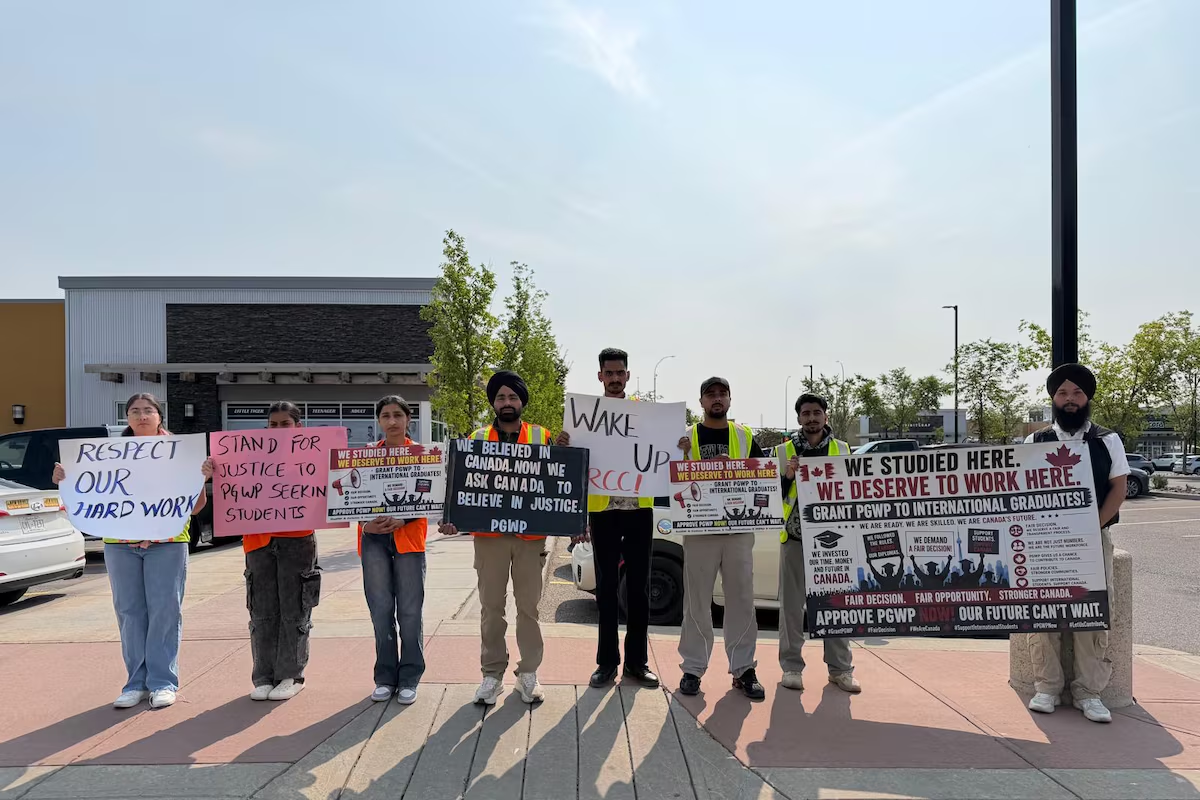
In an undated handout photo, protesters oppose the federal immigration department’s refusal of post-graduation work permits that were previously expected.Gurpreet Singh/The Canadian Press
A coalition of close to 300 labour and community groups are calling on the federal and Alberta governments to halt the removal of 10 international students it says were singled out for enforcement at a protest.
The Migrant Rights Network group makes the demand in a public letter sent this week on behalf of transnational groups, including Amnesty International, CUPE Ontario and Climate Justice Saskatoon.
The network says in the letter that targeting newcomers for enforcement while they’re protesting immigration rules is a violation of the Charter right of free speech and will have a chilling effect on those wanting to speak out.
“Migrants across the country are being told that joining the next protest, picket line or public meeting could put their ability to remain in Canada at risk,” says the letter.
The letter is pinned to a recent protest in Calgary by 1,500 graduates from Portage College, a public institution based in northeastern Alberta with programs delivered through partner campuses in Calgary and Edmonton.
The network says that graduates completed programs that made them eligible for post-graduation work permits, but over the summer they were refused the permits as the federal government changed the eligibility rules on its website.
The federal government disagrees.
In an e-mail, a spokesperson for Immigration Minister Lena Metlege Diab said there had been no changes to eligibility criteria for the post-graduation work permit program but that the government had updated its web page in June to clarify existing requirements.
Affected students began weeks of demonstrations starting in mid-July in Edmonton and Calgary. The network says the Aug. 12 protest in Calgary is what triggered their letter.
On that day, police were called in on a complaint that protesters were blocking a sidewalk.
A spokesperson for Calgary police said in an e-mail that officers went to the scene, asked for identification from demonstrators and called the Canadian Border Services Agency with concerns.
The spokesperson added that the protesters had not committed any crimes.
The border agency said its officers were called in to check if demonstrators were non-compliant under the Immigration and Refugee Protection Act. It interviewed 12 of them.
Network spokesman Syed Hussan said that number was narrowed to 10 by the day’s end and that those found to be non-compliant were given exclusion orders. Exclusion orders demand the person leave Canada and not return for at least a year.
Border services, in an e-mail, said those who receive removal orders are given due process, including the ability to appeal and request judicial reviews.
“We fully agree that the freedom of peaceful assembly is a Charter-protected right. We are aware of and reviewing the letter issued today by civil society organizations,” it said Wednesday.
Hussan said the students were promised – then unfairly denied – the work permits. He said those whose study permits had expired were still within a 90-day window to renew them.
“On the immigration side, this is the wrong decision,” Hussan said.
“But what’s most dangerous is that freedom of expression is a Charter protected right. And that Charter-protected right was attacked.”
The letter also calls for the post-graduation work permits to be granted, for the actions of police and border officials that day be investigated and for clear rules not to target migrants at peaceful protests.
The network says there are more demonstrations planned for Sept. 20, including in Toronto, Vancouver and Ottawa.
Alberta Immigration Minister Joseph Schow said the rules are clear.
“Anyone who comes to Canada on a temporary status needs to return home once their permit is expired,” he said in a statement.
“That is the position of our government, and it’s not going to change.”
One of the protesters, 29-year-old Gurpreet Singh, said he’s trying to decide whether to fight his exclusion order or return to India.
In December, 2024, Singh graduated with a certificate in osteopathic therapy, which involves hands-on manipulation of joints to help reduce pain and stiffness.
He said he had to quit his job after being denied a postgraduate work permit, because he can’t work.
“I’m not asking for any kind of mercy or anything,” Singh said in an interview.
“I’m just asking [for] what we were told before coming to Canada.”