
Open this photo in gallery:
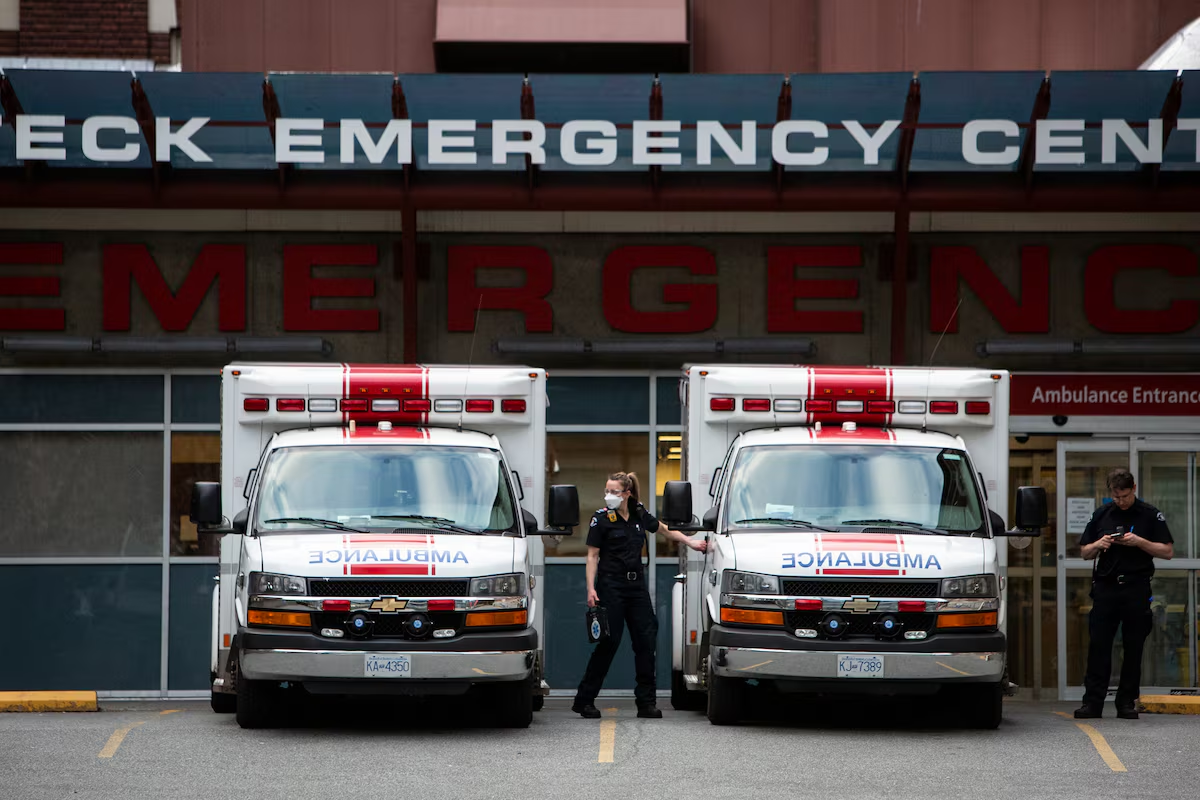
Doctors say the issue is a symptom of hospital overcrowding, an aging population, more medically complex patients and limited access to other health care supports.Jesse Winter/The Globe and Mail
Emergency physicians in major cities across Canada say they can usually catch their breath during the summer months. But this year has been unlike any other with patient levels in some cities reaching highs never seen before.
Doctors who spoke with The Globe and Mail had difficulty pinning this summer’s rush to any single issue. It’s the symptom, they said, of hospital overcrowding, an aging population, more medically complex patients, limited access to other health care supports – and the list goes on.
Then there are unique factors in certain provinces, such as a measles outbreak that has sickened hundreds this year in Manitoba. Or the wildfire smoke that suffocated Ontario in July and led to a spike in respiratory-related emergency department visits.
Kirk Magee, an emergency physician at the QEII Health Sciences Centre in Halifax, said this summer has been noticeably different.
“Many days you walk through the waiting room and it feels like it’s January,” he said, recalling a recent shift when he saw patients who had been waiting for more than 15 hours.
Emergency room wait times continue to climb as more medically complex patients seek care
“That’s horrific even in the middle of influenza season, but I’ve never ever seen that before at this time of year.”
During the summer, EDs expect to see an increase in trauma cases linked to such activities as boating, quadding or sports. But overall patient volumes tend to dip as respiratory illnesses slow down and people head off on vacation, though the trend has been slimming in recent years.
Dr. Magee said the summer surge is a predictable outcome of hospital overcrowding, which leaders in the health care system have been sounding the alarm over for years. Hallway medicine is now the norm in congested EDs across Canada.
Noam Katz, an ER doctor at St. Boniface Hospital in Winnipeg, said the health care system is no longer on the brink of collapse but caving in before our eyes. “This is the end state of what people have been warning everybody about for years,” he said.
Open this photo in gallery:
A treatment room in the emergency department at Peter Lougheed hospital in Calgary.Jeff McIntosh/The Canadian Press
Research released by the Canadian Institute for Health Information in June, which covered parts of 2024 and 2025, showed that one in 10 patients spent more than 14 hours waiting for care in Canadian EDs. Those requiring admission sometimes waited three times longer.
Staffing is also a constant challenge. Another study, published in July, found that nearly half of the 410 ED physicians surveyed by the Canadian Medical Association last year had reduced their clinical hours and roughly 20 per cent had taken time away from working in EDs.
Real-time, public data on patient volumes are limited across Canada. While the Canadian Institute for Health Information does track these metrics, not all hospitals provide data.
In Alberta, internal provincial data provided to The Globe shows there were 7,485 emergency inpatients (EIP) who were waiting for a hospital bed on July 26. This is an eight per cent increase from the July count last year, a 96 per cent jump from five years ago and 176 per cent rise from 2016.
The data show the problem is particularly acute in Edmonton where there were 5,118 EIPs in July, a 37 per cent increase from the previous year. In January, major hospitals in the capital called on Alberta to declare a formal emergency due to overcrowding; the province didn’t do so.
Opinion: An urgent prescription for our ailing Canadian health care system
Paul Parks, president-elect of the Alberta Medical Association’s emergency medicine section, said there is no more elasticity in the health system.
He warned that patients will continue to die in a similar manner to Prashant Sreekumar, who died last December after eight hours in an Edmonton ED. The risk also rises for disabilities and other suboptimal outcomes.
“More and more people are going to be in our waiting rooms, are going to be sitting hours and hours suffering in pain with no care and some may die because of it.”
Despite politicians across Canada having committed to improving ED overcrowding, emergency physicians say provincial governments are falling short on their promises.
Vancouver emergency physician Kaitlin Stockton said doctors asked British Columbia to create a working group and commit to a four-step framework to improve health care delivery. She said the province declined.
Some psychiatric patients wait days in the ER for a hospital admission, data show
The framework asked the province to establish transparent performance targets, mandate public reporting of utilization and performance metrics, use an accountability framework and create an independent oversight body to audit performance.
“I don’t want to hear any more about how much money is being spent on what. I don’t care. I want to know the outcomes,” Dr. Stockton said. “The only people who are being held accountable are frontline providers.”
Michael Herman, an Ottawa-based emergency physician, stressed that ED overcrowding is “not ordained from heaven” but the result of poor policy choices from hospitals, health authorities and governments.
He said better data collection and accountability measures must be implemented to help understand and solve the issues plaguing EDs: “If you don’t take a temperature, you can’t find a fever.”
Losing the seasonal reprieve is also bad for staff morale, especially heading into the busy viral season. He said ED staff have left because the tempo is unrelenting and expects others will do the same.
Quebec, too, has not escaped the summer phenomenon.
Montreal-based emergency physician Judy Morris said the reason EDs are clogged extend well beyond the department’s walls. She stressed that there are not enough community supports, such as long-term care and addiction treatment beds.
“If the appropriate facilities to adequately treat these patients would exist, they wouldn’t have to come to the ER,” she said, adding there is “no end in sight.”