
Open this photo in gallery:
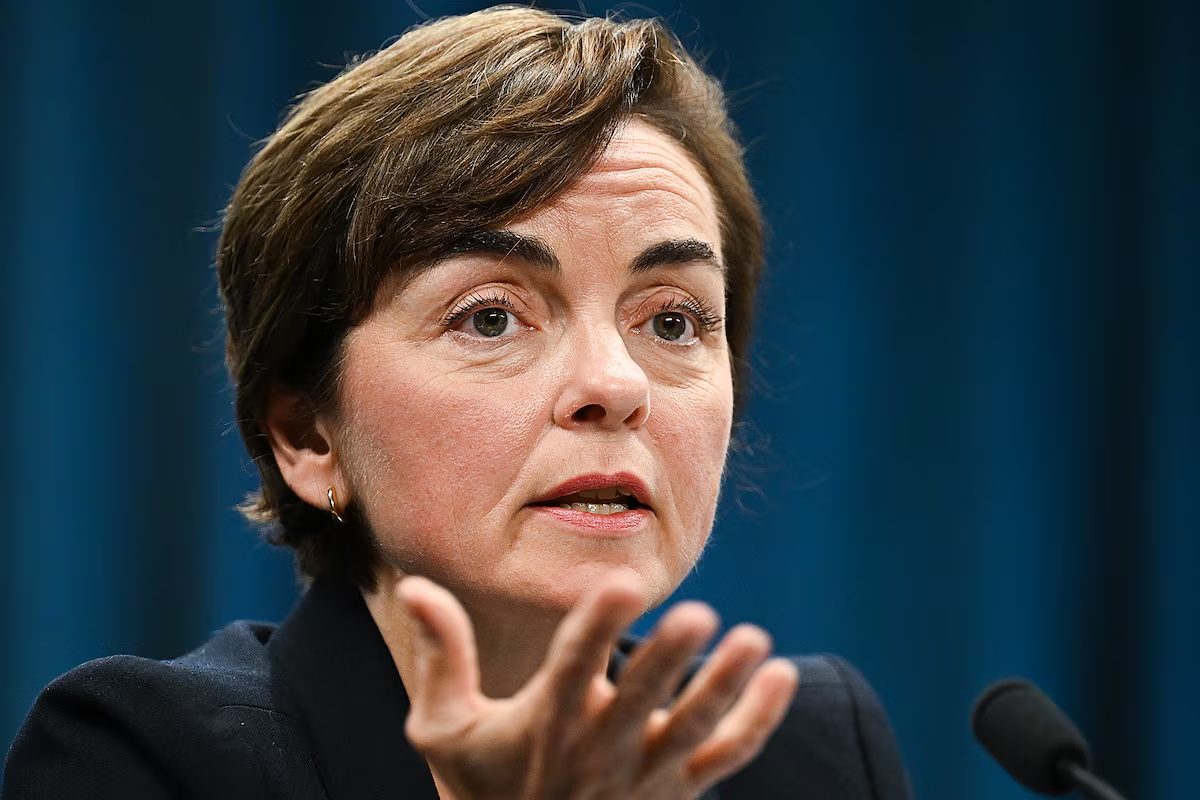
Quebec Premier Christine Frechette speaks during a news conference in Montreal, on Aug. 22.Graham Hughes/The Canadian Press
Quebec Premier Christine Fréchette has kicked off a high-stakes election campaign that will likely be dominated by the Canada-U.S. trade war and the prospect of a third referendum on independence.
Ms. Fréchette, who has been premier since April, visited Quebec’s lieutenant governor Thursday morning to dissolve the National Assembly and launch a 39-day campaign. Quebeckers will go to the polls on Oct. 5.
The start of the campaign comes days after trade negotiations between Canada and the U.S. fell apart, prompting U.S. President Donald Trump to approve 50-per-cent tariffs on about $28-billion worth of Canadian goods, while Ottawa responded with what it called dollar-for-dollar tariffs Tuesday.
Ms. Fréchette is attempting to position her party, the Coalition Avenir Québec, as the best choice to lead the province at a time of geopolitical uncertainty. But after eight years in government, mostly under the leadership of former premier François Legault, the CAQ has seen its support collapse in recent years as Quebeckers look for change.
Trump and sovereignty among issues key to Quebec election, analysts say
The sovereigntist Parti Québécois has led in the polls for the better part of three years under the leadership of Paul St-Pierre Plamondon, who has promised a third sovereignty referendum within a first mandate if his party forms government.
But support for independence remains stubbornly low in Quebec, around 30 per cent in recent polls. Last week, Mr. St-Pierre Plamondon announced he would not hold a referendum until after Mr. Trump leaves office in 2029. The move appeared to be an attempt to shift the focus of the campaign onto other issues.
The PQ’s lead has shrunk in recent months, while the CAQ has rebounded slightly since Ms. Fréchette took over. But with five parties likely to win seats this fall, and three- and four-way races anticipated in several ridings, the campaign could be unpredictable.
The Liberals, currently the official Opposition, are trying to make a comeback under their new leader, Charles Milliard. But they have struggled to improve their polling among francophone voters outside Montreal.
Meanwhile, the left-leaning Québec Solidaire will try to hold onto its handful of existing seats, while the Quebec Conservatives are hoping for a breakthrough this year, especially in the regions around Quebec City. The party currently holds just one seat in the National Assembly.