
Open this photo in gallery:
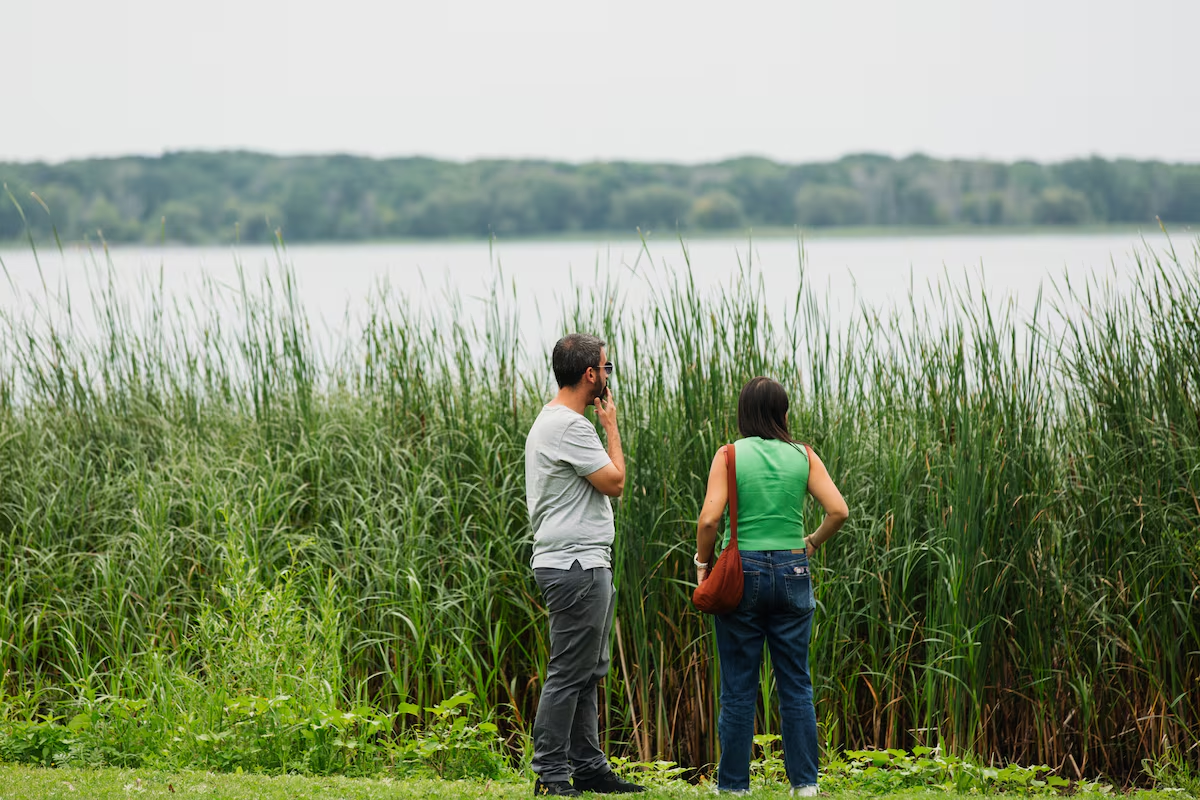
A man smoking a cigarette at the Thousand Island National Park in Mallorytown on Aug. 20. A 2019 study from University of the Fraser Valley found that 11 per of outdoor fires in Canada from 2012 to 2015 were caused by smoking.Kaja Tirrul/The Globe and Mail
Anti-tobacco advocacy groups are calling on the federal government to ban smoking in national parks to reduce the risk of wildfires and prevent litter from cigarette butts.
The Canadian chapter of Action on Smoking and Health is among seven organizations that signed a letter to Environment, Climate Change and Nature Minister Julie Dabrusin earlier this month, arguing that a smoking ban is needed in national parks, historic sites and conservation areas to protect the environment.
The group’s executive director, Les Hagen, said the federal government must act quickly as climate change makes conditions worse for wildfires.
“We continue to struggle with more and bigger wildfires. Well, here’s a measure that’s absolutely free of charge that doesn’t require any firefighting equipment or resources that the government can implement immediately,” he said.
Ms. Dabrusin wasn’t available for an interview.
The metrics that reveal the human cost of a wildfire season
Parks Canada follows provincial, territorial and municipal laws when regulating tobacco use in national parks, ministerial spokesperson Keean Nembhard said in an e-mail. He said that aligning with those regulations helps visitors have consistent rules to follow.
This year’s wildfires season is on track to the be fourth worst on record in Canada because of high temperatures and dry conditions.
Wildfires in British Columbia triggered a provincial state of emergency last week after a fire in the Okanagan region forced 20,000 to flee their homes. Fires in Northern Ontario earlier in the summer blanketed much of the province and large areas of the United States with thick orange smoke, forcing multiple Indigenous communities to evacuate.
A 2019 study from University of the Fraser Valley found that 11 per of outdoor fires in Canada from 2012 to 2015 were caused by smoking.
Mr. Hagen pointed to the 2017 Elephant Hill wildfire in B.C., which burned nearly 200,000 hectares and torched more than 100 homes, as an example of why a ban is needed. B.C. fire officials concluded the fire was likely caused by “smoking materials.”
In 2018, Parks Canada imposed a smoking and vaping ban near playgrounds, public buildings, shelters and viewing towers, but smoking is permitted in most areas of national parks.
B.C. and New Brunswick are among the jurisdictions that prohibit smoking in provincial parks, with exceptions for some designated areas and campsites. Last year, the French government imposed a national ban on smoking in public parks.
Open this photo in gallery:
Thousand Islands National Park “Leave No Trace” signage on the Jones Creek Trail. Parks Canada follows provincial, territorial and municipal laws when regulating tobacco use in national parks.Kaja Tirrul/The Globe and Mail
Health Canada issued a consultation paper in 2017 as it worked to update its national anti-smoking strategy. Among the potential measures floated in the report was prohibiting smoking in public parks. The proposal was not included in the updated anti-smoking strategy that was released in 2018.
In addition to the wildfire risk, Mr. Hagen said a ban would lessen the amount of cigarette-butt litter, which can leach harmful chemicals into waterways and soil when discarded.
The letter says a ban would also help Canada reach its goals to curb tobacco use among young people as the government seeks to prevent smoking-related illnesses and deaths.
Mr. Hagen said allowing smoking in national parks sends a mixed message to youth when they visit by normalizing it.
“You’re saying on one hand, ‘Please enjoy this park, the healthy outdoor air and experience, and the physical activity that goes along with it,’ but here you are stuck on a trail behind a bunch of folks that are smoking and vaping,” he said.
Mr. Hagen said exemptions to a potential ban could be allowing smoking in campsites, not in backcountry wilderness areas, and for medical use of cannabis.
André Picard: Can we spare future generations from the horrors of smoking?
Laura Chasmer, an associate professor of geography and environment at Western University, said discarded, smouldering cigarettes in parks present a significant wildfire risk as forest debris becomes drier because of climate change.
She said that a smoking ban in national parks could help reduce wildfire risks, but people need to follow the orders for it to be effective.
“It depends on whether or not somebody thinks, ‘Well, I’m not going to pay attention to that,’ and chuck the cigarette butt out of the car anyway,” Ms. Chasmer said.
She said that while some cigarettes are labelled as “fire safe” and are designed to extinguish faster, discarding them irresponsibly can still be dangerous, especially if wind conditions fan the embers into flames.
A June, 2025, study from the United States Department of Agriculture found that modified cigarettes can still ignite wildfires. From 2010 to 2020, smoking has caused roughly 1,700 wildfires annually in the U.S., according to the study.