
Open this photo in gallery:
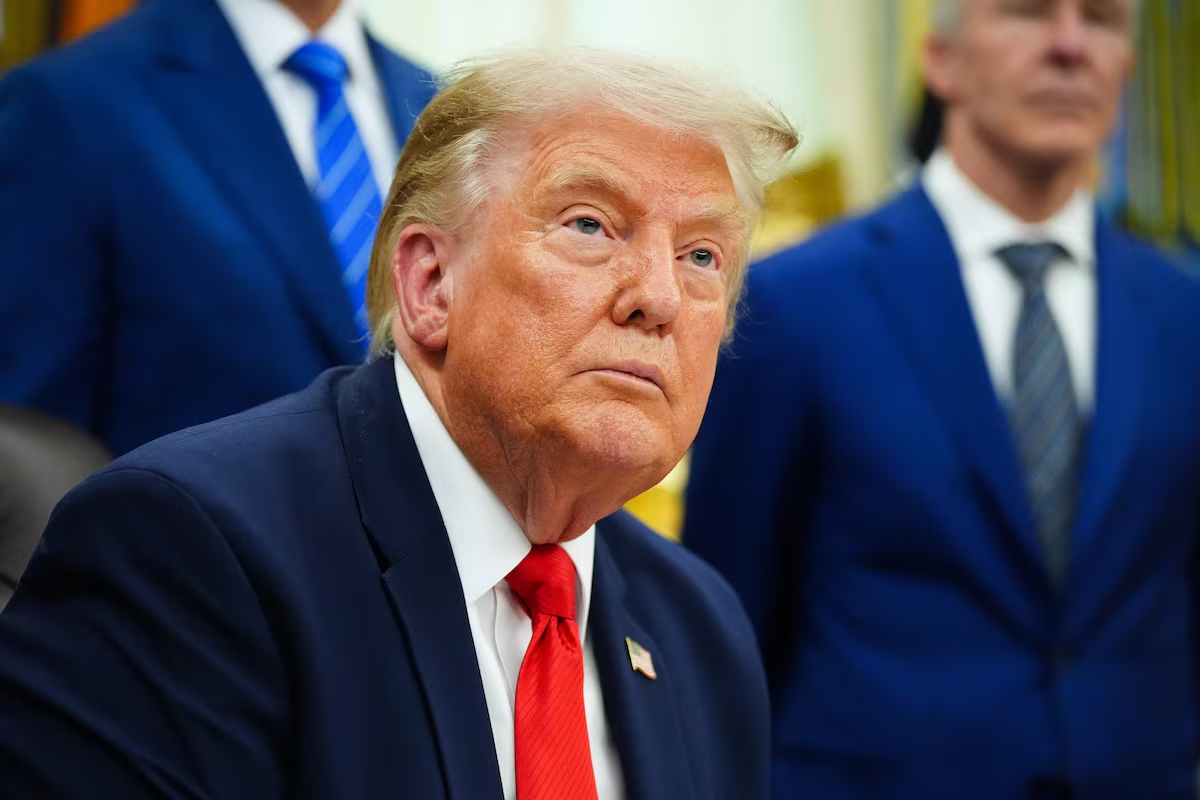
U.S. President Donald Trump in the Oval Office of the White House on July 29.Julia Demaree Nikhinson/The Canadian Press
A group of 25 Democratic-led U.S. states sued U.S. President Donald Trump’s administration on Monday, arguing that the president’s latest round of tariffs on goods from 60 trading partners, like most of his earlier sweeping tariffs, exceeds his legal authority to tax imports.
The states’ lawsuit filed in the U.S. Court of International Trade in New York follows previous challenges by small U.S. businesses, which sued to block the tariffs on the day they went into effect last month.
States and small businesses have successfully challenged previous global tariffs imposed by Trump in his second term, but the president has continued to pursue new tariffs despite a series of legal setbacks. The Trump administration on July 24 imposed new tariffs of 10 per cent and 12.5 per cent on 60 trading partners, including the European Union, over allegations that they were not doing enough to stop the export of goods produced with forced labour.
The tariffs went into effect just as a previous 10 per cent global tariff expired. The states that sued, including Oregon and New York, all have Democratic Attorneys-General or governors.
Editorial: The accidental tourist upside of U.S. tariffs
“Despite losing every step of the way, Trump is trying yet again to inflict more chaos on working families and homegrown Oregon businesses,” Oregon’s Attorney-General Dan Rayfield said in a statement.
White House spokesman Kush Desai said the tariffs were an appropriate and legal response to unfair trade practices in other nations.
“A foreign country’s failure to impose and effectively enforce a prohibition on the importation of goods produced with forced labour is unreasonable and burdens U.S. commerce, including American workers, and must be addressed,” Desai said.
Trump has made tariffs a central pillar of his foreign policy, even after a stinging defeat in the U.S. Supreme Court.
The U.S. Supreme Court ruled against most of Trump’s widest-ranging tariffs on Feb. 20, finding that the International Emergency Economic Powers Act (IEEPA) does not authorize the president to unilaterally impose tariffs on trading partners.
Trump responded to that ruling by escalating his trade war, calling Supreme Court justices “disloyal” and issuing new temporary 10 per cent tariffs under a different legal authority that, like IEEPA, no president had previously used to impose tariffs.
Those tariffs were also ruled illegal by the U.S. Court of International Trade, but they remained in effect while the Trump administration appealed. The latest round of global tariffs was imposed under Section 301 of the Trade Act of 1974, which is meant to combat unfair or discriminatory economic practices by other nations. The tariffs imposed in July affect over 99 per cent of U.S. imports.
Unlike IEEPA or the temporary global tariff authority, Section 301 has been used by past presidents. But the states and small businesses said in their lawsuits that Section 301 tariffs have historically been targeted to address specific nations and industries, and Trump’s broad-brush approach has no historical precedent.
The states’ complaint, like two previous lawsuits filed by small businesses over the tariffs, also argued that the new tariffs used “forced labour” as a pretext to re-impose the tariffs that had already been ruled illegal in court.
They said that a sweeping tax on imports would do nothing to address the real problems of forced labour around the world.