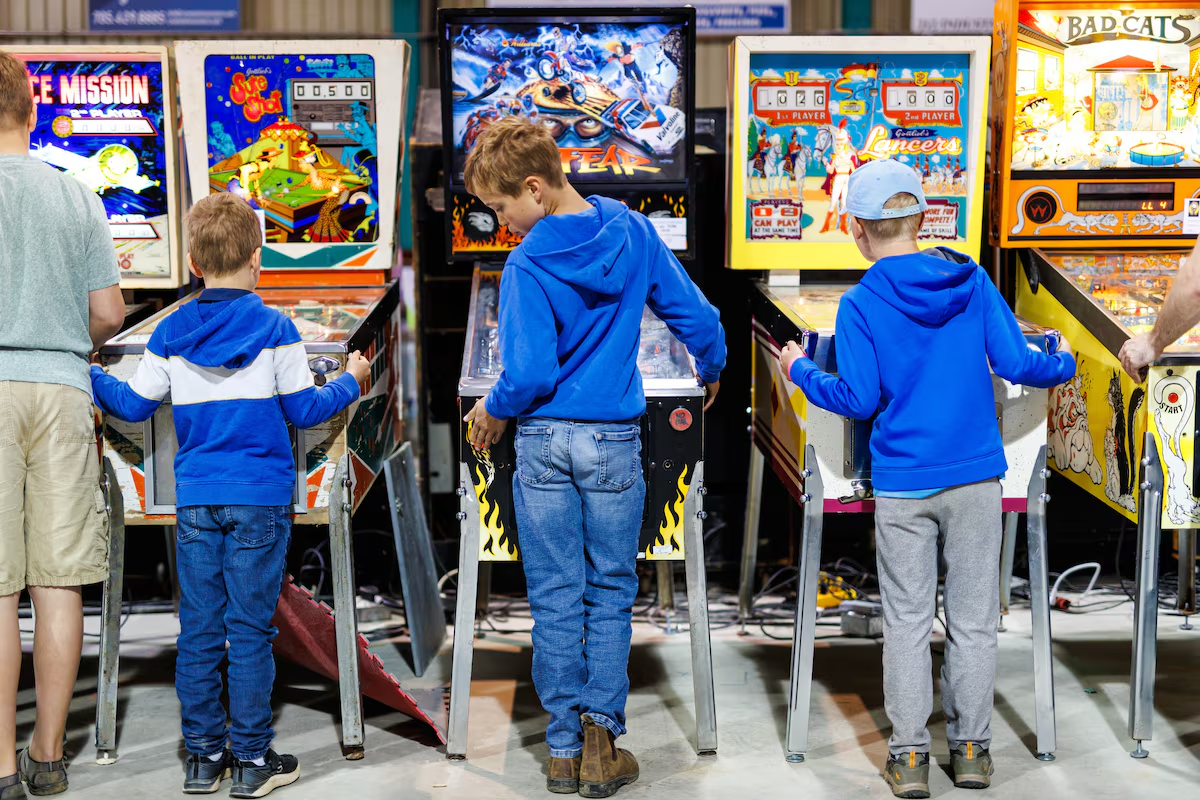

Packed into a barn at the Great Northern Exhibition Fairground in Stayner Ont., close to 100 pinball machines clank, ping and sing in an echoing chorus. The earliest one dates to the 1930s; the newest is a Pokémon game released only a few months ago.
Pinball machines are often described as a world under glass – intricately placed ramps, bumpers, targets and pins in a cabinet adorned with its respective generation’s pop culture imagery.
The objective is to control a metal ball, using two small flippers, to hit targets in a specific order to score points. The classic arcade game is played by a hodgepodge of enthusiasts, restorers, collectors, sellers, casuals and competitors.
Until the 1970s, pinball was widely considered to be a form of gambling and often illegal. But nearly 60 years later, at the fourth annual Ontario Pinfest, love for the game runs deep – and across generations.
In 1993, Dave Astill saw a newspaper listing for a pinball machine he recalled playing as a young boy. Since the moment he brought the machine home – he paid $1,000 for it – he says he’s been “full tilt on pinball.”
Mr. Astill is the organizer of Pinfest, and for him, the game is a family affair.
“When my children were babies, I used to have them sitting on the glass, and I’d play,” he says. “They would follow the ball – I guess the sounds and the flashing lights and everything was attracting them.”
The Astill family, helped by a dozen volunteers and pinball collectors, organized the fourth annual Ontario Pinfest. For these pinball enthusiasts, love for the arcade game runs deep – and across generations.
The Globe and Mail
These days, Mr. Astill’s son, 21-year-old Noah, is a much better player than his dad; he holds the high scores on most of the 22 machines the family owns.
They often travel around North America attending pinball conventions, bringing together Dave’s childhood nostalgia for the machines and the growing interest of a younger generation slowly rekindling a love for tactile gaming.
The expertise, interest, investment and complexity in the game spans a wide range. Some of the older games are electromechanical, often referred to as EM games. They contain a mess of wires, relays and switches that control the game play. The newer ones are controlled by a single small chip. (Dave, a one-time real estate agent, now sells these chips full time.)
A new addition to many of these games is a QR code reader that pairs with an app. This allows players to keep their scores online and compete against their friends around the world.
“I just think there’s so much innovation in the new machines,” says Dave. “It seems to be attracting the younger kids, and I hope it’s here for a couple more generations.”
If his son has anything to say about it, it will be. “For what they’ve done in the last decade, I’m very excited to see what they do in the next decade plus,” says Noah. “I look forward to the day where I’m playing and teaching my kids how to play pinball.”