
Open this photo in gallery:
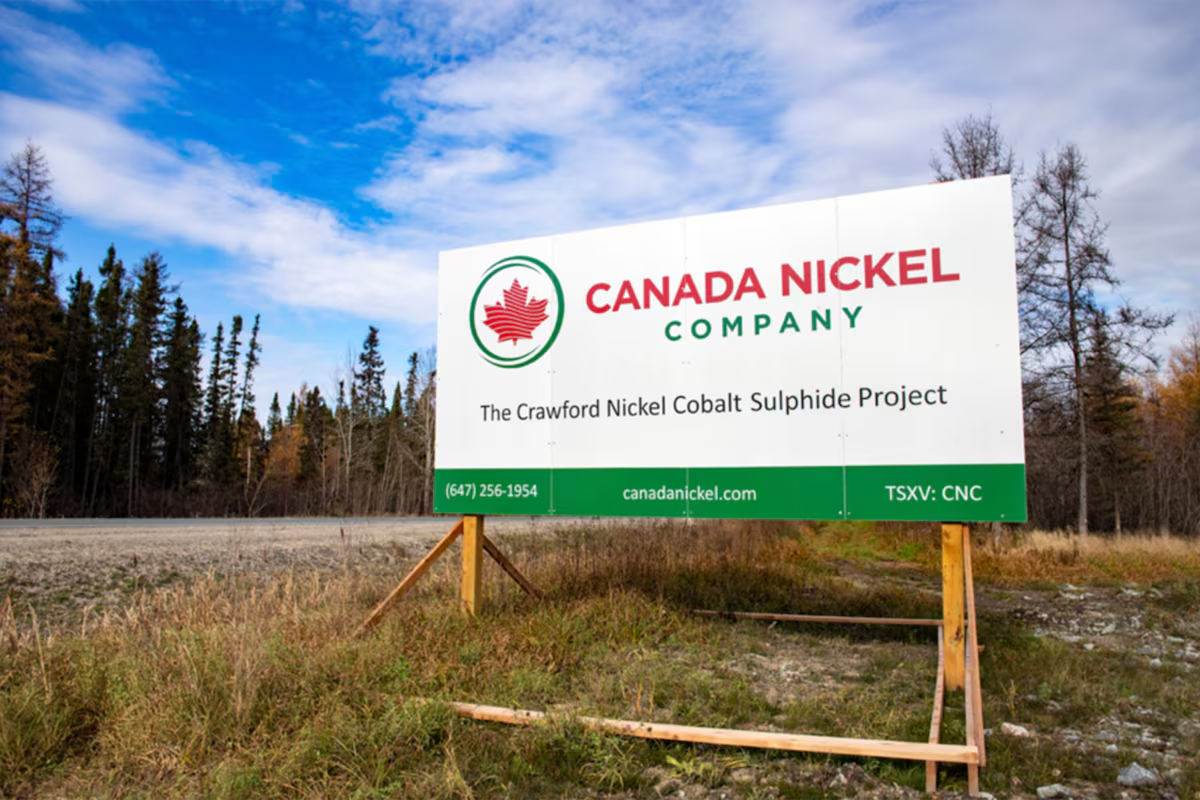
The Crawford nickel cobalt project will be built north of Timmins, Ont.Canada Nickel
Ottawa has formally approved the construction of Canada Nickel Co. Inc.’s CNC-X Crawford critical minerals mine, not long after the project was selected for federal fast-tracking through Prime Minister Mark Carney’s Major Projects Office.
The Globe and Mail reported on Thursday that Toronto-based Canada Nickel had secured the approval and it was confirmed by the company in a press release on Friday.
Located about 40 kilometres north of Timmins in Northeastern Ontario, Crawford contains the world’s second largest nickel reserve, and is expected to be the biggest nickel mine in the Western world once it is built. Crawford should be in production in 2029, and is expected to operate for 41 years.
Federal Environment Minister Julie Dabrusin in her decision statement released on Friday said that while the mine will likely cause adverse effects on fish, migratory birds, water quality and on Indigenous communities, its positive economic effects, as well as mitigation efforts by the company to minimize the environmental damage, led her to conclude that it is in the public interest for Crawford to go ahead.
Ms. Dabrusin imposed dozens of legally binding conditions on Canada Nickel around the operation of Crawford. Those include monitoring water quality, lighting stipulations to account for migratory birds, as well as workplace commitments relating to anti-harassment, anti-bullying and gender policies.
In an interview on Friday, Canada Nickel chief executive officer Mark Selby estimated that the company spent thousands of hours working with the government through the Impact Assessment Agency of Canada over a nearly four-year period. The impact statement the company filed to Ottawa ran more than 20,000 pages long.
While Crawford was already far along in the regulatory system before being referred to the MPO, Mr. Selby said the designation undoubtedly helped speed things along with the company benefitting from “a permitting concierge” at the federal level.
Mr. Selby had already gone through the federal permitting process a decade ago with the Dumont nickel-cobalt project, and he said the current system works better.
“The government really has made some significant changes in terms of how it approaches permitting,” he said. “The attitude, and the work that’s involved in terms of getting through, it’s a much smoother process.”
Canada has long been criticized for taking far too long to approve major resource projects and bogging down companies unnecessarily with red tape, especially when overlapping provincial and federal permits are needed.
Canada Nickel was the first mining project approved under the federal Impact Assessment Act since it was enacted in 2019. Former prime minister Justin Trudeau’s government expanded reviews far beyond environmental parameters to encompass health, social, cultural, gender and economic impacts.
Natural Resources Minister Tim Hodgson said in a statement on Friday that the Canada Nickel approval is a testament to the government’s commitment to getting projects approved and streamlining the permitting processes.
But Conservative shadow minister for natural resources Carol Anstey doesn’t think the Liberals have done enough to improve the permitting process. In a statement on X, she said that only one mine approval since the Impact Assessment Act came into effect isn’t good enough.
“Canada needs projects like Crawford, but it shouldn’t take seven years for the first project to make it through the Liberals’ process of delays, red tape and roadblocks,” she said.
Building critical minerals mines, ports and pipelines is a key tenet of Prime Minister Carney’s strategy to offset the financial hit caused by tariffs U.S. President Donald Trump has imposed on Canada.
While the Crawford approval is an important milestone for Canada Nickel, it must finalize a US$2.5-billion financing package before the construction can go ahead.
The company has most of the funding tentatively in place, and much of that is from the public sector.
Tentative fundings include US$500-million in debt from Export Development Canada, $500-million from another unnamed Canadian government financing agency, and about US$600-million in tax credits related to critical mineral development, and carbon capture and storage. Samsung SDI of South Korea also has an option to purchase 10 per cent of Crawford for US$100-million.
Canada Nickel still needs to nail down an additional US$300-million, which Mr. Selby expects will come from a mix of raising equity through the private sector and from other government sources.