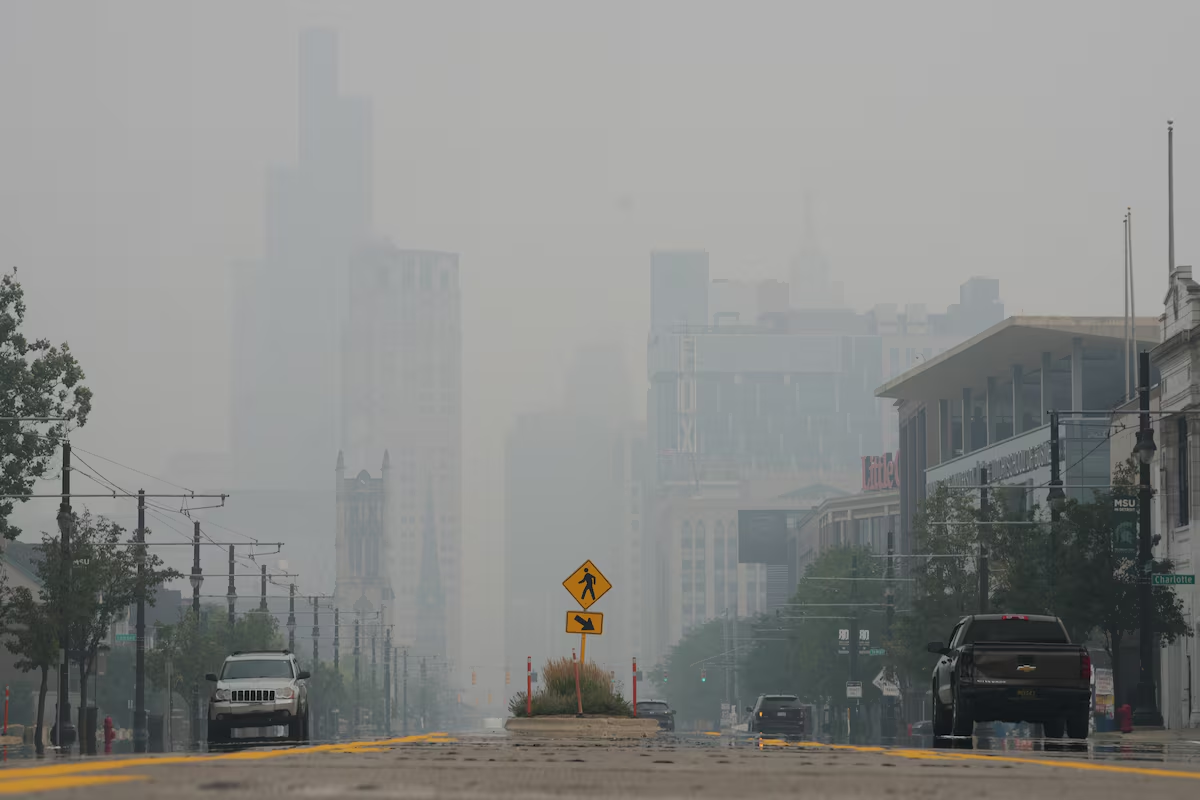

Open this photo in gallery:
View of the Ambassador Bridge as smoke from wildfires settles in Detroit on Thursday.Gregory Shamus/Getty Images
Smoke from Canadian wildfires has been smothering much of Southern Ontario and the northeastern United States in a lung-irritating haze for days and prompted air quality warnings affecting millions of people, but officials are hopeful that rain will bring relief ahead of Sunday’s World Cup final in New Jersey.
Hazardous smoke from the wildfires has already affected some sporting events in the U.S., including a baseball game between the Mets and Phillies in Philadelphia whose start time was moved up and a soccer match that was postponed between the Vancouver Whitecaps and Chicago Fire in Chicago on Thursday.
Ford defends Ontario’s wildfire response as smoke blankets central Canada, Eastern U.S.
The World Cup final between Spain and Argentina, however, is still scheduled for 3 p.m. ET Sunday at open-air MetLife Stadium in East Rutherford, N.J., despite lingering, hazy smoke and warnings from U.S. health officials on Friday telling people to limit their time outside. Meteorologists said rainstorms forecast Saturday could help dissipate a lot of the smoke, although air quality warnings were expected to continue into Sunday.
While air quality improved Friday in Toronto, where earlier in the week smoky conditions forced the cancellation of outdoor World Cup watch parties, pollution indexes showed major U.S. cities still had some of the most dangerous air in the world.
The smoke was especially pronounced in the Great Lakes Region around Chicago and Detroit – where health authorities said it was causing serious health effects and life-threatening symptoms. The impacts have been far-reaching in the U.S., with a thick blanket of smoke spreading from Minnesota and Michigan to Pennsylvania, Ohio and New York state, prompting officials to postpone concerts and close pools, golf courses and many outdoor events.
“It’s basically a river of smoke pouring into the Midwest right now,” said Emily Fischer, an atmospheric chemist and professor at Colorado State University. “This is a direct connection to climate change. This is the climate change that people breathe.”
Why wildfire smoke is difficult to forecast and damaging to our health
In New York, where the sky was tinged with an orange haze and the air smelled acrid, local officials cautioned the elderly, pregnant women, and people with other risk factors such as heart and lung disease, to remain inside.
“Today is expected to be the worst day of this event,” New York Mayor Zohran Mamdani said at a gathering on Thursday. “At ’unhealthy’ levels, everyone, not just people with asthma or heart conditions, not just older adults, everyone may feel health effects. So today, every New Yorker should take precautions.”
The city was handing out free KN95 face masks at hundreds of libraries, police precincts and firehouses, the mayor said.
Open this photo in gallery:
People wear masks to protect themselves from smoke in Chicago.Scott Olson/Getty Images
Even if the smoke lifts somewhat by Sunday, players in the World Cup final could still face health risks and would require considerable hydration and cooling, an expert said. It’s expected to be 28 C at kickoff time in New Jersey.
“It not only is going to be terrible, terrible air quality. It’s hot, and that can cause an extreme amount of stress on the heart,” said Dr. Vin Gupta, a pulmonologist and board member at the American Lung Association.
“That is a very powerful and dangerous one-two punch to the human body. It’s going to be critical to maintain core body temperatures as low as possible.”
Open this photo in gallery:
The New York City skyline, through a cover of wildfire smoke, in Jersey City, N.J., on Friday.Ryan Murphy/The Associated Press
Dr. Gupta suggested that fans with health issues wear masks in the stadium or even consider selling their World Cup final tickets if the air quality doesn’t improve.
“If you’re immunocompromised for whatever reason, consider watching the game at home instead of going in person. So sell your tickets if that’s an option if air quality is going to be bad on Sunday,” he said.
While there’s no indication the game will be changed, the wildfires did prompt a meeting between President Donald Trump and FIFA President Gianni Infantino on Friday. Members of the Trump administration have been discussing air quality concerns with soccer’s governing body and monitoring the wildfire situation, according to a White House official. The person was granted anonymity to confirm internal discussions.
With hundreds of forest fires burning out of control in Canada, according to the Canadian Wildland Fire Information System, some Republican members of Congress have accused Canada of not doing enough to keep wildfire smoke from drifting south of the border.
“We are done accepting apologies in place of action. If Canada will not manage its forests to prevent these fires, the United States will look elsewhere, and act on our own, to protect our people,” U.S. lawmakers John James, John Moolenaar, Jack Bergman and Lisa McClain said in an open letter to Prime Minister Mark Carney.
Complaining their “patience has run out,” the Republican politicians said “American lungs are paying the price for Canadian inaction, year after year.” They accused Canadian officials of “chronic under-investment in forest thinning, fuel reduction, and prescribed burns, along with inadequate enforcement against arson.”
Michigan lawmakers press Carney on poor air quality from wildfire smoke
On Thursday, Mr. Carney did not respond directly to these claims, but said that both countries had a responsibility to fight climate change.
“Climate change is everyone’s responsibility, truly everyone’s, including the United States,” he told reporters.
Meanwhile, Ontario Premier Doug Ford dismissed criticism of his government’s handling of the fires, saying over 150 fire crews are on the ground battling the blazes. He said his government has more than doubled the annual base funding for emergency firefighting since it took office, and has spent more than $1.5-billion on wildland firefighting since 2018.
With reports from The Canadian Press and Reuters