
Premier Doug Ford is defending his government’s handling of wildfires that have destroyed one community, forced evacuations in several others and sent smoke drifting as far south as the White House, saying the province is “throwing every single resource we can” at the infernos.
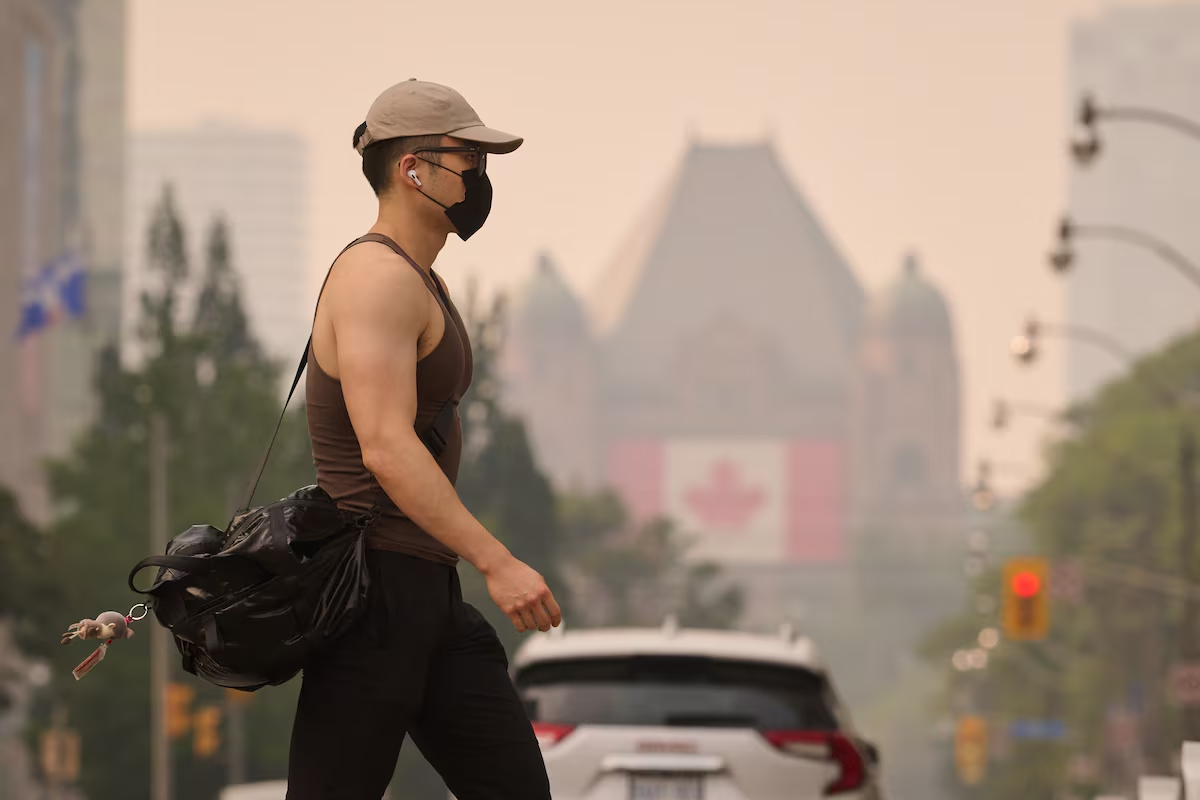
Smoke from 129 active wildfires in the province’s northwest region has blanketed much of central Canada and the eastern U.S., triggering dire air-quality warnings and drawing criticism of Canadian forestry practices from U.S. lawmakers.
Emergency Preparedness Minister Jill Dunlop and Natural Resources Minister Mike Harris joined Mr. Ford at a morning press conference in Toronto on Friday to address the province’s deepening wildfire crisis.
Images released on Thursday from Namaygoosisagagun First Nation, also known as Collins First Nation, located about 210 kilometres north of Thunder Bay, show empty roads and smouldering ruins from a wildfire that tore through the community on Monday.
Chief Helen Paavola said she called the Ministry of Natural Resources for evacuation assistance before the flames overtook the town on Monday, but no help arrived.
Instead, residents scrambled to a lake and fled across the water in small boats as they watched the blaze engulf their community. There were no fatalities, but the loss has left residents wondering about the settlement’s future and why they had to escape on their own.
“That particular fire started very, very close to the community, which is unusual,” said Mr. Harris. “We didn’t really have a whole lot of lead time to be able to get crews there from the other fires they were already fighting.”
He said the fire was moving at four kilometres an hour and “plumes of smoke made it difficult for aircraft to reach the area.”
“In this certain circumstance, the important part was that people got out, there was no loss of life,” he said.
The Premier said that 10 communities have evacuated or currently have evacuations under way. Another four are preparing for possible evacuations.
Evacuees are being hosted in cities across the province, including Thunder Bay, Kenora, Fort Frances, Sioux Lookout, Sudbury, Niagara Falls and Toronto.
The province has asked the federal government and the Canadian Armed Forces be prepared to support evacuations. There are 150 fire crews on the ground and 80 water bombers and helicopters are currently fighting fires, with another 39 awaiting deployment.
Mr. Ford’s government has faced criticism throughout the week for budgeting $150-million for emergency firefighting in 2026-27 after spending $271-million last year. Mr. Ford explained that the $150-million figure is just base funding that the province routinely exceeds. “That base funding ensures that firefighters, aircraft, and equipment are in place before fire season begins,” he said. “But that isn’t where the funding ends. Firefighting is based on need, so while the base budget is $150-million, every year we spend significantly more than that.”
Ontario will spend $650-million on five new helicopters and six new water bombers to help fight spreading wildfires, Premier Doug Ford told a press conference on Friday.
Reuters
The wildfires took on an international dimension on Thursday, with some U.S. lawmakers threatening retribution for the haze cloaking states from the Great Lakes to the Atlantic coast.
Ohio Sen. Bernie Moreno said in a post he will introduce a bill next week “to sanction Canada and the responsible Canadian government officials for this atrocity.”
Four Republican members of Congress in Michigan called on Canada to act on the smoke Wednesday, saying their patience has run out.
“We are done accepting apologies in place of action. If Canada will not manage its forests to prevent these fires, the United States will look elsewhere, and act on our own, to protect our people,” they said in an open letter to Prime Minister Mark Carney.
Mr. Ford said Ontario has assisted with natural disasters in the U.S. and that lawmakers there should help rather than hector.
“If some politicians are out there chirping away, well maybe what they should do rather than complain is send support, send help, because we have done the exact same thing for our Americans friends, and that’s what you’re supposed to do.”
With a report from The Canadian Press