
Open this photo in gallery:
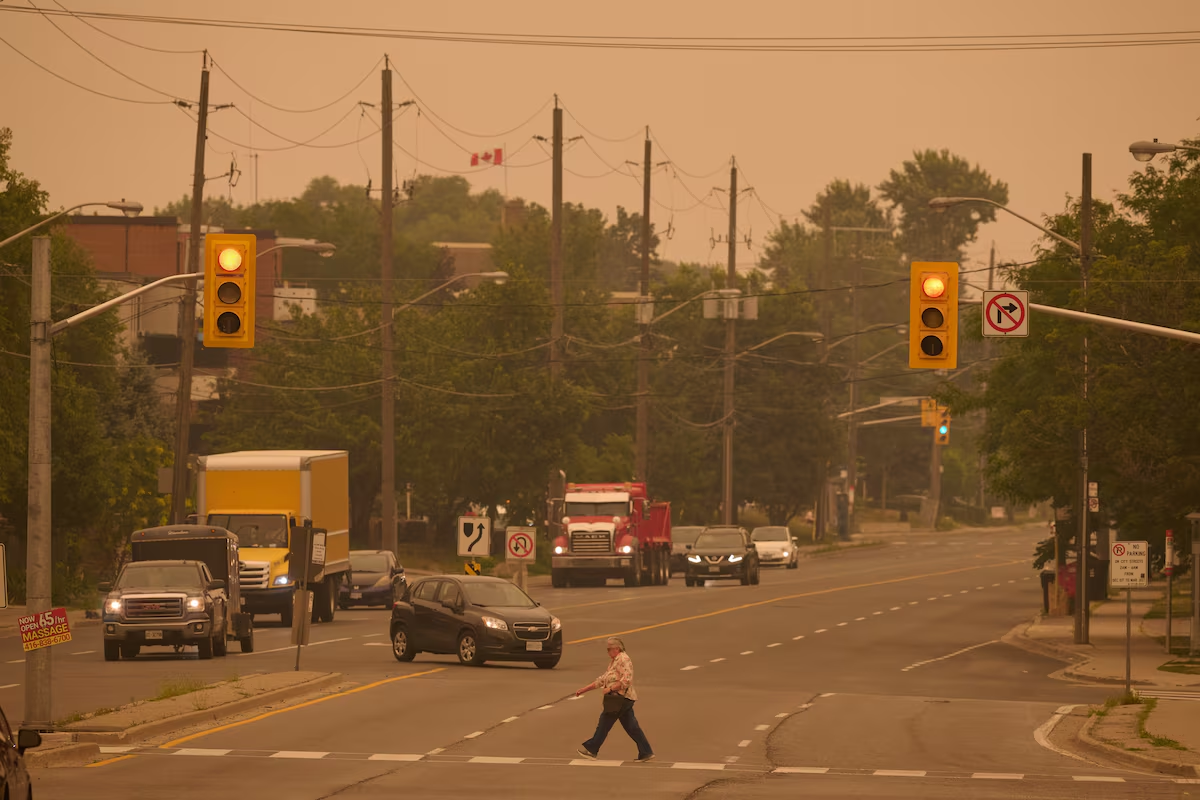
Pedestrians cross a road as wildfire smoke rolls across Toronto on Wednesday.Sammy Kogan/The Globe and Mail
Several communities in northwestern Ontario have been evacuated as wildfires devastate homes and infrastructure in the region, with the situation only expected to worsen.
More than 130 active wildfires burned in the province’s northwest Wednesday, as out-of-control blazes prompted evacuation orders for the communities of Armstrong, Collins First Nation, Lac La Croix First Nation, Lac des Mille Lacs First Nation and Whitesand First Nation, and provincial police closed highways.
Smoke from the wildfires turned Toronto’s skyline an eerie shade of yellow as air quality warnings across southern parts of the province raised health concerns and prompted outdoor event cancellations.
Environment Canada’s air quality warnings stretched from Thunder Bay to Kingston and down to London, Ont. Many of the wildfires are threatening areas around Lake Nipigon, north of Thunder Bay, and the smoke plumes have stretched across the U.S.-Canada border, prompting health warnings in New York State.
Ontario’s Ministry of Natural Resources said recent lightning events have caused extreme fire hazard levels and increased fire activity.
“With current and forecasted dry and warm weather, we are anticipating continued increases in activity across much of the province,” said Victoria Lee, a fire information officer for the ministry in Dryden, Ont.
“Our focus continues to be on priority areas where fire suppression efforts are most likely to be successful, with top priorities being the protection of wildland firefighting personnel and public safety, critical infrastructure, and capturing, where possible, new fires,” Ms. Lee said.
CN Railway evacuates workers, suspends operations in area hit by wildfire
A joint statement from the Ministry of Natural Resources and the Ministry of Emergency Preparedness and Response said the province’s “world-class fire and emergency response crews are actively working alongside partners across the Northwest to respond to fires” and are co-ordinating with affected communities to ensure safe evacuations.
Gull Bay First Nation, which declared a state of emergency because of nearby fires and the closing of the only highway into the community, has ordered a self-evacuation. But a handful of elders are still in their homes and refusing to leave, Gull Bay councillor Hubert Bottle told The Globe and Mail Wednesday afternoon.
“They don’t want to leave,” he said, adding that he’s also staying behind to monitor the situation and make sure the elders are safe.
“I got some boats in the water in case, hopefully, they’ll jump on my boat and take off,” Mr. Bottle said during a phone call as he drove around his community checking on the elders. He said a fire is burning 12 kilometres away but the ministry has not conducted any fire suppression efforts in the community.
“I don’t see no MNR here whatsoever. I tried calling them right now, and they said they couldn’t give me an answer for that,” Mr. Bottle said.
You might hear the Canadian term thrown around weather forecasts, especially during extreme heat. It helps explain why the temperature on your thermometer might not match how hot you actually feel. The Globe’s Alex Migdal breaks it down.
Alex Migdal/The Globe and Mail
In a statement, the Ministry of Natural Resources said it has not issued an evacuation order for Gull Bay, but it is aware of the self-evacuation that is taking place. The closest fire to the community is located approximately 30 km northwest of Gull Bay, the ministry said.
Tausha Esquega is a member of Gull Bay First Nation living in Thunder Bay, where she said many evacuees have fled to without a plan.
“It was like, get in your cars and go to Thunder Bay, ask your friends or family if you can stay there. And I mean, for people who’ve been living in the community for their whole lives, that’s all they have, that’s all they know.”
Indigenous Services Minister Mandy Gull-Masty said in a statement on social media that her department is actively looking for suitable relocation options for evacuees.
Ontario wildfires trigger air quality warnings for Toronto, southern regions
Indigenous Services Canada “is engaged in a whole-of-government effort to respond to the evolving situation and is in close contact with First Nations leadership, federal and provincial partners, the Canadian Red Cross and other partners,” Ms. Gull-Masty said.
Northwestern Ontario is a vast landmass covered by dense boreal forest territory in the heart of the Canadian Shield.
Images of eerily ominous scenes of orange and yellow smoky skies, and plumes of smoke flooded social media Tuesday, as ashes fell in a light blanket over Thunder Bay and its outskirts.
The City of Thunder Bay has temporarily suspended operations of its non-critical programs and services, including pools, beaches, splash pads, golf courses and marinas, because of poor air quality.
The smoke from Northern Ontario is expected to continue to spread into the eastern seaboard of the United States over the next few days, worsening overnight Wednesday and into Thursday, said Brian Proctor, meteorologist at Environment and Climate Change Canada.
“It’s not looking very good in the Toronto area and that sort of air quality is going to continue to spread eastwards and westwards,” he said.
Mr. Proctor said states as far off from the fires as Virginia and Maryland will be affected by the smoke, and many of the most populous states in the eastern U.S., including New York, Pennsylvania and Ohio, will have poor air quality over the weekend.
Ontario Liberal MPP Ted Hsu accused Premier Doug Ford’s government of underfunding the province’s emergency forest firefighting service.
“Courage on the front lines cannot compensate for inadequate preparation. Ontario entered this fire season facing shortages of crews, pilots and equipment,” Mr. Hsu said. “The government has added 68 permanent firefighting and support positions, but serious recruitment and retention pressures remain.”
Patty Hajdu, the Minister Responsible for the Federal Economic Development Agency for Northern Ontario, said the federal government is ready to support the province but a request for assistance had not been made as of Wednesday afternoon.
How poor air quality can affect your health, and how to protect yourself
Sharon Bak is a former field officer for the Ministry of Natural Resources and the current volunteer community emergency management co-ordinator for the unincorporated municipality of Pass Lake, located just east of Thunder Bay, which is also at risk of evacuation.
She said the current system for managing emergencies in the province, particularly in northwestern Ontario, is not working, in part because municipalities, unincorporated townships and First Nations are all drawing on the same resources in ways that don’t make sense.
“The province has made it near impossible for capacity-building for folks like us in Northern Ontario,” she said. “There is not one full-time community emergency management co-ordinator in a municipality in northwestern Ontario, and that is ridiculous.”
With reports from The Canadian Press