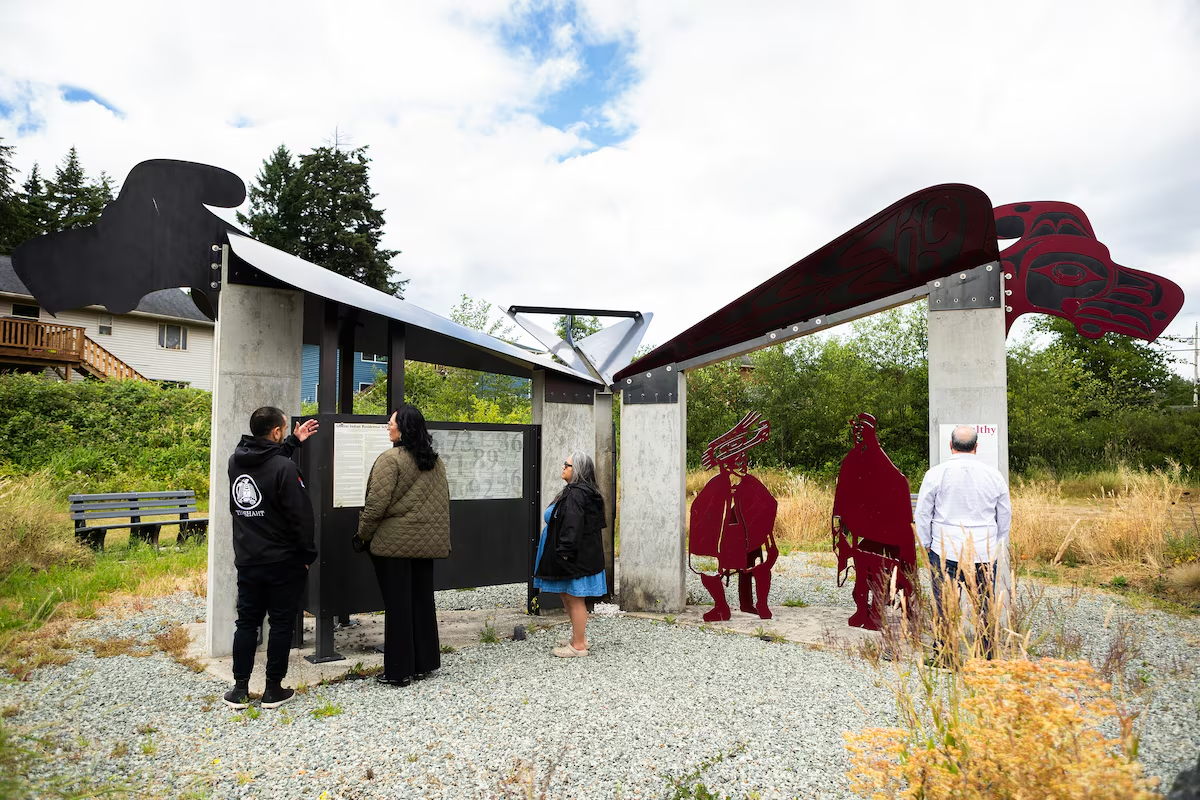

Open this photo in gallery:
Elected Chief Council Ken Watts, left, speaks with Minister of Indigenous Services Mandy Gull-Masty as they tour the Alberni Indian Residential School memorial Nation in Port Alberni, B.C., on June 26. More than 150,000 Indigenous children were forced to attend residential schools, the last of which closed in 1996.Chad Hipolito/The Globe and Mail
First Nations chiefs say the federal government is enabling residential school denialism by failing to make it a crime.
The chiefs passed an emergency resolution at the Assembly of First Nations general meeting in Ottawa on Tuesday, calling on the feds to criminalize residential school denialism as hate speech.
“Truth is not optional and reconciliation cannot exist without truth,” said Chief David Monias of Pimicikamak Cree Nation.
“We must honour the survivors, and we must honour every child who never came home.”
The resolution comes not long after the Liberals passed a new hate crime law. Some senators tried and failed to amend that law to cover residential school denialism.
Chiefs have passed similar resolutions over the years, but the federal government has yet to change the Criminal Code.
AFN National Chief raises concerns about federal major projects push
More than 150,000 Indigenous children were forced to attend residential schools, the last of which closed in 1996.
An estimated 6,000 children died in the schools, though experts say the actual number could be much higher.
NDP MP Leah Gazan tabled a private member’s bill in 2024 that would have made residential school denialism a criminal offence. It has yet to come up for a vote.
Kimberly Murray, Canada’s former special interlocutor on unmarked graves and missing children, said despite the “well-documented reality” of deaths in the institutions, some have made a concerted effort to attack the testimony of survivors, Indigenous families and communities.
Murray said denying the history of residential schools enforces a false view of Canadian history and protects those responsible for the system by justifying their actions.
Photos at the University of Saskatchewan could help corroborate residential school claims, Indigenous advocate says
In her final report, released in 2024, Murray said people who do not deny that residential schools existed and operated may still misrepresent the intent, outcome and impacts of the residential school system.
“Denialism is not a simple misunderstanding of the facts; whether consciously or unconsciously, denialists are working toward the accomplishment of psychological, practical or political goals,” she wrote.
“Indian residential school denialism must be taken seriously because it puts at risk the important work of truth and reconciliation. It should not be dismissed as a harmless fringe phenomenon.”
Anishinabek Nation Grand Council Chief Linda Debassige said the history of residential schools isn’t up for debate.
“Our survivors, both here today and those who have passed on, have kept the truth alive for generations. Now, hate speech needs to be incorporated into law to ensure denialism will no longer prey upon survivors, their families, or our people across this country,” she said.
“We stand united across this country to ensure that we will continue to honour our ancestors, our survivors, and to continue to push this until this is formally recognized in the Criminal Code of Canada.”