
Open this photo in gallery:
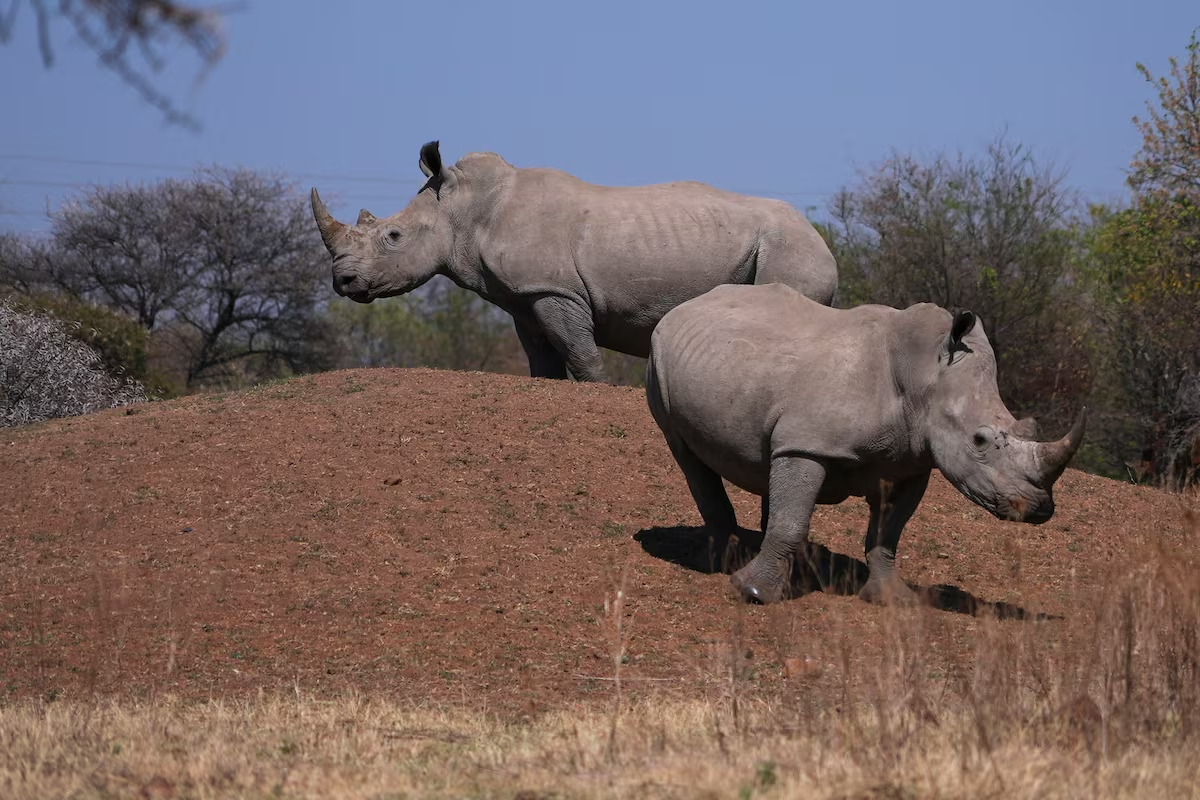
Rhinos stand on a small hill at the Dinokeng Game Reserve near Hammanskraal, South Africa, in 2025.Alfonso Nqunjana/The Canadian Press
A South African High Court has dismissed its government’s bid to block the export of more than 500 rhino horns – a decision that, if unopposed, could test whether Canada’s regulations banning raw rhino horn imports are adequate to stop a shipment.
The case was brought forward in 2023 by a South African rhino rancher who wants to export horns harvested from live, captive-bred rhinos under an exemption in international wildlife law that otherwise bans commercial rhino horn trade.
Last fall, a superior court ruled in his favour, ordering the South African government to issue export certificates. The government appealed, but the July 3 ruling found it had “no reasonable prospects of success on appeal” and declared the October, 2025, judgment “immediately operative and enforceable,” giving the government until July 10 to issue the certificates.
Canada was among the eight proposed import destinations – alongside China, Hong Kong, Japan, Laos, Mongolia, the United States and Vietnam – but Hendrick Diedericks, the rhino rancher, says his plans have changed since Canada released regulations in 2024 banning raw rhino horn imports.
With no meaningful market here, Mr. Diedericks says Canada is no longer on his radar.
“We literally only did that to test the waters and to see if Canada will grant import permits, because Canada does everything by the book,” he told The Globe and Mail.
But while Canada’s new regulations should stop the import of rhino horns, it’s unclear how effective that may be against a scientific exemption in the regulations which could allow imports that carry a medicinal purpose code.
Rhino horn is made of keratin – the same protein as human fingernails – and has no evaluated pharmacological benefits, though it is highly sought in East Asia for unproven uses ranging from lowering fever to treating cancer.
In depth: How Canada became a global player in the illegal wildlife trade
Mr. Diedericks, the owner of Rockwood Conservation – a 33,000-acre nature and hunting reserve in South Africa’s Northern Cape that is home to more than 450 white rhinos – has spent years fighting for the right to sell horn trimmed from his living animals.
Dehorning – a non-lethal procedure to deter poachers that removes a portion of the horn, which grows back – has kept Rockwood poaching-free for 11 years, he says.
“We are already talking to potential buyers in the east – China specifically, Hong Kong, Singapore – all of the countries where there’s a demand for it,” says Mr. Diedericks.
He argues a legal, regulated supply would flood the market, drive prices down and eliminate the incentive to poach – a theory that has never been tested in real-world conditions.
Taylor Tench, senior wildlife policy analyst at the Environmental Investigation Agency, which first flagged Canada as a potential import country in a report published in May, says Canada cannot afford to look away, even with Mr. Diedericks’s attention turned east.
“If these horns are exported to other countries, will they find their way – either in raw form or medicinal form – to Canada in the form of re-exports and resale?” Mr. Tench says. “There are large traditional Chinese medicine user communities in much of the world, including Canada. It’s one thing to intercept a whole horn, but if you’re getting processed and packaged medicine, that’s much harder to detect.”
Open this photo in gallery:
A wild white rhino in the North-West Province of South Africa in 2023.LUCA SOLA/AFP/Getty Images
The Globe asked Environment and Climate Change Canada whether its regulations are sufficient to block a shipment arriving under a medicinal purpose code.
In a statement, spokesperson Samantha Bayard said a decision on the issuance of an import permit would be made under Canada’s wildlife trade legislation and its implementing regulations.
“A scientific exception requires that the applicant provides a summary of the research project, including its methodology, which would then be assessed,” she says.
Mr. Diedericks’s case centres on a little-used exemption in the Convention on International Trade in Endangered Species – the global treaty known as CITES, which effectively bans commercial rhino horn trade. He argues that Article VII(5), which allows animals bred in captivity for non-commercial purposes to be traded without standard permitting requirements, applies to Rockwood.
Mr. Tench says the exemption comes with a catch. “The government loses its ability to determine whether or not the trade would be detrimental to the survival of the rhino,” he says. “They can’t stop the export if there are concerns over the intended recipient, destination or purpose of trade – it’s just, was this rhino bred in captivity? Yes. Here’s your certificate, send it wherever you want.”
If ultimately successful, Mr. Tench says it would mark the first commercial export of rhino horn since CITES banned international commercial trade in the product in 1977. The southern white rhino at the centre of this case is classified as near threatened, with South Africa holding 76 per cent of the world’s approximately 15,750 individuals. Private owners such as Mr. Diedericks manage more than 70 per cent of them.
The South African Department of Forestry, Fisheries and the Environment told The Globe, “the Minister is currently considering the judgment and will thereafter make a decision on whether to lodge a petition challenging the recent refusal for leave to appeal.”