
Open this photo in gallery:
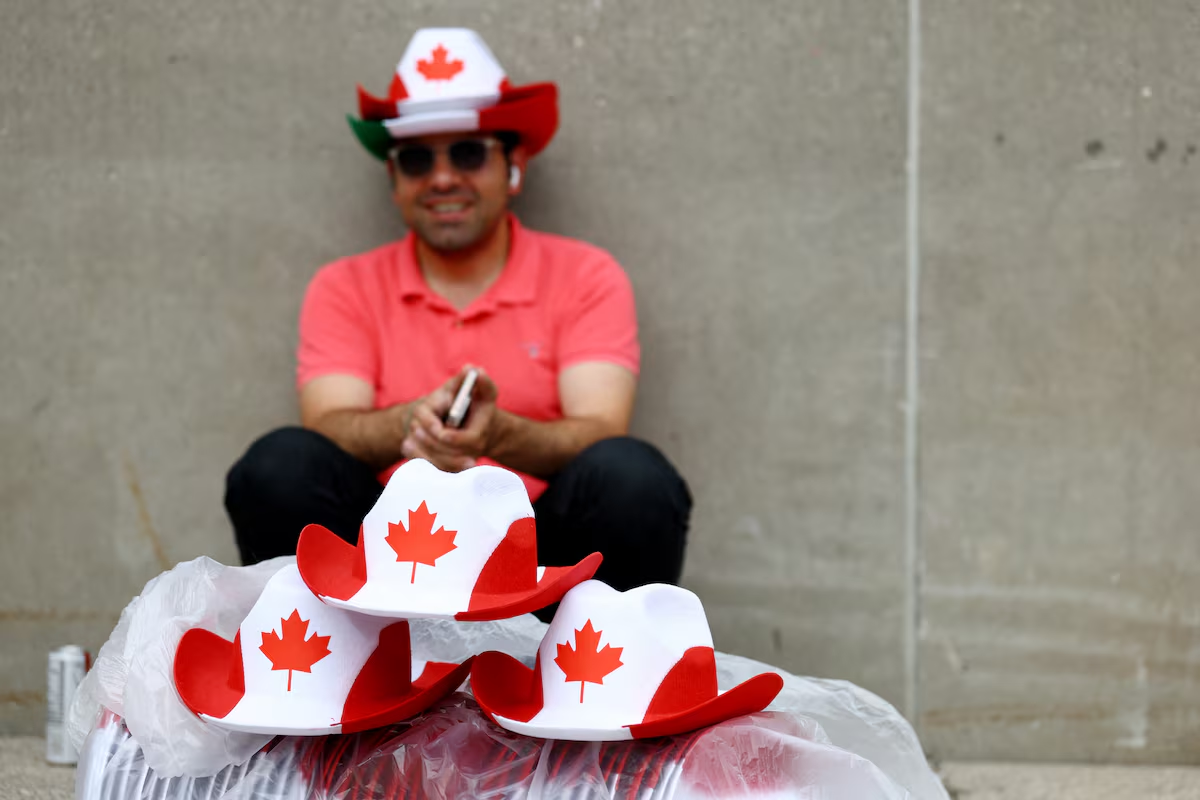
A vendor selling Canada-themed hats as the match plays on a big screen in front of Toronto City Hall.Piroschka Van De Wouw/Reuters
On a suburban street corner in Etobicoke, jerseys and hats are spread out across a folding table, and flags representing different countries are propped up in paint buckets.
The transient store, located in an auto-shop parking lot, beckons fans looking to sport their country’s colours during the FIFA World Cup.
Jose Gallardo, who operates the enterprise out of the back of his trailer, said he has been careful to avoid running afoul of strict FIFA rules around branding.
Toronto police say seizure of alleged counterfeit soccer jerseys is largest in Canadian history
But that didn’t prevent him from getting a visit from a police officer in June.
“I assumed because my product did not have the Nike or Adidas or Puma on it, I would be able to sell a couple of those jerseys,” he said.
But Mr. Gallardo said he was told that his jersey with the Canada Soccer logo and his Argentina jerseys with an emblem from the 2022 World Cup were infringing on copyright.
Mr. Gallardo said those products were seized and he was given a court summons.
With World Cup games underway and soccer fever gripping ticket-holders and loyal fans across Canada, local street vendors are capitalizing on the moment by selling merchandise representing the competing countries. But FIFA officials are keeping a close eye on sellers violating trademark laws.
“All my other product is fine, because none of my other products – my Portugal jerseys, Ecuador, England, all that stuff – it doesn’t have any branding on it or anything that bothers them,” he said.
Mr. Gallardo said he holds a permit from the city to run his stall, but he didn’t have the permit with him when the officer asked for it.
Nadine Ramadan, a spokesperson for the Toronto Police Service, said in an e-mailed statement that police were alerted to a man selling counterfeit T-shirts in the area on June 15.
Police said the seller did not have a valid vendor licence to sell items in the area. The merchandise was seized and the seller was charged with a bylaw offence, she said. Ms. Ramadan added it is standard procedure for officers to enforce existing bylaws.
FIFA did not respond to a request for comment on the incident.
Since January, the City of Toronto has issued 39 hawker/pedlar permits for street vendors on foot, with a vehicle or using a pushcart, according to an e-mailed statement from Sean McGowan, executive director of municipal licensing and standards at the City of Toronto.
These permits expire annually, and city bylaw officers conduct regular inspections of street vendors, Mr. McGowan said.
Mr. Gallardo said he takes care not to sell counterfeit goods and is upfront with his customers.
“We always try to educate people and just let them know, listen, you’re buying a replica item, you’re not buying something real,” he said, adding that a real jersey would not be available at a $40 to $50 price point.
On June 1, TPS announced the arrest of two men and a seizure of sports merchandise worth more than $3.5-million. Investigators believe the merchandise was used to supply retailers, and said the jerseys and flags featured FIFA and major athletic-wear brand logos on them.
According to FIFA’s strict guidelines on the use of its branding, any business that creates products using its intellectual property is producing counterfeit items.
Bars and restaurants in a two-kilometre area around the stadiums in Toronto and Vancouver have also been placed under advertising and promotion restrictions. The rules are aimed at preventing the use of official FIFA branding or intellectual property by establishments.
Eddie Kirio, who bought merchandise from a street vendor at St. Clair Avenue West and Caledonia Road, said the store was the fifth place he checked while looking for Iraqi flags. He bought T-shirts and flags, but is waiting on the store to stock more products.
“People are happy when their teams win, they celebrate with flags, they celebrate all kinds of ways,” he said.
Canadian brands avoid FIFA marketing rules with a wink
Many of the other stores that Mr. Kirio checked for flags were in northern Etobicoke. Several vendors selling merchandise have set up shop at busy suburban intersections, with stalls covered in flags.
In Etobicoke, vendors rely on the area’s diversity across demographics to drive sales of merchandise from several countries, Mr. Gallardo said.
He said street vendors are collegial with each other, with many using the same supplier and meeting during restocking trips.
“I just tell people, just be safe out there. If you don’t feel comfortable, you don’t know what you’re buying, don’t buy it,” Mr. Gallardo said.
“Buy it from someone who has a good reputation, someone who can educate you on it.”