
Open this photo in gallery:
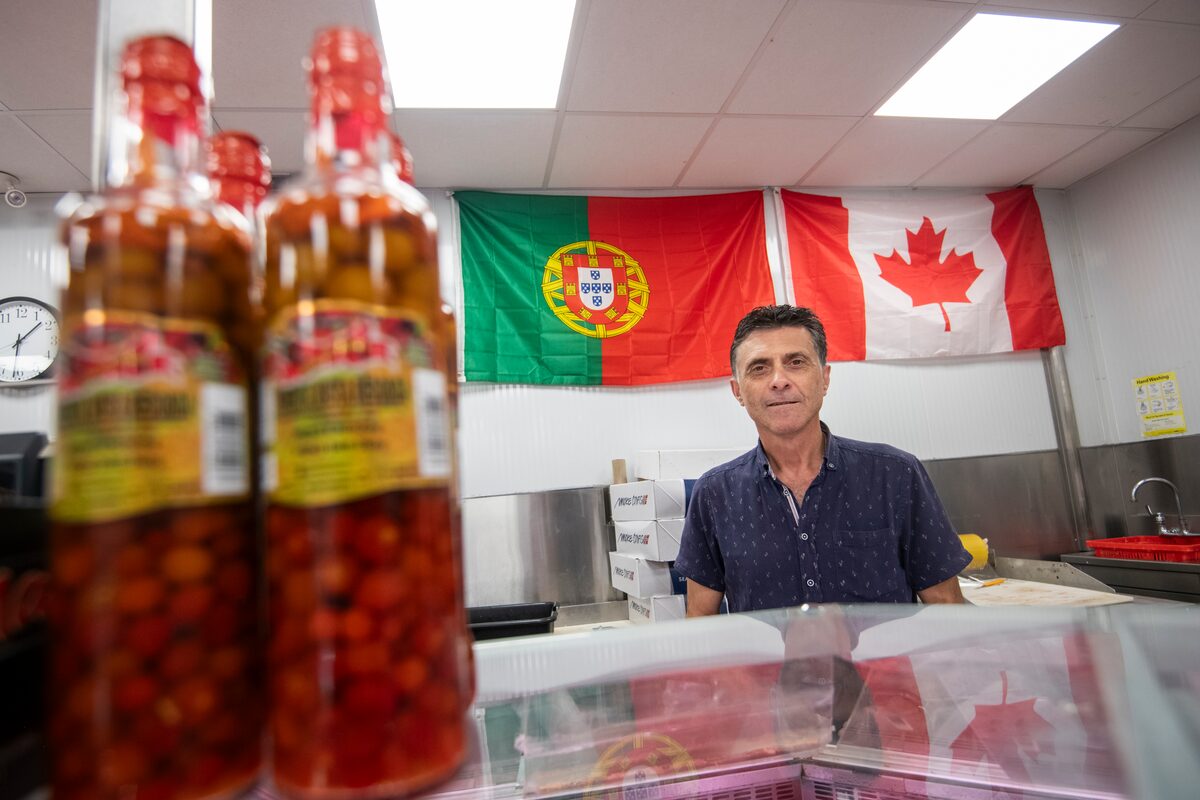
Rui Gomes, owner of Rui Gomes Meats and Food Market in the store’s west end location on Tuesday. Like other Portuguese butcher shops in the city, Mr. Gomes has seen high demand for barbecue meats ahead of Portugal’s World Cup game in Toronto.Fred Lum/The Globe and Mail
When Nancy Moniz and her mother, Gertrudes, step into their local Portuguese butcher shop, all the staff know their names and their orders.
On Tuesday, the two women were grabbing the ingredients for a traditional fish soup at Pavão Meats & Deli, located in Toronto’s Little Portugal neighbourhood. Ms. Moniz said the excitement for the World Cup and especially for Portugal playing in Toronto on Thursday is palpable.
“Of all the cities across Canada, really in North America, this was a sweet spot, I think, because of the huge Portuguese population,” she said.
Ms. Moniz remembers her father, who died in 2024, as the family’s biggest soccer fan. They would invite family over for Portuguese barbecue on match days and all of the relatives would wear jerseys and drape their cars with flags.
Despite not being a soccer fan at first, Ms. Moniz’s 86-year-old mother has taken up the mantle after her husband’s death. And more so with the team playing in Toronto.
Ahead of Thursday’s World Cup match between Portugal and Croatia, much of the Toronto Portuguese diaspora are marking the historic arrival of the team by loading up on cultural foods and meats as they welcome family and friends.
Roughly 240,680 people living in Canada identify Portuguese as their first language, as of Statistics Canada’s 2021 Census.
Nearly half of those people live in Toronto, according to the consulate-general of Portugal.
Open this photo in gallery:
A combination Canadian and Portuguese flag hangs outside a bar on Dundas St. West, on Tuesday.Fred Lum/The Globe and Mail
Luis Pavão, owner of Pãvao Meats & Deli, couldn’t contain his excitement ahead of the Thursday match. He was tracking the Portuguese team’s flight into Toronto and, if he wasn’t working, Mr. Pavão would’ve been among the fans to greet the team at the airport.
“I don’t think we’ll ever have, at least in my lifetime, another opportunity like this. It’s just personal, because you have your own country coming to Toronto,” he said, while filling out his checklist to restock meats.
At 12-years-old, Mr. Pavão immigrated with his family to Canada. His father started the Little Portugal shop in the early 1990s, cementing it as a staple of the community.
Portuguese barbecue has been the main driver of his sales throughout the World Cup, he said. While having family gatherings around traditional food is the norm for Portuguese culture, Mr. Pavão said it’s “overwhelming” how much more meat he is selling because of the spike in get-togethers.
The top sellers are a Brazilian cut of meat called Picanha, steaks and sausages.
He hasn’t sold out of any specific meats yet, but it has required more effort and co-ordination between his other seven shops to maintain stock because of the high demand.
Mr. Pavão said sales to Toronto Portuguese bars and restaurants have increased by 400 to 500 per cent. The busiest days have been when Canada or Portugal have matches.
“They’re ordering every hour, almost like ‘Oh I need more of this, I need more of that’ because there’s so much going on,” he said.
Open this photo in gallery:
Fred Lum/The Globe and Mail
Open this photo in gallery:
Portuguese banner in a car in Toronto’s west end where many Portuguese businesses are located, on Tuesday.Fred Lum/The Globe and Mail
While many watch the matches at bars, Mr. Pavão is content staying at home, barbecuing steaks and playing host to a few friends for the game.
If Canada has to face Portugal – both teams would need to make a run to the semi-finals for that to happen – Mr. Pavão said his heart “would be broken in two” because Canada is his home and is where he had the opportunity to grow his business and succeed.
“As much as I like my country and that my family is from there, there’s nothing like Canada,” he said.
While much of the Portuguese community settled along Dundas Street to form Little Portugal, Mr. Pavão said people started moving further north in Toronto, along St. Clair Avenue, which is where the World Cup celebrations will be the loudest come match day.
At Távora Foods, a Portuguese grocery store and butcher shop on St. Clair Avenue, salted cod, a traditional staple food, and cured meat is the scent first to hit the nostrils.
Amid the imported food and hanging fillets, TV screens tuned to Portuguese channels flash videos and pictures of star player Cristiano Ronaldo as pundits discuss the coming match.
Down the street at Rui Gomes Meats & Food Market, with Portuguese flags hanging behind the meat counter, owner Rui Gomes said having the Portuguese soccer team playing in Toronto is good for the city.
Like other Portuguese butcher shops, he’s also seen high demand for barbecue meats.
His business first opened in Little Portugal in 1990, off College Street, but in 1993, he made the move to Rogers Road, after many in the Portuguese community left for the area.
He said the migration happened because housing prices got too expensive, and it was still affordable to buy a home in north Toronto.
Open this photo in gallery:
Sandra Rocha, VP of Futebol Clube do Porto de Toronto, in the club’s west end location on Tuesday.Fred Lum/The Globe and Mail
Across the street, Sandra Rocha was preparing to pick up meat at Mr. Gomes’s shop for a watch party with friends and family.
She moved from Portugal to Toronto with her husband and two children in 2013 in search of a better life. Now, she has a third child who is three months old.
Ms. Rocha, the vice-president for Futebol Clube do Porto de Toronto, a supporters’ club for the Portuguese team FC Porto, said the entire community is excited to see the team’s stars on home soil.
“It’s the first and the last time Ronaldo comes here because probably this one will be the last World Cup for him. That’s why everybody’s so excited to have him,” she said.