
Open this photo in gallery:
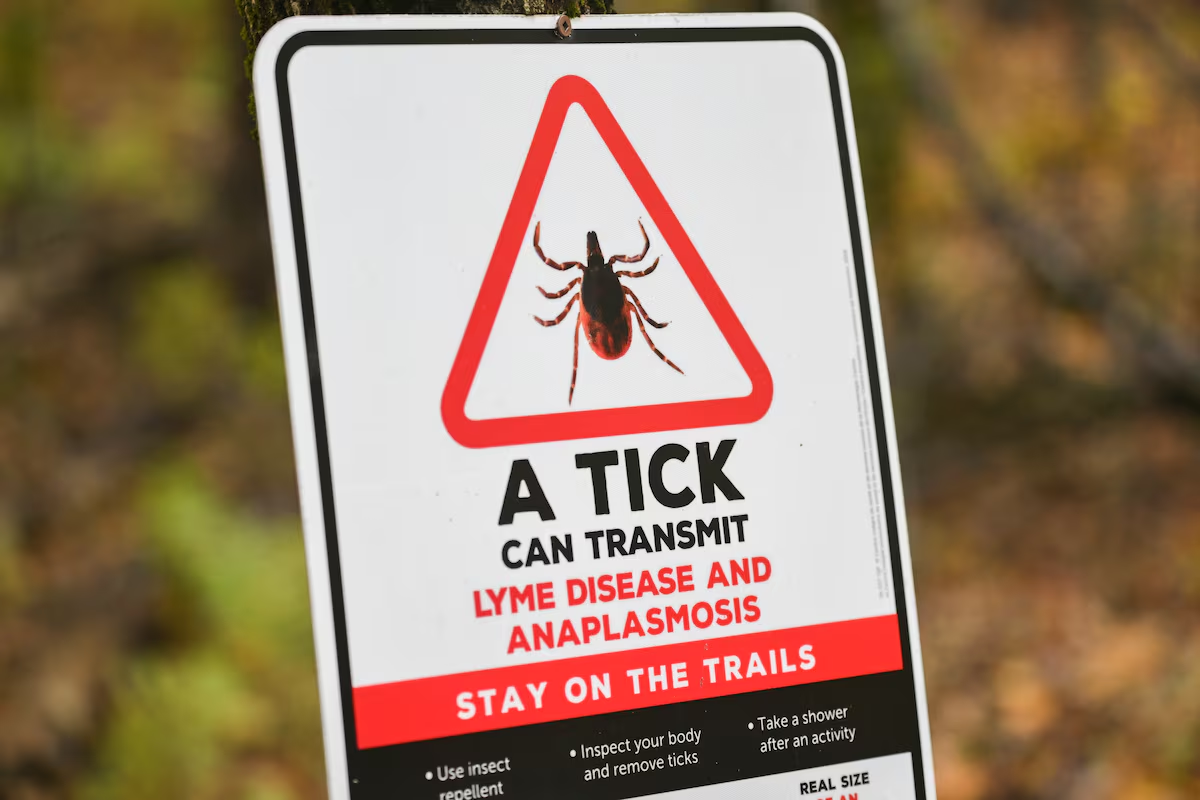
A sign advising hikers of ticks is shown on a trail in the woods in the Eastern Townships west of Montreal.Graham Hughes/The Canadian Press
At Camp GUEPE, a summer nature program in Montreal, parents are directed to an online guide on outdoor challenges, including how to check campers for a seasonal pest of growing concern.
The guide provides details on what ticks look like and where to look for them, including sneaky spots such as a child’s hairline and armpits.
“We encourage families to do a tick check at the end of the day when the kids come back from the camp,” said Anne Frédérique Préaux, a spokesperson for GUEPE and former camp counsellor.
As the summer months bring more kids outdoors, public health officials are raising awareness about ticks, the bloodsucking arachnid responsible for growing rates of Lyme disease.
In particular, Montreal’s public health agency recently advised residents to be vigilant when outdoors. It recorded 161 cases of Lyme disease in 2025, the highest number since data collection began in 2003.
However, Nicolas Sheppard-Jones, a medical lead for the infectious emergencies and disease unit at Direction régionale de santé publique de Montréal, said not all cases were the result of exposures in the city. Rather, he said 38 per cent are believed to have been acquired during outdoor activities in Montreal, while the majority are thought to have been picked up elsewhere in Quebec.
Tick season is here. How can you protect yourself?
Two types of ticks, blacklegged and western blacklegged, are linked to the spread of Borrelia bacteria, associated with Lyme disease.
Health experts say it is critical that ticks are removed from the body as soon as possible so they can’t feast on blood from their host for hours, if not days.
Ms. Préaux said ticks are not typically a common issue for campers. Still, GUEPE encourages tick checks and advises clothing go straight into the washing machine.
GUEPE camp counsellors, who run programs for campers age five to 13 years old, are all trained on how to remove ticks with tweezers, which they carry in a first-aid kit.
When camp starts next week counsellors will speak with campers about topics that include poison ivy and ticks, not to scare them but to inform them, said Ms. Préaux. Counsellors encourage campers to make preventive tick measures, such as wearing long-sleeved clothing and using insect repellent, part of their daily routines.
The Association des camps du Québec, which promotes camps in the province, is taking a similar approach in raising awareness about ticks, including among camp managers.
Through an app called Réflexe, it shares information that includes how ticks should be removed from the skin. It also underscores the need to watch for symptoms, such as a rash, after a tick bite.
What should I know about ticks and Lyme disease?
Virginie Millien, an assistant professor of biology at McGill University, said although the associated health concerns can be serious, it is important people not “freak out” about ticks. Many, she said, are unaware that ticks are often present in places such as parks and backyards.
It is inevitable young kids will end up rolling in the grass in the summer, Prof. Millien added. “You want them to do that, that’s okay. They may get a tick, but what matters is when they come back home, there’s a tick check, there’s a shower, the clothes go in the wash right away.”
Prof. Millien noted climate change has allowed ticks to survive in areas that were previously too cold. They can also travel on migratory birds.
Ticks are here to stay, she said. “We have to learn to live with them.”
Dr. Sheppard-Jones said Lyme disease is on the rise on the entire island and public health officials have communicated that message to camps.
“I think that the first step is really realizing that this is no longer something that you just get on a hike in areas that are off the island,” Dr. Sheppard-Jones said. “If you don’t know about the risk, it’s hard to be motivated or have the impetus to get to know those precautionary measures.”