
Open this photo in gallery:
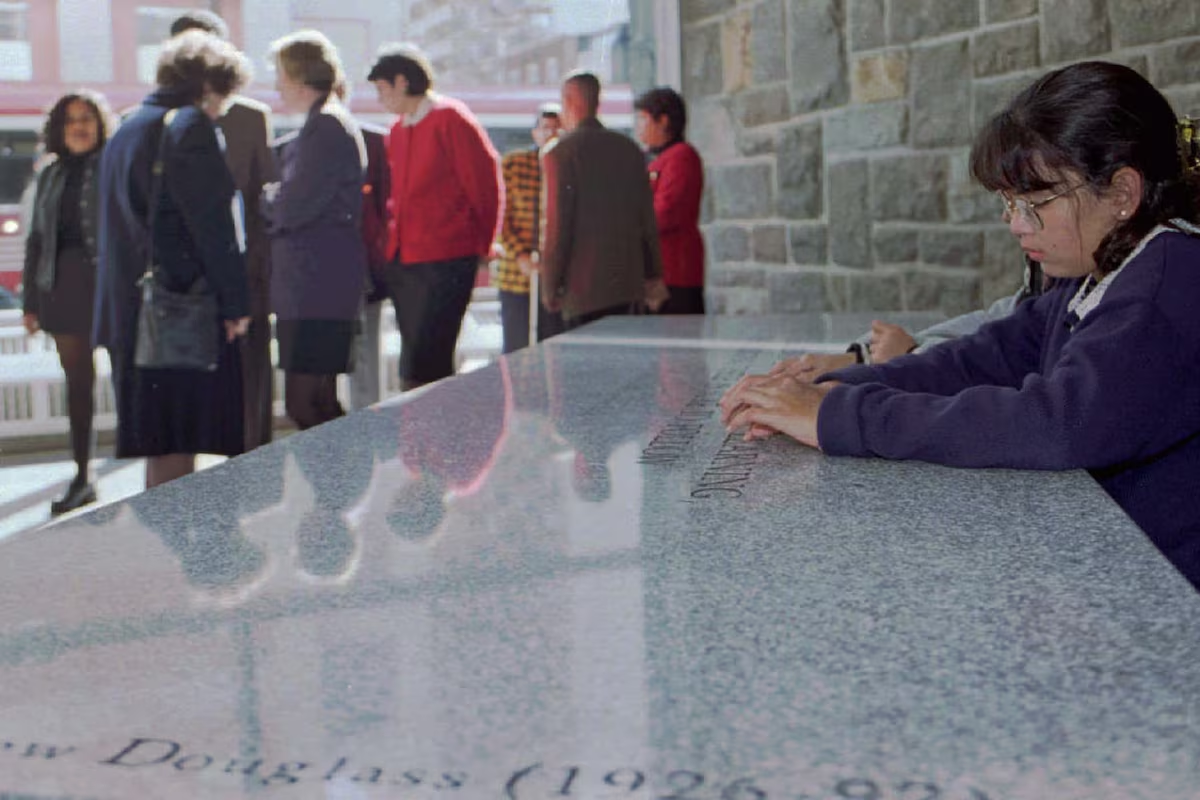
Jennifer Douglass sits at a granite table dedicated to her grandfather, Matthew Douglass, a Concordia University professor who was murdered by colleague Valery Fabrikant on Aug. 24, 1992.ANDRE FORGET/The Canadian Press
Valery Fabrikant, the mass shooter whose rampage against four fellow professors at Montreal’s Concordia University in 1992 left four dead, has died in prison at age 86.
The convicted murderer had been serving a life sentence since 1993 and had been denied requests for parole and a reduction of his sentence several times.
Correctional Services Canada said in a press release that Mr. Fabrikant apparently died of natural causes at the Archambault Institution north of Montreal.
The August, 1992 shooting came just three years after Montreal’s École Polytechnique massacre, in which 14 women were killed, and revived a long-running debate about gun control. That discussion took on new life after the June 22 shooting in Montreal’s Côtes-des-Neiges neighbourhood left a police officer, a 68-year-old civilian, and the assailant dead, and prompted the city’s mayor to call for a crackdown on private gun ownership.
Mr. Fabrikant was born in the Soviet Union and immigrated to Canada in 1979, where he became a mechanical engineering professor at Concordia. He eventually developed paranoid resentments towards his colleagues that led to him levelling wild allegations and threats of violence.
When he opened fire on the ninth floor of the university’s Harry F. Hall Building on Aug. 24, he killed four other professors: Matthew McCartney Douglass, Michael Gorden Hogben, Aaron Jaan Saber, and Phoivos Ziogas. A secretary, Elizabeth Horwood, was also wounded but survived.
After taking two more hostages, Mr. Fabrikant was eventually arrested and stood trial for murder, attempted murder, and forcible confinement, during which he represented himself after firing a number of lawyers.
In prison, he wrote online screeds about his case and was eventually declared a vexatious litigant for his abusive use of the court system. During parole hearings, Mr. Fabrikant maintained the killings were in self-defence, a position that was dismissed by multiple judges involved in his trial.
The case prompted an overhaul of human resources and security policies at Concordia.