
Listen to this article
Estimated 4 minutes
The audio version of this article is generated by AI-based technology. Mispronunciations can occur. We are working with our partners to continually review and improve the results.
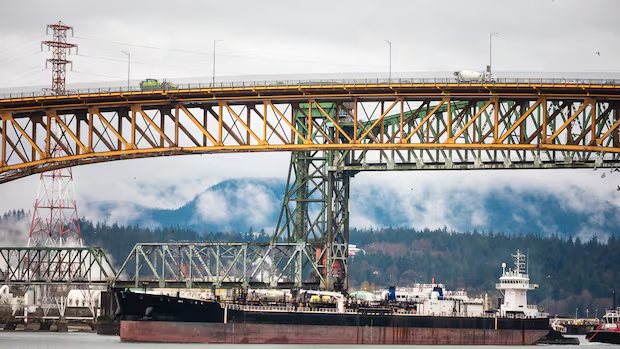
The Vancouver Fraser Port Authority says it has received all federal permits to allow for the dredging of Vancouver’s Burrard Inlet, making room for larger oil tankers loading up from the Trans Mountain pipeline.
The work will take place despite concern from some that it will harm local marine life.
The port authority says the dredging along northern and southern edges of the navigation channel underneath Vancouver’s Second Narrows bridge will start in September, but it could not say how long the work will take.
The authority responsible for Canada’s largest port says the work is being done, so the ships — including Aframax-class tankers — filling up at the Westridge Marine Terminal can “load more fully.”
The Aframax ships measure up to 250 metres long and have a draft of up to 16 metres, but Trans Mountain says on its website that such tankers generally only load to about 80 per cent of capacity in order to clear the inlet.
WATCH | Concern over environmental impact of dredging:
Dredging Burrard Inlet could put environment at risk, says professor
The Vancouver Fraser Port Authority is looking to dredge part of the Burrard Inlet to allow tankers going through it to carry more oil. But Juan José Alava from SFU’s school of resource and environmental management says the operation could damage the ecosystem and hurt wildlife.
Prime Minister Mark Carney first floated the idea of dredging Burrard Inlet in 2025, but the most recent federal budget does not include any specific references to the project, beyond promises to “improve access” to overseas markets by investing in new airport, railway and port infrastructure.
B.C.’s government also supports the project, and Energy Minister Adrian Dix said last year that the federal project “would allow for less traffic at the port and better utilization” because ships could fully load.
The port says the work will not change the number or size of the largest vessel type currently sailing underneath the Second Narrows, noting that Aframax-class tankers will remain the largest vessels.
The dredging comes about two years after the expanded TMX pipeline started operating in May 2024 and there have been calls to expand it again to help diversify energy exports away from the United States during recent trade friction.
 The oil tanker Pacific Jade is seen docked at the Trans Mountain Westridge Marine Terminal in Burnaby, B.C., in August 2024. The expanded Trans Mountain Pipeline came online in 2024, and there are calls to expand it further due to trade tensions with the U.S. (Ben Nelms/CBC)
Vancouver’s port authority says it is committed to carrying out the work with care for the environment and in collaboration with local communities and First Nations, noting that project is subject to more than 50 conditions.
They include measures to monitor and protect marine life and enhance kelp habitat.
Vancouver Fraser Port Authority also says it will limit all work in the water to the least-risk window for fish and fish habitat from mid-August to the end of February, as established by the Fisheries Department.
Environmental criticism
The Sierra Club environmental group says the dredging project beneath the Second Narrows Bridge could undo “years of ecological healing” in the Inlet by disturbing toxic sediments and harming returning eelgrass, herring, salmon, seal, and whale populations.
The port authority says a the risk of contaminated sediment being disturbed and harming the marine environment is low, but adds that the dredging contractor will be required to monitor turbidity and pause as needed.
A background document from the agency says most dredging will occur to a depth of around 1.3 metres to a maximum of six metres below the sea floor, removing about 25,000 cubic metres of material.
It says that is less than one per cent of the material the port authority removes annually from the Fraser River as part of a maintenance dredging program.
The project also calls for the removal of sections of two decommissioned Metro Vancouver waterlines and the installation of navigation aids.