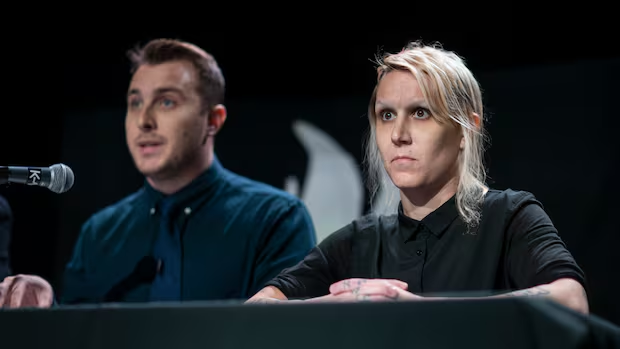
The founders of a Vancouver-based compassion club that sold uncontaminated drugs to its members have had their drug trafficking convictions stayed after they successfully challenged the constitutionality of Canada’s drug laws.
On Tuesday, a B.C. Supreme Court judge found the Drug User Liberation Front’s compassion club reduced the harms associated with the toxic drug crisis and did not negatively impact the community or public safety.
Justice Catherine Murray found part of Canada’s Controlled Drugs and Substances Act unconstitutional and stayed the convictions against Jeremy Kalicum and Eris Nyx, who co-founded DULF.
Kalicum and Nyx were found guilty last year of drug trafficking after Vancouver police raided the club in 2023.
“Mr. Kalicum and Ms. Nyx have borne the burden of bringing a successful constitutional challenge, thereby doing the public interest a service at considerable personal cost,” Murray said.
In her decision, Murray said the founders’ mission was to save lives by offering a safer supply of drugs. They bought drugs on the dark web, tested them to make sure they weren’t contaminated, and sold them to members at cost.
WATCH | Thousands have died of toxic drugs. Did politics get in the way of saving lives?:
Murray said in court on Tuesday that the pair “selflessly” put themselves to the side for the cause.
She noted thousands of people have died due to toxic drugs since the public health emergency was declared in B.C. in 2016.
“It is one of the worst public health emergencies in living memory,” Murray said.
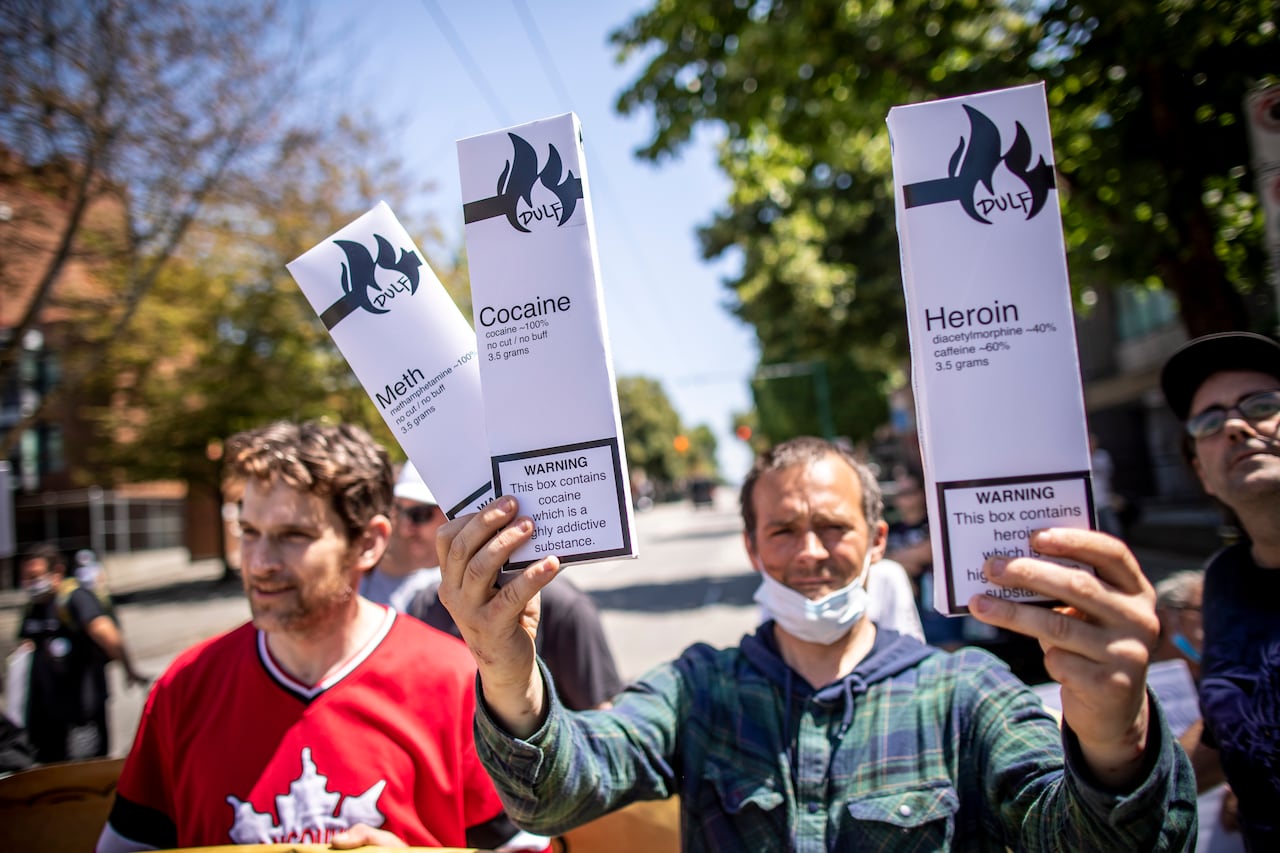 A man holds boxes containing tested cocaine, meth and heroin from DULF in July 2021. (Ben Nelms/CBC)
Tim Dickson, one of the lawyers representing Kalicum and Nyx, said the court had recognized that his clients were acting in the public interest, despite the personal risk.
“Today was a real vindication of the actions that they took in running the compassion club,” he said.
What was the constitutional challenge about?
Murray said Kalicum and Nyx’s constitutional challenge focused on the lack of ability to obtain an exemption from prosecution for otherwise illegal activities under the Controlled Drugs and Substances Act (CDSA).
The DULF founders said there were no pathways through the relevant laws that would have permitted a “non-medicalized safer supply program,” like the DULF compassion club, which they said is “urgently needed to address a public health crisis of epic proportions,” according to Murray.
Kalicum and Nyx developed an operating plan in 2021 for the compassion club that included procuring heroin, cocaine and methamphetamine on the dark web, because sourcing from a licenced supplier “was not possible under the current regulatory framework.”
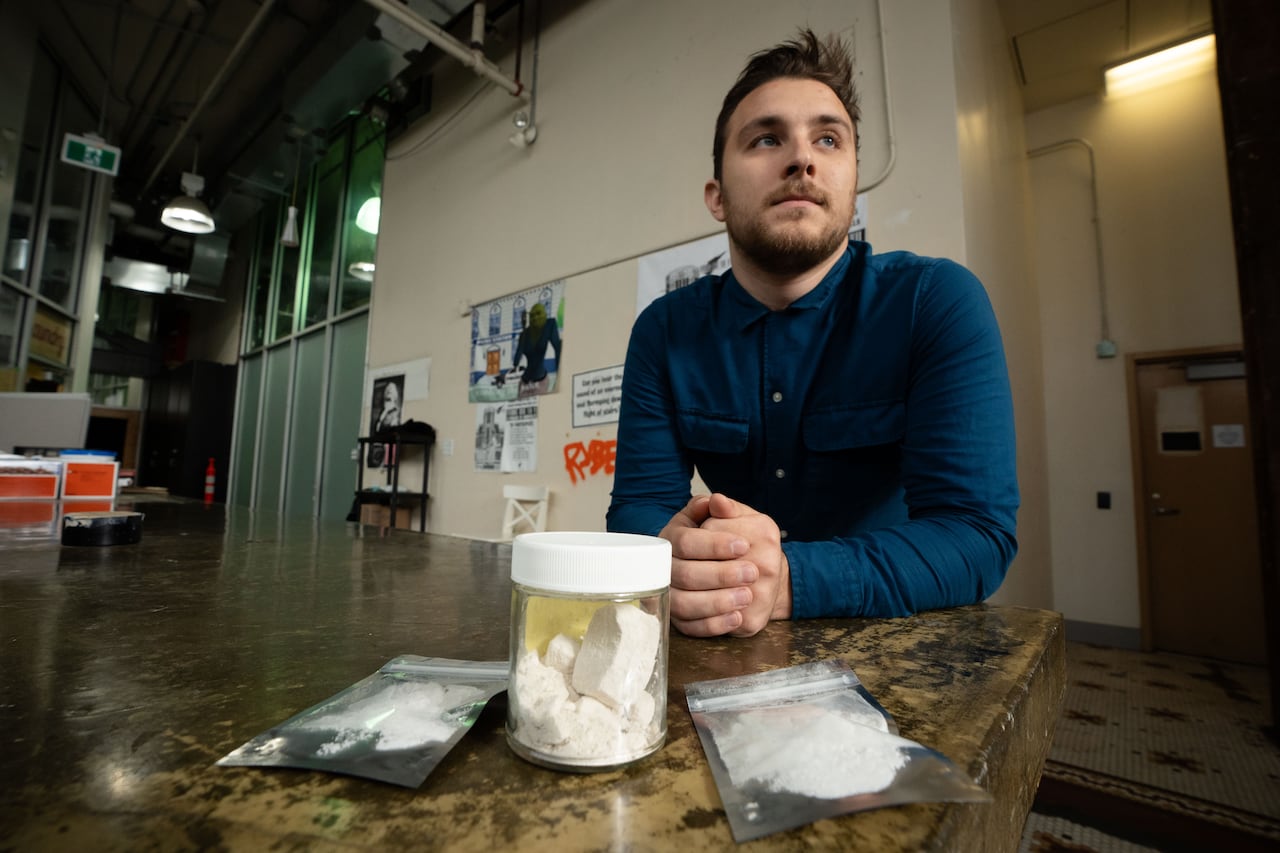 Jeremy Kalicum is pictured at DULF (Drug User Liberation Front) headquarters in Vancouver in September 2023. (Maggie MacPherson/CBC)
“The program ran outside the medical system; no prescription or medical oversight was required,” Murray said in her decision.
They would store the drugs in a safe, test them for fentanyl, benzodiazepines and other impurities, and label the tested drugs with information about their contents and health warnings, according to the decision.
Their plan included screening compassion club members to make sure they were over 18 years old and currently using illicit drugs.
DULF also worked with researchers to study how well the club worked.
What happened to the club?
DULF applied for an exemption to operate the compassion club in August 2021.
Health Canada responded in May 2022 that it intended to refuse DULF’s request for an exemption because its method of acquiring drugs on the dark web was not a “viable option for advancing the objectives of the CDSA.”
DULF replied to Health Canada that they did not want to procure drugs from the dark web, but there were no legal options for obtaining the drugs. The judge called it a “paradoxical situation.”
Health Canada denied DULF’s application for an exemption in July 2022.
According to the judge, DULF “started putting together” the compassion club in that same month. The B.C. minister of health supplied a storefront to DULF, at no cost, in Vancouver’s Downtown Eastside and designated it as an overdose prevention site.
Murray said DULF was “fully transparent about what they were doing” and added the Vancouver Police Department was aware of DULF’s operations.
“DULF’s pilot project for their [compassion club] worked,” said Murray. “In its first year there were no overdoses involving the substances provided at the DULF site.”
But after an article published in The Economist in September 2023 “ignited a maelstrom of activity,” political pushback and public outcry led to terminated funding and the beginning of a police investigation into DULF. The investigation led to charges in 2024.
In November 2025, Murray found Kalicum and Nyx guilty of possessing cocaine, heroin and methamphetamine for the purpose of trafficking.
 People hold a casket plastered with ‘March for DULF’ signs during a rally in Vancouver in November 2023 to condemn the arrests of Drug User Liberation Front’s (DULF) founders. (Ethan Cairns/The Canadian Press)
But in her judgment on their constitutional challenge on Tuesday, Murray concluded that a non-medicalized safer supply program is urgently needed to save lives.
And with no legal source of drugs available for such a program, and no legal “safety valves” in the CDSA that would support setting one up, she found such a program “is legally and practically incapable of being exempted.”
 The arrest of DULF’s founders prompted rallies in their support in November 2023. (Ben Nelms/CBC)
She said part of the CDSA “unjustifiably infringes” on two parts of the Charter of Rights and Freedoms, and deprives DULF members the “right to life and security of the person.”
She gave Parliament six months to find a way to allow for a “pathway to non-medicalized safer supply.”
Murray said Kalicum and Nyx should be “very proud.”
“It’s people like you who make a difference, and you just did.”
Political fallout
Politicians have been quick to slam the ruling.
Mike Farnworth, who has previously served as public safety minister and is running for re-election in Port Coquitlam with the B.C. NDP, said the decision would have “serious consequences” nationwide.
“The federal government to needs to appeal it,” he said. “Of course people with serious addictions need support, but we have federal drug laws for a reason.”
LISTEN | Inside the compassion club:
Front Burner27:48The ‘compassion club’ fighting Canada’s drug laws
CentreBC Leader and Surrey South candidate Elenore Sturko said it was “concerning” the judge had concluded DULF’s actions did not cause harm.
“The fact that taxpayer funds were possibly diverted to the dark web and we have money going into the hands of the very murderous gangs, the cartels and drug dealers that our law enforcement officers and government are trying to dismantle? I think that’s very harmful,” she said.
The Public Prosecution Service of Canada said it was reviewing the decision, and has 30 days to decide on whether to file an appeal.