
Open this photo in gallery:
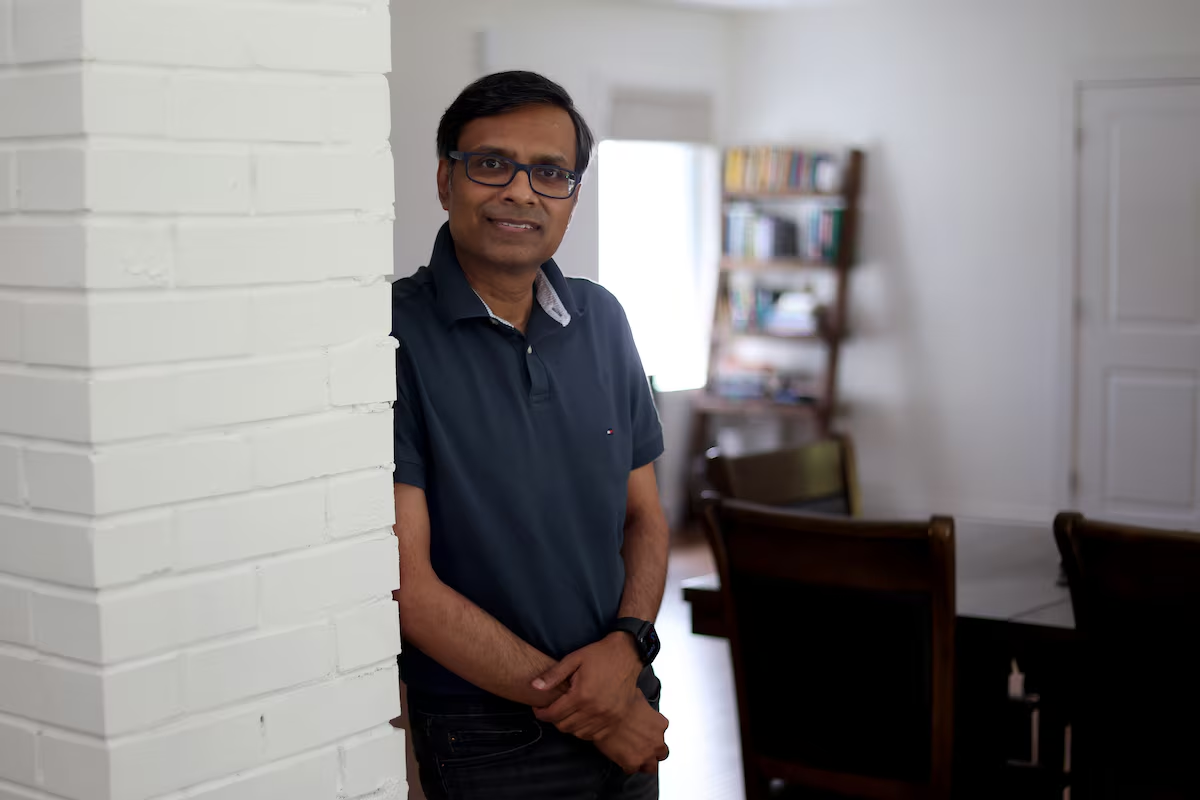
Raj Mittal at his home in London, Ont., Sept. 23.Nicole Osborne/The Globe and Mail
Raj Mittal’s new heart came in an unusual package.
After a cardiac arrest and a triple bypass in June, 2025, he spent a month and a half sedated in intensive care at the London Health Sciences Centre in Ontario before he could return home to his wife and two children.
When his heart condition led to pneumonia in January and another hospital stay, he learned he was a candidate for a heart transplant.
Typically heart donors are patients who have been declared brain dead, but whose hearts are still beating. Once the organs are removed they are placed on ice, and can last in this state for only up to six hours, limiting how far they can travel.
But when Mr. Mittal’s heart arrived in February, two weeks after he was added to Ontario’s transplant list, it was still warm and pumping blood.
According to the London hospital, which performed the transplant, he was the first Canadian to receive what is colloquially called a “heart in a box.”
The box, which is actually a cart-sized medical device on wheels with a chamber where the organ can rest and receive blood through a system of tubes, doubles a donor heart’s potential lifespan to 12 hours. With the longer timeframe, a heart can travel much farther than was previously possible.
The gift of care for people with Alzheimer’s disease
The box can also revive hearts after they stop beating, expanding the pool of donors to include patients who die after circulation stops. In ordinary circumstances, these organs wouldn’t be considered viable.
“It’s a second life for me,” said Mr. Mittal, a 50-year-old information technology professional.
Dave Nagpal, medical co-director of the multiorgan transplant program at the London Health Sciences Centre and its director of cardiac transplantation, called the technology “fascinating.”
The box, formally known as an Organ Care System, is made by TransMedics, a company headquartered in Massachusetts.
Once a donor heart is removed, Dr. Nagpal said, the device can be attached to the organ, which starts pumping again.
“You can hook the heart up to this device and actually watch it regain function and assess the function of the heart based on the visual appearance, but also based on the laboratory investigations that we can do on the device,” Dr. Nagpal said.
“This additional technology allows us to get more donor hearts into those recipients that really need them.”
He acknowledges it took a village for the technology to be made available in Ontario. Hearts from Canadian donors have previously been revived in the devices, but they were transplanted into American recipients.
Ontario Health, a provincial agency, financed the equipment. The acquisition took years of collaboration with the Trillium Gift of Life Network, an agency responsible for delivering and co-ordinating organ and tissue donation and transplantation services across the province. And the physicians who would use the device required special training.
Before Mr. Mittal’s transplant, the hospital’s cardiac surgeon, Rashmi Nedadur, had to retrieve the donor’s heart from another location that the hospital says it cannot disclose.
Dr. Nedadur assessed how the heart was functioning and deemed it viable for transplant. She brought it back to the London hospital, where a surgical team was prepped and ready to scrub in.
In the operating room, major vessels were trimmed to fit Mr. Mittal’s anatomy. The heart also needed to be protected through a process that involved special solutions and temperature control.
To climb Everest, a Briton gets a Canadian upgrade
Once the heart was sewn into Mr. Mittal’s chest, Dr. Nedadur said, it “took off immediately.”
Just days after the transplant procedure Mr. Mittal started feeling more like himself.
He could get up and move in the intensive care unit, before he was transferred to the hospital’s transplant unit. He had to return briefly to the ICU to manage his blood pressure and fluid levels. But later that month he was able to go home.
These days, Mr. Mittal is recovering well. But he said he has to remind himself to go slow. He is doing cardiac rehabilitation and takes medication daily.
Although he remains on leave from his job, he is finding joy in simple things, such as being able to get outside for walks.
This is a marked improvement from life before the transplant, he said, when his energy levels were so low he couldn’t enjoy time with family.
He hopes that with more time, his new heart will eventually allow him to get back to doing more.
His main goals are to return to work, and, by next summer, get back on his bike. He enjoys riding alongside his children, now 11 and 17.
In the meantime, he is deeply grateful to the doctors, nurses and the technology that saved him.
“With God’s grace and friends’ and family wishes, I’m here today,” he said.
Editor’s note: This article has been updated to correct the secondary reference to cardiac surgeon Rashmi Nedadur.