
Open this photo in gallery:
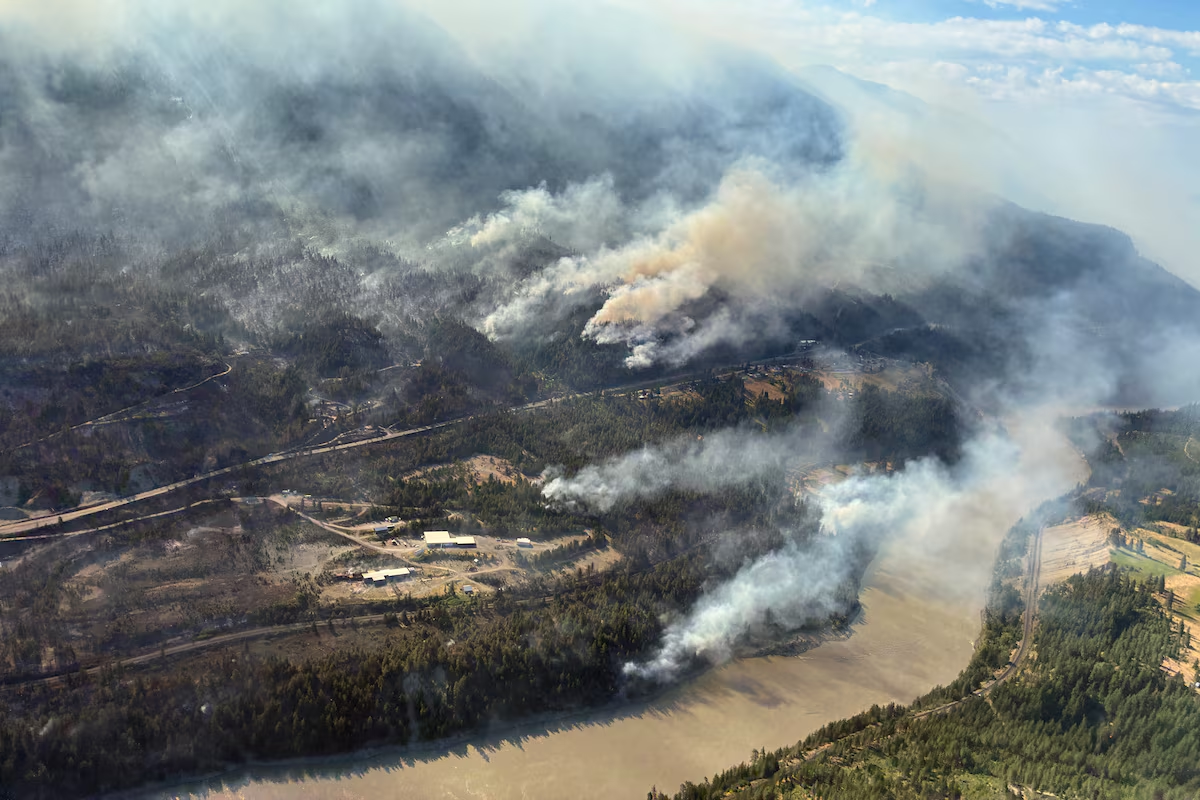
The Saw Creek fire near Lytton, B.C., June 20.THE CANADIAN PRESS/Handout-BC Wildfire Service
Meghan Fandrich has already stared down a wildfire this year near her home in Lytton, B.C.
Five years after the blaze that immolated her town, wildfire experts are predicting British Columbia could face a fire season similar to some of the worst on record.
Ms. Fandrich, a writer and editor, was placed under an evacuation alert on June 19. Power line poles were burnt to the ground and the sky was black with smoke. Within an hour, it was clear the fire was out of control and headed toward her house.
As Ms. Fandrich walked a short distance away from her home to take stock of the approaching inferno, her 10-year-old daughter began to cry uncontrollably. After the devastating 2021 wildfires burnt most of the town to the ground, feeling unsafe had become a part of her childhood.
This year, before the fire reached Ms. Fandrich’s home, the wind died down and shifted, and the evacuation alert was lifted on June 23.
“In my childhood I don’t remember any major fires in the area,” Ms. Fandrich said, except for one in the mountains that was “not burning out of control in the way that they are now.”
Editorial: After the fire, another disaster lurks for Lytton
Since the 2021 fire, she said Lytton has had big, devastating wildfires almost every year, where they’ve lost more homes in the community.
Despite cooler weather and higher rainfall reducing wildfires across the country in the spring, Environment and Climate Change Canada is predicting hotter than average temperatures this summer and into early fall, with normal and lower than normal precipitation in some parts of the country, consistent with effects from the El Niño weather phenomenon. The United States National Oceanic and Atmospheric Administration’s National Weather Service predicts this year will see a strong El Niño, a climate pattern that often produces hot and dry conditions across Western Canada, increasing wildfire risk.
Tanya Letcher, the fire behaviour program lead for Alberta’s Wildfire Predictive Services unit, said she expects her province could see a fire season lasting as late as November, largely due to El Niño.
But despite the worry, Alberta’s season so far has been well below the five-year average. Slower snowmelt and higher precipitation over the winter kept potential fuel damp, slowing the start of wildfires.
How we created a devastating fire debt
Trevor Grant, fire chief for Grande Prairie in northern Alberta, keeps a close eye on the precipitation tracker on his desk. After two significant wildfires leading to evacuations last year, he’s hoping that the forecast for a quieter season holds in Alberta.
“This spring, we were fortunate,” he said.
“I think everybody’s in the same boat, of that cautious optimism that we have.”
Ravi Parmar, British Columbia’s Minister of Forests, said this year’s wildfire season could be similar to the devastating years of 2017, 2018 and 2021. Over a million hectares in B.C. burned in each of 2017, 2018, 2023 and 2024.
“British Columbia is just prone now, these last few years, to having really challenging wildfire seasons,” said Mr. Parmar. “We’re going to be prepared for the worst and hope for the best.”
He said the B.C. Wildfire Services team works year-round to catch wildfires early, using predictive models and new technology like wildfire detection cameras.
Despite a cooler start to the year, droughts are making the land drier, Mr. Parmar said. He added that as temperatures get hotter, the B.C. Wildfire Service expects an increase in lightning-caused fires.
Mike Goetz, mayor of Merritt, B.C., said starting in February, his city has been working to mitigate threats from wildfires, with the fire service conducting prescribed burns and bringing in goats to remove dried vegetation off the ground.
Merritt is not far from recent wildfires in the region, located between Lytton and West Kelowna.
“At this time of year, when we start to see the warmer weather show up, when we start hitting the high 20s, low 30s, sustaining, your eyes start to turn to the hillsides,” said Mr. Goetz
Vancouver company gets $1-million to test anti-wildfire cloud-seeding technology in B.C.
The city also has a full-time emergency management co-ordinator who creates evacuation plans and contacts the necessary services in the case of an emergency.
“He wakes up every day like the world is either drowning or on fire, and that’s exactly how I want him to be,” the mayor said.
Mr. Goetz said most people keep a 72-hour grab-and-go bag in their car and are aware of mustering locations around the city. “We’re very vigilant, we’re very alert, but we’re not on edge,” he said.
Ms. Fandrich said years of terrible fire and years more spent worrying about fire conditions have changed the way she feels about the area she calls home. “In my childhood, there was the trust that nature was the one constant,” she said.
Even if everything in life was difficult, she said, there was peace in looking at the mountains, forests and rivers. But now, the feeling of safety that nature would bring is gone.
She said acting together to make sure that this wouldn’t become normal for future generations was a necessity.
“There are enough reasons in the world to already be having hard days,” she said, “and we can’t spend our lives waiting for the next fire to start.”