
Open this photo in gallery:
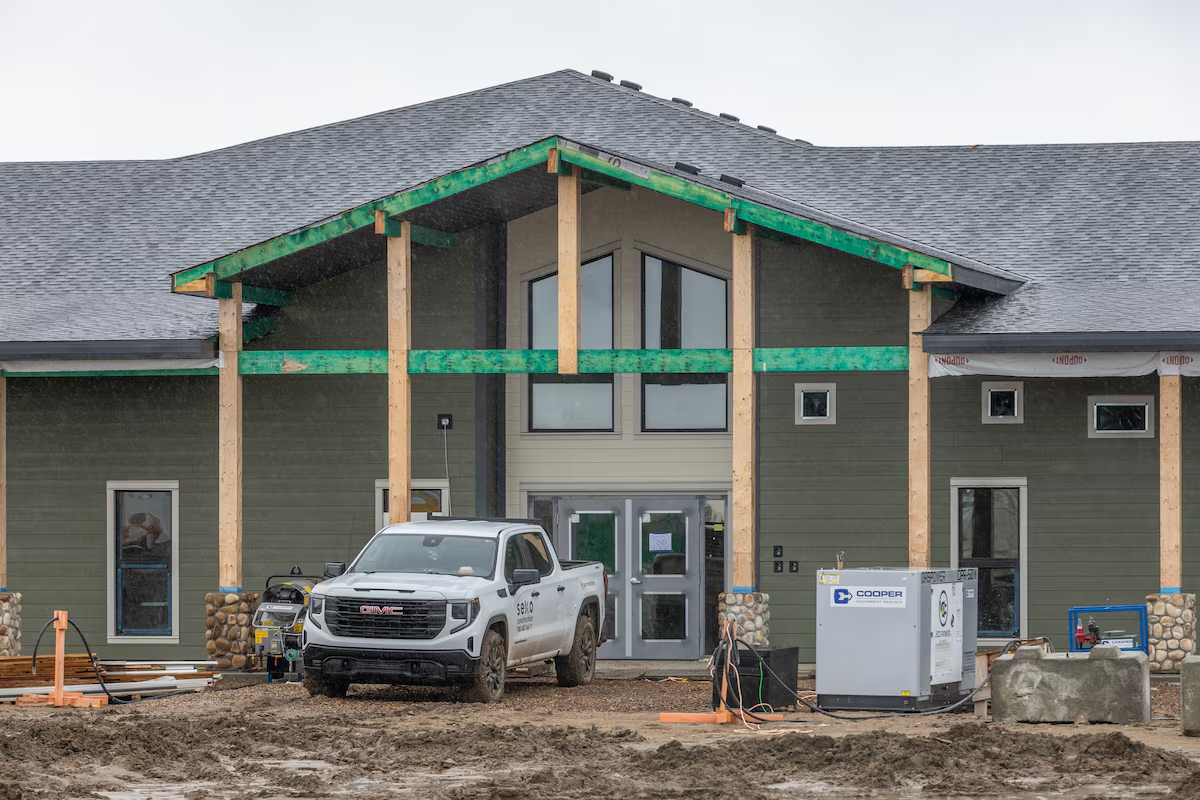
A truck is parked in front of the recovery centre under construction in the Métis Nation of Alberta in Smoky Lake, Alta., on April 22, 2016.Megan Albu/The Globe and Mail
One of the top executives at the Métis Nation of Alberta has left the organization.
Aaron Barner, who held the title of senior executive officer, departed the Métis Nation on Thursday, the Indigenous group announced in a news release. The release did not provide a reason, but said the move followed a meeting of the organization’s council, during which it was provided with confidential information including “privileged legal advice.”
Mr. Barner was named by a construction company last year in a multimillion-dollar lawsuit alleging that he interfered in its work to build an addiction-recovery centre for the Indigenous community.
Métis Nation president Andrea Sandmaier addressed Mr. Barner’s departure in a note to the organization’s leadership.
“Many of you will have worked with Aaron over the years and will be saddened by this news,” Ms. Sandmaier said in an internal memo obtained by The Globe and Mail. “On the advice of legal counsel, privacy and legal considerations prevent us from providing any details regarding Aaron’s departure.”
Ms. Sandmaier’s office did not address questions from The Globe about the reason for his departure. The Métis Nation represents more than 70,000 people in Alberta, according to its website.
Mr. Barner and his lawyer did not respond to a request for comment.
His exit comes as the construction of the Métis Nation’s $35-million recovery centre has become mired in liens, lawsuits and allegations that contractors have been left unpaid.
The project in Smoky Lake, Alta., a 90-minute drive northeast of Edmonton, remains unfinished. It was funded through an Alberta government grant and is part of Premier Danielle Smith’s signature initiative to build recovery centres across the province.
The allegations surrounding the construction of the Métis Nation’s recovery centre, which are contained in litigation between the builder and one of its business partners, in part involve Mr. Barner’s ties to Edmonton businessman Sam Mraiche.
Mr. Mraiche is the chief executive of a medical-supply company who for the past 16 months has found himself at the centre of a health care procurement controversy that has shaken Alberta politics. Mr. Mraiche has repeatedly denied any wrongdoing.
Mr. Barner and Mr. Mraiche have been past business partners, corporate filings show, and have been photographed together in private box suites during Edmonton Oilers hockey games.
Scott Hutchison, a lawyer for Mr. Mraiche, said in a statement that his client has “nothing to do with any change in Mr. Barner’s employment situation.”
“To insinuate otherwise in your reporting, because they both attended the same hockey game 25 months ago, is both unfair and wrong,” Mr. Hutchison said.
The Métis Nation’s recovery centre, along with two others being built for Indigenous communities elsewhere in Alberta, has become enveloped in a complex string of litigation that began last year after a dispute emerged between businesses involved in the project.
The Globe reported in March that Melewka Homes Ltd., the construction company tapped to build the Métis Nation’s recovery centre, was suing Mr. Barner, Mr. Mraiche and several others. The company’s principals, Lewis and John Semashkewich, alleged that Mr. Barner and Mr. Mraiche had worked together to withhold payments on the Métis Nation’s recovery-centre project from Melewka Homes until the company agreed to pay Mr. Mraiche.
According to Melewka Homes’ court filings, Mr. Mraiche allegedly told Lewis Semashkewich during a phone call that he had the government connections necessary to “pull” the construction company’s projects and allegedly said: “I own Barner and he will do what I say.”
Mr. Mraiche has denied saying that in his court submissions, and both he and Mr. Barner have denied any wrongdoing in their respective statements of defence.
Melewka Homes is being sued by AEHE Holding Corp., a business development and consulting company that was once Melewka Homes’ partner on the Métis Nation recovery-centre project. Mohamed Eldassouki, AEHE Holding’s owner, alleged in a statement of claim filed last summer that Lewis Semashkewich used a forged share sale agreement to unlawfully obtain control of Mr. Eldassouki’s business and bank accounts.
Mr. Semashkewich and Melewka Homes denied wrongdoing in their statement of defence and declined to comment. A lawyer for Mr. Eldassouki also did not comment.
A flurry of liens and other lawsuits have followed the litigation between Melewka Homes and AEHE Holding. Six contractors, including Melewka Homes, have filed liens totalling $10.6-million against the Métis Nation’s recovery-centre property. Two subcontractors are also suing Melewka Homes and Métis Crossing Ltd., the wholly-owned subsidiary of the Métis Nation that owns the land on which the recovery centre is being built.
When The Globe visited the Smoky Lake property in April, construction equipment could be seen on the site. A progress report published in April by the Alberta government said the recovery centre is expected to open by “late fall” and that the Métis Nation terminated its contract with Melewka Homes in March.
The Métis Nation entered into an agreement with Melewka Homes for the recovery centre’s construction in January, 2024, according to a copy of the contract filed in court. The contract was signed by Lewis Semashkewich on behalf of Melewka Homes, and by Ms. Sandmaier, the Métis Nation’s president. Mr. Barner signed as a witness.
Ms. Sandmaier did not respond to a request for comment.