
Open this photo in gallery:
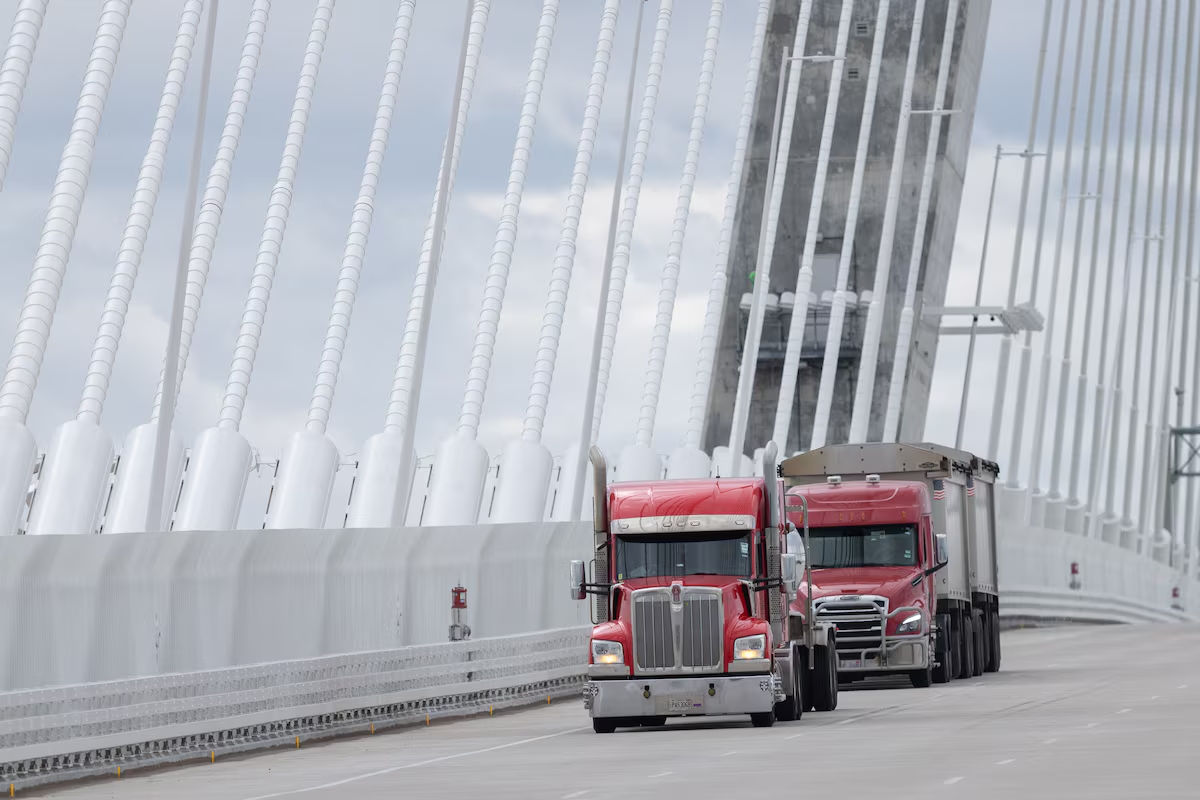
Trucks cross the Gordie Howe International Bridge that connects Windsor, Ont. and Detroit. Long-haul trucking is the largest source of workplace complaints of all federally regulated industries, a Globe and Mail found.Dax Melmer/The Canadian Press
The federal government says it will crack down on labour violations in the trucking industry and devote additional resources to address wage theft and employee misclassification.
The measures, introduced as part of sweeping legislative changes aimed at economic reform, will strengthen compliance and enforcement in the trucking sector, as well as introduce digital tools to tackle misclassification, Ottawa said.
If passed, the measures announced in Bill C-39 will commit more resources to labour inspections and invest in “digital solutions” such as a worker complaint portal, Pamela Wotherspoon, a spokesperson for Employment and Social Development Canada, said in a Tuesday statement.
A Globe and Mail investigation published in May found that weak and disjointed regulation in the trucking industry has resulted in widespread workplace abuse.
Trucking companies deemed unsafe permitted to employ temporary foreign workers
Long-haul trucking is the largest source of workplace complaints of all federally regulated industries, The Globe’s investigation found. However, Ottawa collected less than 20 per cent of the $6-million in unpaid wages it has ordered trucking firms to pay workers since 2022, data obtained by The Globe revealed.
The Globe’s investigation also found the number of trucking workers classified in census data as self-employed significantly increased between 2011 and 2021 – reflecting mounting problems with employee misclassification.
Misclassification refers to when employers falsely treat workers as self-employed to evade minimum labour protections as well as statutory contributions like employment insurance payments.
The bill will also amend federal labour law to provide ESDC with stronger powers to enforce settlement agreements in wage theft cases – and to secure workers’ unpaid wages when there is a risk that an employer may move or dispose of their assets before the money owed can be recovered, Ms. Wotherspoon said.
The statement did not say how much money would be committed to the proposed measures.
Jonathan Blackham, director of policy and public affairs with the Canadian Trucking Alliance, the national federation of provincial trucking associations, called the proposals an “opportunity to give government better tools to identify non-compliance and recover wages that are owed.”
The CTA welcomed the prospect of additional enforcement resources, he added.
“Worker misclassification is an issue that affects both workers and the trucking companies that play by the rules,” Mr. Blackham said.
“When someone who should be an employee is improperly treated as a contractor, it can mean lost wages and protections for that worker, while giving non-compliant operators an unfair cost advantage.”
Navi Aujla, a service director with Brampton, Ont.-based non-profit Labour Community Services of Peel, said ESDC’s enforcement efforts will not be effective without stricter penalties.
“Fines are seldom issued and even when they are, the amounts are inconsequential for employers who profit much more from misclassifying drivers and not paying them their wages,” she said.
Ms. Wotherspoon said in the statement that ESDC has sought to target misclassification and other workplace violations in trucking through targeted inspections, outreach and education in collaboration with provincial and territorial partners.
Ontario to standardize trucker training after audit flagged widespread issues
A publicly-available database of employers fined by ESDC shows they have penalized eight trucking employers for misclassification this year. The fines ranged from $1,500 to $24,000. None of the firms have paid their fines, according to the database.
Some 70 per cent of long-haul truck drivers in Canada have experienced wage theft on the job, according to a survey of 400 truck drivers published in February by worker advocacy groups including Toronto legal clinic Parkdale Community Legal Services and Labour Community Services of Peel.
More than 65 per cent of the drivers surveyed also reported that they were currently misclassified as independent contractors, or had been in a past job.
The federal government has already implemented tax reforms aimed at addressing employee misclassification.
Last fall, the federal government also committed $77-million for the Canada Revenue Agency to increase scrutiny of trucking firms’ payments to contractors – lifting a previous moratorium on penalizing failure to report these transactions.
The Ontario Trucking Association, which advocates on behalf of trucking firms across the province, has said the moratorium weakened oversight of the trucking sector and accelerated the “predatory use” of the misclassification model and welcomed renewed enforcement.
However, labour advocates have raised concern that the CRA’s efforts have targeted drivers who were unwillingly misclassified by their employers.
Ms. Aujla said the strategy “penalizes the victims of wage theft and does little to hold accountable the employers responsible for it.”