
Open this photo in gallery:
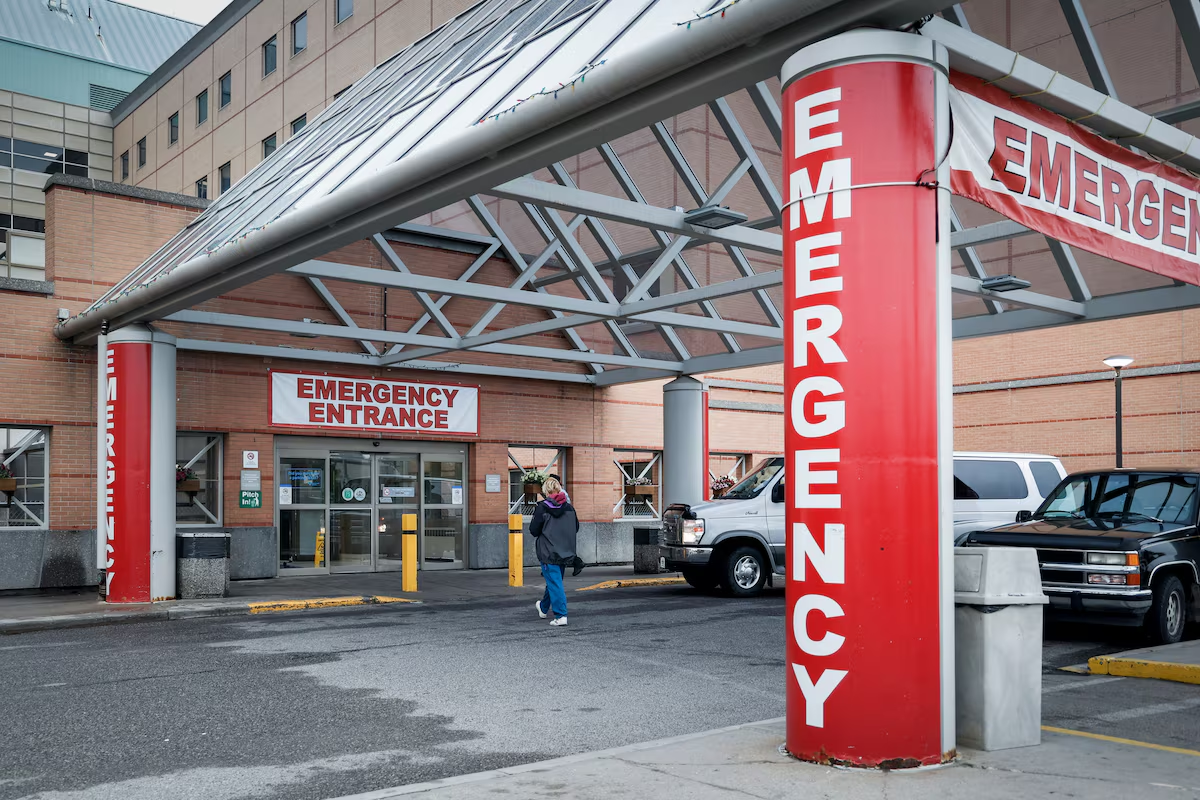
The Alberta government is looking at charging some temporary residents between $1,400 and $1,900 per person for health care, which Premier Danielle Smith suggested could be shouldered by businesses.Jeff McIntosh/The Canadian Press
Alberta Premier Danielle Smith is floating the idea of a $1,900 health premium for some temporary residents, one of the first concrete ideas she has pitched as the province prepares to vote on immigration policy proposals in October’s referendum.
Ms. Smith on Tuesday said the government is looking at charging some temporary residents between $1,400 and $1,900 per person for health care, which she suggested could be shouldered by businesses.
“This is a new conversation. I recognize that we have been generous for a long time, but it’s put too much strain on our system,” Ms. Smith told members of the business community at a Calgary Chamber of Commerce event.
While the Premier was non-committal when pressed by reporters for details, Finance Minister Jason Nixon, suggested that the government’s proposals wouldn’t be implemented until after the next provincial election in October, 2027.
It was one of the first times Ms. Smith has provided examples of how some temporary residents could be affected in the wake of Alberta’s Oct. 19 referendum, which proposes a suite of reforms to provincial immigration policy.
Opinion: Alberta’s shameless attempt to scapegoat immigrants
The five immigration and citizenship proposals, and four others on constitutional issues have largely taken a back seat to the question around secession – the tenth and final item on the ballot. For that question, Albertans will pick between remaining in Canada or starting the legal process toward holding a second, binding secession vote.
The Premier has said she needs a mandate from Albertans before implementing the immigration policies. The province is spending $4-million in advertising to encourage residents to vote in favour of the government’s proposals.
The immigration questions propose introducing a yet-to-be-defined “Alberta-approved immigration status” that would make certain temporary residents eligible for services such as education and health care.
Ms. Smith is also proposing requiring non-permanent residents to live in Alberta for a year before being able to access public social-support programs and charging non-permanent migrants fees for using the health and education systems.
Ms. Smith said her government hasn’t made decisions around specifics, such as whether temporary residents currently living in Alberta would be required to pay the new fee or if it would only apply to new temporary residents.
“We have to talk about that as a cabinet,” Ms. Smith said. “I want to see if we even have a mandate to do it.”
Danielle Smith denies watering down government messaging on independence question
The Premier said a $1,900 health premium would be designed to encourage employers with low-skill labour needs, such as fast-food companies, to hire local youth.
“I guess that’s the question: Is $1,900 for a business to take on that fee, is that going to make or break your business? If it is, you’re probably hiring into a low-skilled profession, and we want those low-skilled jobs to go to youth employment.”
Mr. Nixon suggested that the United Conservative Party would likely provide precise details in the run-up to the next provincial election, scheduled for Oct. 18, 2027.
“We would need clear instructions from Albertans, which we’re asking for in this referendum, and from there we will begin the process to implement it,” Mr. Nixon said.
“I would not see it being fully implemented until post the ‘27 election,” Mr. Nixon said.
Calgary Chamber president Deborah Yedlin said such a proposal could become a drag on finding labour needed to build major projects in the province and would add costs to businesses.
“This is not necessarily going to make businesses more competitive in Alberta,” Ms. Yedlin said.
Alberta NDP Leader Naheed Nenshi said Ms. Smith’s proposal targets non-permanent residents who pay the same amount in taxes as all other provincial residents.
“If she says that every temporary worker who pays the same taxes as every other Albertan is sucking out money from the health care system, guess what? That means every Albertan is sucking money out of the health care system,” Mr. Nenshi told reporters at a news conference.
The Premier has said the province’s roughly 246,000 temporary residents annually cost the government about $1-billion. In February, staring down a $9.4-billion deficit, Ms. Smith partly pinned the shortfall on immigration, but the provincial budget did little to show how Alberta’s rapidly growing population pushed it into the red.
Ms. Smith also announced on Tuesday that her government was repealing Alberta’s 13-cent-per-litre retail gas tax on Oct. 1 in response to windfall oil revenues tied to the Iran war.
Provincial law requires the government to tie the gas tax to the average price of West Texas Intermediate over a stretch of the previous quarter. In June, however, her government opted to keep the tax and cut $100 cheques to Albertans.
Mr. Nixon said there were “a lot of challenges” with the province’s online payment system and so they decided to opt for a tax cut for the next quarter.