
Open this photo in gallery:
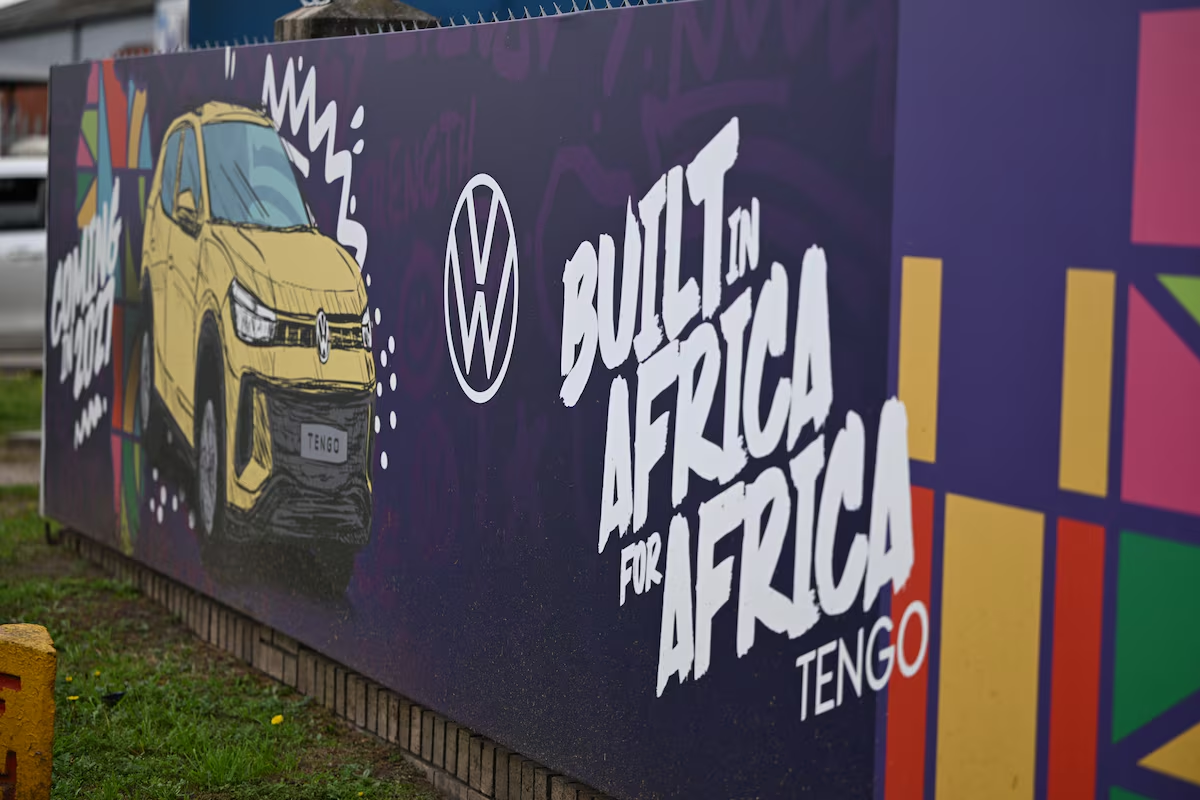
At the Volkswagen factory in Kariega, South Africa, a sign advertises the latest Tengo car model, which it says is ‘Built in Africa for Africa.’ The city, a hub for the country’s auto industry, is pressure from cheap Asian imports and higher U.S. tariffs,Lulama Mau Mau/The Globe and Mail
As job losses and factory closings gain momentum in South Africa’s auto-industry capital, criminals are targeting a new source of revenue here: severance payments.
Laid-off workers in Kariega stay quiet about their severance payments because of the risk of attack by thieves, residents say. “If you’ve got even a few rand in your bank account, you’ll immediately be a target,” said Lindithemba Sdeba, a skills training official in the city.
South Africa’s motor city is in trouble. Under pressure from cheap Asian imports and higher U.S. tariffs, the hub of the country’s auto sector is facing an unemployment crisis, a rising crime rate and a sharp deterioration of basic services, including water and electricity.
For decades, Kariega was a humming industrial centre, with a strategic location just inland from the Indian Ocean port city of Gqeberha (formerly Port Elizabeth), from where its autos were shipped to the world. The two cities are part of Nelson Mandela Bay, a coastal metropolis with a population of 1.2 million.
Manufacturers such as Volkswagen and suppliers such as Goodyear built major factories in Kariega, making the city the heart of the country’s auto manufacturing sector, which accounts for 5 per cent of national GDP. Thousands of cars sold in Europe every year are made here, mainly from the VW plant, the biggest on the continent.
Chinese and Indian competition, however, is ruthlessly eroding the industrial sector in the “Detroit of South Africa.” About 6,000 manufacturing jobs have been lost in Nelson Mandela Bay over the past two years, according to the local business chamber.
Open this photo in gallery:
Lindithemba Sdeba, a Kariega skills training official, at an abandoned sports facility on Aug. 31. The site was looted by thieves who stole anything of value.Lulama Zenzile/The Globe and Mail
Three major tire manufacturers have closed their factories here since 2020, largely because of Asian tire imports. Goodyear was the latest to shut its doors, eliminating more than 900 jobs last year. Even Volkswagen has faced rumours about its future.
Until recently, about half of all cars sold in South Africa were supplied by domestic manufacturers. But today two-thirds of car sales are imports, primarily Chinese and Indian. Morocco, meanwhile, has surpassed South Africa to become the biggest automaker on the continent.
Many of the surviving manufacturers in South Africa have switched to cheaper, Asian-made components, including tires – despite anti-dumping duties imposed by the South African government. This, in turn, has devastated an entire network of industry suppliers in Kariega.
Open this photo in gallery:
Men work at a scrap metal yard in Kariega on Aug. 29. Scrap metal is a booming business Kariega, even as many auto-industry plants are closing.Lulama Mau Mau/The Globe and Mail
Some Chinese companies, including Beijing Automotive Industry Company (BAIC), have set up assembly operations in Nelson Mandela Bay. But their wages are much lower than those of other factories, and they import most of their components, leaving their South African plants to do mainly the final assembly and some finishing touches.
Higher U.S. tariffs, imposed by President Donald Trump last year, have also hurt South Africa’s auto sector. The country’s vehicle exports to the United States dropped 83 per cent last year.
“Our auto industry is in a very difficult situation,” said Denise van Huyssteen, the chief executive officer of the Nelson Mandela Bay Business Chamber, which is lobbying for government measures to protect the sector.
“You can’t allow operators to come into the market when they’re only importing vehicles and displacing the local manufacturers and local jobs,” she told The Globe and Mail.
“The imports out of Asia land in this market cheaper than what can be manufactured by local suppliers. No country can compete with them. The business case doesn’t work any more.”
Open this photo in gallery:
The Goodyear tire factory in Kariega on Aug. 29. It shut down last year.Lulama Mau Mau/The Globe and Mail
It was the Goodyear shutdown that had perhaps the biggest psychological impact on Kariega. The company was regarded as one of the better-paying employers in the city. Now its sprawling factory sits empty. At the factory gate is an auction notice from March, when the site was opened to bidding, but there is no indication of a buyer.
“It’s like someone switched off the light when we needed it the most,” Mr. Sdeba said. “So now we’re in darkness and we have to fight for survival.”
South Africa’s new inquest into Steve Biko’s death comes decades late – but with it, hope
Kariega, once known as “Garden Town” for its lush vegetation, is now filled with abandoned buildings, potholed streets, broken traffic lights and crumbling infrastructure as the auto industry declines. A new sports facility was thoroughly looted, with anything of value – even the turf on a playing field – carted away by thieves.
Scrap-metal yards, heaped with parts from old cars and stolen cables, are among the few booming businesses. “You wake up one morning and your front gate is gone – they sell it for 80 rand (about $7),” Mr. Sdeba said.
Municipal services have drastically deteriorated. The nearby township of Kwanobuhle, where many auto workers live, is plagued by water leaks that leave stagnant algae-infested pools on crumbling streets. “There’s a smell, and the kids are getting diseases,” said Noxolo Swartbooi, who lives on a street blocked by a chronic water leak. “The mosquitos and rats are big.”
Open this photo in gallery:
Water leaks are common around Kariega, sometimes shutting down entire streets. This street is in Kwanobuhle township, on the outskirts of the city, is home to many of the auto industry’s workers.Lulama Mau Mau/The Globe and Mail
Nelson Mandela Bay loses as much as 63 per cent of its municipal water from leaks and illegal diversions – one of the reasons why some businesses have fled. Factories face unreliable water supplies and the risk of flooding. Frequent power disruptions also deter investors.
South Africa envoy Rieaz Shaik laments Canada peacekeeper cuts
But the business chamber refuses to give up. It works with a coalition of civil society groups on “adopt a leak” programs to fix the water outages. It has similar projects to repair the damage from vandalism and cable theft at pumping stations and electricity substations. Guards and surveillance cameras are being installed to protect the infrastructure. Volunteers work at busy intersections to prevent accidents when the traffic lights are broken.
With its seaports and other assets, the city is a “Bay of Opportunities” for investors, according to the business chamber’s campaign to attract investors. It is also lobbying for government help: higher tariffs on imported vehicles, stronger anti-dumping measures, local procurement rules for manufacturers and technology incentives to help factories become more globally competitive.
Because of its auto industry history, Nelson Mandela Bay has the largest number of engineers and technical specialists in the country, Ms. van Huyssteen said. Many of those specialists are among the volunteers repairing the leaks and tackling the infrastructure crisis.
“We’ve learned how to run a city,” she said. “We believe this is the most fixable city in South Africa. It can be turned around very quickly.”