
Open this photo in gallery:
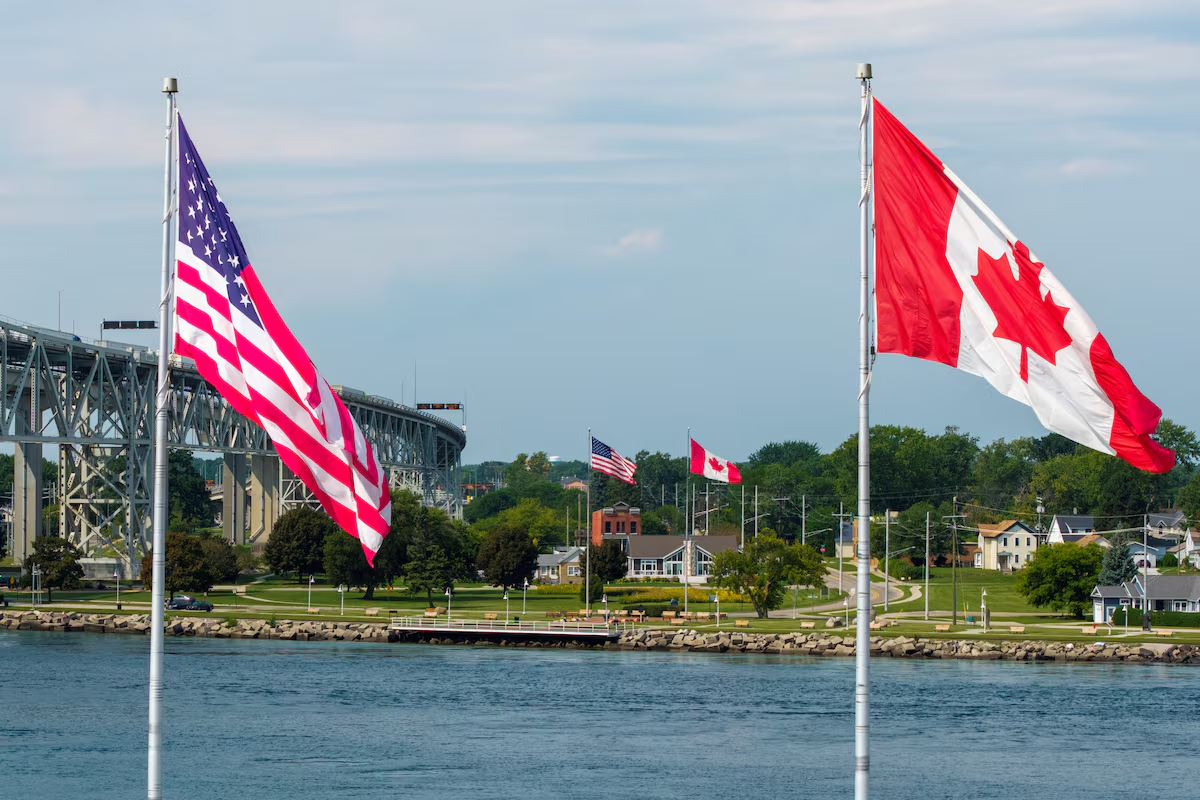
Canadian and U.S. flags fly on both sides of the St. Clair River near the Blue Water Bridge, connecting Sarnia, Ont., and Port Huron, Michigan.Carlos Osorio/Reuters
09/09/26 09:30
Canada to blame for Washington’s escalation of trade war, says Trump trade czar
– The Canadian Press
Open this photo in gallery:
U.S. Trade Representative Jamieson Greer speaks to reporters outside the White House on Aug. 24. Greer says Canada is to blame for Washington’s decision to escalate the trade war with its northern neighbour.Mark Schiefelbein/The Associated Press
U.S. Trade Representative Jamieson Greer says Canada is to blame for Washington’s decision to escalate the trade war with its northern neighbour.
Greer says the escalation was a “natural consequence” of Canada discriminating against American exports and choosing “senseless retaliation” over a near-final trade deal.
He says President Donald Trump plans to defend the interests of American workers and exporters, and restore reciprocity in bilateral trade relationships.
The five new orders, which will take effect later this month, will completely bar imports of certain Canadian goods, including motorcycles, some dairy products and alcoholic beverages. But the orders also exempted some Canadian products from being tariffed altogether, including toilet paper, road salt, and cement.
In a statement on X Tuesday, Maine Senator Susan Collins said she appreciates the Trump administration’s flexibility as she continues to press for a trade resolution with Canada.
“I mentioned in a letter to the Administration that Frenchville, a small Maine town on the Canadian border, would incur $10,000 in extra costs for road salt, threatening the town’s ability to provide municipal services,” wrote Collins, a Republican.
“These additional exemptions follow Canada’s announcement that it will carve out American seafood and fish products from its retaliatory tariff list, which would have caused significant harm to Maine’s lobstermen.”
Collins said tariffs on forest products were still in place and would lead to higher costs in Maine.
“I urge the Administration to continue to work to de-escalate this conflict,” she said.
09/09/26 09:30
Rift with Canada shows potential to become a pressing U.S. election issue
– Nathan VanderKlippe
At the northern edge of Washington state, the political establishment is contemplating a question no one can remember asking before.
Could Canada be an election priority this year?
“Historically, this hasn’t been a topic of interest,” says Alicia Rule, a Washington state representative who lives in Blaine, just south of the most important West Coast land border crossings.
But after more than a year of sparring between the two countries – with Canadians cancelling travel plans, increasingly hostile rhetoric from the White House and now a surge of punishing tariffs that has upended cross-border trade – that is changing.
The U.S. fractures with Canada have grown deep enough that Democratic political consultants are preparing polling questions to gauge public sentiment on the matter, a reflection of how the Canada question could drive ballot decisions during midterm voting later this year.
Read the full story here.
09/09/26 09:30
Carney focuses on attracting investment and economic growth as U.S. conflict deepens
– Steven Chase
Federal cabinet ministers will fan out across the country in the days ahead to reassure companies of support they can access during the escalating Canada-U.S. trade war, while Prime Minister Mark Carney’s office says his focus as formal talks with Washington remain stalled is on attracting investment and stimulating economic growth.
Two sources said ministers such as Industry Minister Mélanie Joly and Finance Minister François-Philippe Champagne will step up a media blitz, including meetings with businesses and chambers of commerce. This will involve guiding companies through the process of applying for support. The Globe and Mail is not identifying the sources, who were not authorized to discuss the matter publicly.
Audrey Champoux, deputy director of communications in the Prime Minister’s Office, said Carney’s priorities right now include affordable housing, new infrastructure and next week’s federal investment summit to attract foreign capital to Canada, as well as this fall’s federal budget.
She said Carney’s government, which has set a goal of doubling non-U.S. trade over a decade, will continue to focus on “building at home and diversifying trade abroad.”
“Our government will always stand up for Canada and focus on what we can control while we will build Canada strong for all,” Champoux said in a statement.
Read the full story here.
09/09/26 09:30
Trump bans imports of some Canadian goods in response to Ottawa’s countertariffs
– Mark Rendell, Adrian Morrow and Nathan VanderKlippe
Open this photo in gallery:
Canadian alcohol is among the goods targeted in the U.S. President’s latest tariff measures.Justin Tang/The Canadian Press
U.S. President Donald Trump has issued a sweeping ban on imports of Canadian alcohol, motorcycles and some dairy products as Washington ratchets up pressure in response to Ottawa’s latest countertariffs.
On Tuesday, Trump signed an order stopping the import of a broad range of alcoholic beverages, including beer sold in cans and bottles, rye whisky and many types of wine. He issued separate orders banning the import of whey protein, molasses and motorcycles.
The measures followed Canada’s decision on Tuesday to proceed with tariffs on $28-billion worth of U.S. products. Ottawa’s levies were “dollar-for-dollar” retaliation for a new round of U.S. tariffs that hit Canadian products last month.
Alongside the outright bans on Canadian products, Mr. Trump also adjusted several existing tariffs on Tuesday, increasing levies on a number of cheese products, motorboats and paper products while removing them from cement, sugar and toilet paper, among other items.
And he threatened in a social-media post to restrict Canadian companies’ ability to compete for certain U.S. government contracts.
The tit-for-tat tariffs, combined with more threats from Mr. Trump, amount to a major escalation in the trade war that has been ramping up since Ottawa walked away from the negotiating table last month.
Most of the new bans and tariffs are set to take effect on Sept. 29.
Read the full story here.