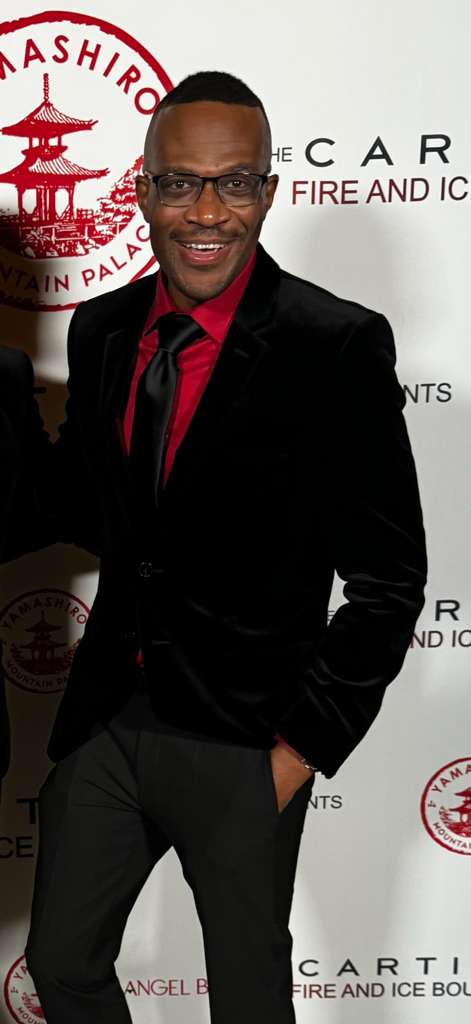
From medicine to motors, systems to storytelling, Okpara is building a life that refuses categorization.
⸻
Born in Enugu, Nigeria, and raised in the United States, Izuchukwu Okpara has built a life that defies simple labels. Physician, founder, strategist, and automotive storyteller, he moves fluidly between the operating room, the boardroom, and the open road.
As the founder of Omni Wound Physicians, he operates at the intersection of clinical care, access, and systems-level thinking. Beyond healthcare, his growing work in technology, content creation, and automotive culture reflects a singular through-line: an obsession with performance, precision, and identity.
What emerges is not a restless résumé, but a coherent philosophy of excellence expressed across multiple worlds.

⸻
Interview
- Your journey has taken you from Nigeria to medicine, entrepreneurship, and content creation. What experiences have most shaped who you are today?
I was born in Enugu, Nigeria, and immigrated to the United States as a child. That early transition shaped much of who I became. I learned very young that identity is not something handed to you neatly. It is something you build, often across different worlds.
Medicine gave me discipline. Surgery gave me precision. Entrepreneurship gave me responsibility. And storytelling gave me a way to make sense of the life I was building.
My path has not been linear. I trained with the ambition of becoming a surgeon, faced professional setbacks, pivoted into wound care, and eventually founded Omni Wound Physicians. What began as a career adjustment became the foundation for building a healthcare organization focused on access, service, and advanced clinical care.
Over time, I realized I was not only interested in treating wounds. I was interested in building systems, solving problems, leading people, and understanding how excellence is created in any field.
That curiosity eventually expanded into technology, content creation, automotive culture, and luxury storytelling. To some people those worlds may seem unrelated. To me, they are all expressions of the same pursuit: performance, precision, identity, and impact.
⸻
- Many people know you as a physician, but others know you through entrepreneurship, automotive storytelling, and leadership. How would you describe the philosophy that connects those different worlds?
The connecting philosophy is excellence.
Medicine teaches you that details matter. A missed detail can change a patient’s life. Entrepreneurship teaches you that systems matter. A weak system can collapse a business. Automotive culture teaches you that design, engineering, sound, movement, and emotion can come together to create something unforgettable.
I am drawn to environments where precision and emotion meet.
That is why I can be equally fascinated by a complex wound-care operation, an AI-driven healthcare workflow, a patient’s recovery, or the way an Aston Martin feels at speed. They may look different from the outside, but each one involves design, discipline, execution, and human response.
My personal brand is not about pretending these interests are separate. It is about showing how they connect.
I am a physician, yes. But I am also a builder, a strategist, a storyteller, and a student of performance. Whether I am speaking about healthcare, business, cars, leadership, or personal evolution, I am usually exploring the same question: what does it take to create something meaningful and sustain it at a high level?
⸻
- Every meaningful journey includes setbacks. Looking back, what obstacles ultimately became turning points in your life and career?
One of the defining lessons of my life is that rejection can become redirection.
There were moments in my medical career where the path I expected did not unfold the way I hoped. At the time, those moments felt like personal failure. Looking back, they became the doorway into the life I have now.
When I entered wound care, I did not initially see it as the grand plan. But I quickly recognized the need. I saw patients who were vulnerable, systems that were fragmented, and facilities that needed better clinical support. That became the opportunity.
Building Omni Wound Physicians was not easy. Healthcare is complex. You deal with patients, families, facilities, regulations, reimbursement, staffing, compliance, and constant pressure. But those challenges taught me how to lead under stress, build teams, and make decisions when the path is uncertain.
The obstacles refined me. They forced me to become more strategic, more resilient, and more honest about who I was becoming.
I no longer view setbacks as interruptions to the story. Sometimes they are the story.
⸻
- You have worked in healthcare, business, and technology. What have these experiences taught you about high performance and sustained success?
High performance is not glamour. It is repetition, discipline, and the willingness to solve problems that most people avoid.
In medicine, high performance means showing up prepared, making sound decisions, and respecting the weight of responsibility. In business, it means building systems that do not depend only on charisma or luck. In technology, it means asking how tools can make people better, faster, more accurate, and more effective.
The mistake many people make is chasing visibility before capability. They want the appearance of success before they have built the structure to support it.
I believe sustained success comes from alignment: skill, discipline, purpose, and execution moving in the same direction.
That is also what fascinates me about performance cars. A great car is not great because of one component. It is the engine, chassis, suspension, design, sound, aerodynamics, and driver working together.
A great career is similar. It is not one achievement. It is the integration of many disciplines into one coherent identity.
⸻
- As someone who has built teams, companies, and relationships across multiple industries, what does leadership mean to you today?
Leadership means carrying responsibility without needing constant applause.
It is easy to admire leadership from the outside. It looks powerful. But real leadership often feels heavy. You are responsible for people, outcomes, decisions, and consequences. You have to make choices before all the information is available. You have to stay calm when others are anxious. You have to protect the mission without losing your humanity.
In healthcare, leadership is especially serious because the work affects real lives. It is not theoretical. Patients, families, clinicians, and staff all depend on decisions being made with clarity and integrity.
For me, leadership has become less about control and more about stewardship. You are entrusted with something: a team, a company, a patient population, a vision, a reputation. Your job is to protect it, develop it, and leave it stronger than you found it.
The older I get, the more I believe leadership is not about being the loudest person in the room. It is about being the clearest.
⸻
- Beyond medicine, you have developed a passion for automotive culture, storytelling, and performance. Why are those worlds important to you, and what do they reveal about the way you see life?
Automotive culture became one of the unexpected creative languages of my life.
Some people see cars as objects. I see them as stories. A car can represent engineering, ambition, beauty, rebellion, heritage, craftsmanship, and memory. When you drive a truly special machine, you are not only moving through space. You are experiencing the result of thousands of decisions made by designers, engineers, builders, and dreamers.
My Aston Martin Vantage F1 Edition, for example, is not just a car to me. It represents a season of my life, a reward for years of building, and a symbol of refinement, discipline, and aspiration. It connects to my love for Bond, performance, elegance, and the emotional power of design.
Through automotive storytelling, I get to explore a different side of excellence. I attend rallies, connect with entrepreneurs and creators, drive on tracks, and document moments that feel cinematic but real.
Medicine reminds me that life is fragile. Automotive culture reminds me that life can also be thrilling, beautiful, and deeply alive.
That contrast matters to me.
⸻
- If you could give one piece of advice to ambitious professionals who want to build both success and meaning into their lives, what would it be?
Build substance before you build image.
The world is full of people trying to look important. Fewer people are willing to become useful, disciplined, skilled, and trustworthy.
Real reputation is not created overnight. It is built through consistency. It is built by doing hard things when no one is watching. It is built by keeping your word, learning from failure, and becoming someone people can rely on.
At the same time, I believe ambitious people should not be afraid to live fully. Success without meaning becomes empty. Meaning without execution becomes fantasy. The goal is to bring both together.
For me, that means building businesses, serving patients, exploring technology, telling stories, creating content, and forming relationships with people who are also trying to build something significant.
My advice is simple: become excellent at something real, then let the world discover the depth of who you are.
⸻
- When people look at your work ten years from now, what do you hope they will say about the impact you have had?
I hope they say I built bridges.
Between medicine and entrepreneurship. Between healthcare and technology. Between professional discipline and creative expression. Between immigrant ambition and American opportunity. Between clinical service and personal storytelling.
I do not want my legacy to be limited to one title.
Physician is part of who I am. Founder is part of who I am. Storyteller is part of who I am. But the larger mission is integration: bringing different worlds together in a way that creates value.
In the future, I hope to continue building healthcare ventures, exploring AI and operational innovation, supporting education, expanding my creative platform, and partnering with brands and organizations that understand the power of authentic storytelling.
I want people to see that a life does not have to fit neatly into one box.
You can be scientific and creative. Disciplined and expressive. Professional and adventurous. Strategic and emotional. Serious and cinematic.
That is the life I am building.
And if someone reads my story and feels invited to think bigger about their own, then I have done something worthwhile.