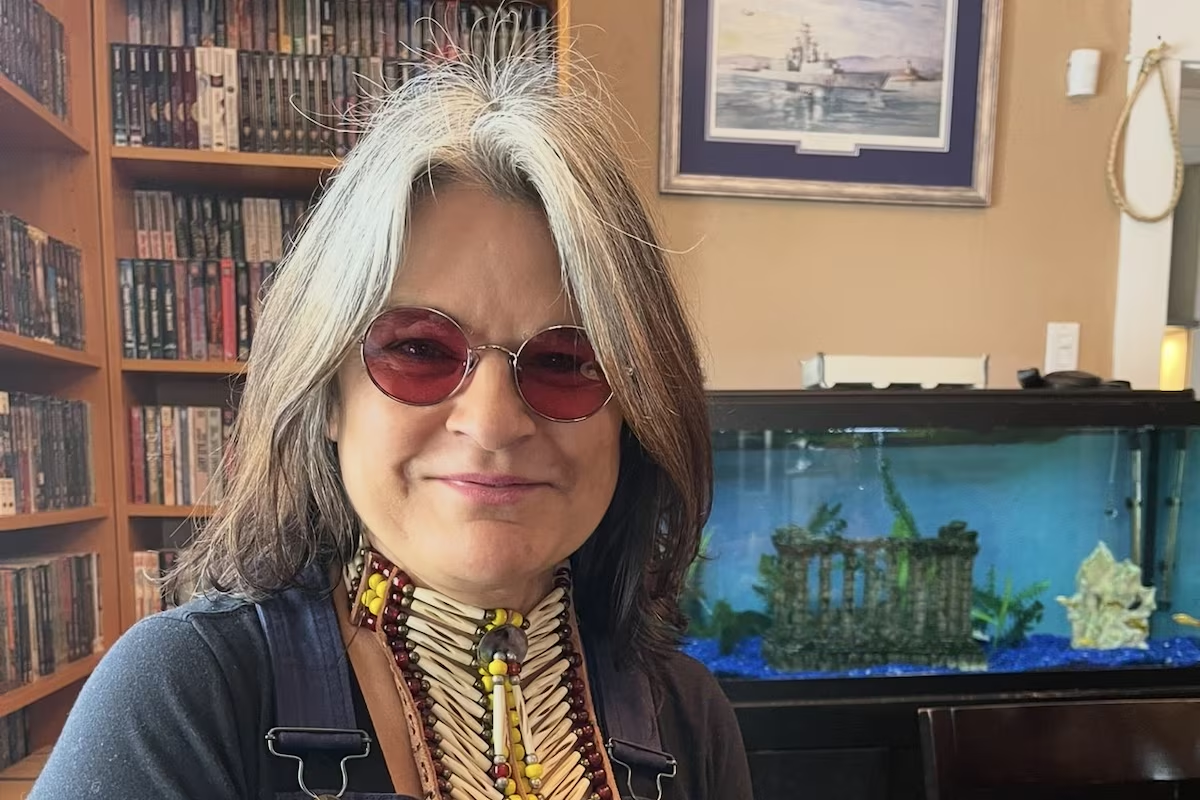

Open this photo in gallery:
Georgina Lightning.Jodi Calahoo Stonehouse/Supplied
Georgina Lightning, the Cree actor, director and screenwriter who broke barriers for Indigenous women in the film industry, died Saturday after an incident at an Indigenous equestrian championship west of Edmonton. She was 63.
Ms. Lightning was shooting a documentary about the three-day Indian Relay event at the Enoch Rodeo Grounds when the incident occurred, according to friends and family.
Police responded at 6:40 p.m. after a horse veered off track and struck a woman standing in a designated media area, said Alberta RCMP public information officer Corporal Mathew Howell. Emergency medical services attended and declared the woman deceased on the scene, Cpl. Howell said. Occupational Health and Safety, Alberta’s workplace-safety regulator, will be taking over the investigation.
“She was doing what she loved, where she loved, and with who she loved,” Edmonton-Rutherford MLA Jodi Calahoo Stonehouse, a close friend of Ms. Lightning’s, said in an interview.
Born in Edmonton and a member of the Samson Cree Nation, Ms. Lightning moved to Los Angeles in the 1990s with her three young children to attend the American Academy of Dramatic Arts and pursue a career in film. Her acting credits included Blackstone, The West Wing and DreamKeeper.
She eventually expanded into producing, directing and screenwriting, becoming an advocate for Indigenous peoples to have a greater role not only in front of the camera but in deciding which stories are told.
Ms. Lightning became the first Indigenous woman in North America to direct a major feature film with her 2008 directorial debut, Older Than America, about the intergenerational effects of U.S. residential schools, which went on to win more than two dozen festival awards. The film was dedicated to her father, George De Jong, who died by suicide after years of struggling with the effects of his experience in the Canadian residential school system.
Ms. Calahoo Stonehouse said Ms. Lightning had spent years working on the film about the Indian Relay, which was in its final stages of shooting.
“Georgina wanted to show not just the excitement of the race, and the joy it brings to the nations as it travels around, but also the healing of the horse spirit, the effect that it has on the families and the riders,” she said.
Indian Relay is a traditional horse race in which participants race bareback around a track at high speed, switching horses after each lap. The sport grew out of centuries-old Indigenous horse cultures after the animals were reintroduced to North America in the late 15th and early 16th centuries.
Presented with the option of shutting down the event after Saturday’s incident, Ms. Lightning’s family said both the race and her work should continue. Ms. Calahoo Stonehouse was at the racetrack on Sunday, finishing Ms. Lightning’s final interviews.
Ms. Calahoo Stonehouse described her friend as a firecracker who held those in power to account, but also had “a tremendous amount of love for people.” She was deeply spiritual, grounded by her faith and connection to ceremony, and devoted to mentoring young people across North America. She was also fiercely proud of her three children and grandchildren.
“Last night when her children and I sat down, we said we have to finish what she started because she was just so determined to tell these stories that no one was telling,” Ms. Calahoo Stonehouse said. “She’s been so determined to take up space where there are no First Nations peoples’ voices being heard.”
Danielle Paradis, a Métis freelance journalist who was working with Ms. Lightning on a documentary about climate change in the Prairies, said the filmmaker was always fighting to show the “bigger picture” in her work.
“She wanted to make sure that whoever was working on [the documentary] understood the complexities of resource extraction in Indigenous communities, because that’s often presented as one of the only ways out of poverty for these communities,” Ms. Paradis said.
“And so, what’s the real conversation about that? Because you’ve got to have money and jobs to feed your family, but you also have to have water and land. It was brave. We’re in an age when so many people are cowardly to talk about that sort of stuff.”
Ms. Paradis said Ms. Lightning was most passionate about fighting for Indigenous women, ensuring that there is a clear path for them and that they are recognized for the work that they do.
She added that she was moved by Ms. Lightning’s humility, despite her many accolades.
“Her answer was always, ‘Teach me,’” she said. “It was such a rare and humble way of approaching things.”
The Enoch Cree Nation said it is mourning the loss of a community member and that the chief and council extend their condolences to the family.
“Our community is grieving, and we are holding them in our thoughts and prayers,” the nation said in a statement issued Saturday.